Uzbekistan Expands Interregional Economic Cooperation

Tashkent, Uzbekistan (UzDaily.uz) — Uzbekistan is strengthening interregional economic cooperation, Deputy Prime Minister Jamshid Khodjaev said, summarizing the country’s participation in the 17th International Economic Forum “Russia–Islamic World: KazanForum” held in the Republic of Tatarstan.
According to Khodjaev, regional partnerships are becoming an increasingly important element of Uzbekistan’s international economic agenda and serve as a practical tool for promoting industrial cooperation, infrastructure development, technology transfer, and expanding opportunities for the private sector.
During the visit, Khodjaev held talks with the Head of the Republic of Tatarstan, Rustam Minnikhanov, focusing on long-term cooperation in industrial projects, development of industrial parks, petrochemicals, tire production, fuel infrastructure, agriculture, livestock farming, and integrated urban development.
It was noted that these areas are directly linked to job creation, deeper localization, and strengthening production chains.
A separate part of the discussions focused on cooperation with the Kyrgyz Republic.
At a meeting with First Deputy Chairman of the Cabinet of Ministers Danyar Amangeldiev, the sides discussed hydropower, modernization of electricity networks, transport connectivity in border regions, tourism development, agro-industrial cooperation, and food security.
During talks with Deputy Prime Minister of the Russian Federation Marat Khusnullin, the sides reviewed projects in infrastructure, construction, industrial cooperation, transport, and urban development, as well as private sector participation in new joint initiatives.
The Uzbek delegation also visited production facilities of the TAIF Group in Nizhnekamsk, where they studied operations in oil refining, petrochemicals, and energy. The experience was highlighted as significant for potential expansion of processing capacity and deeper localization in Uzbekistan.
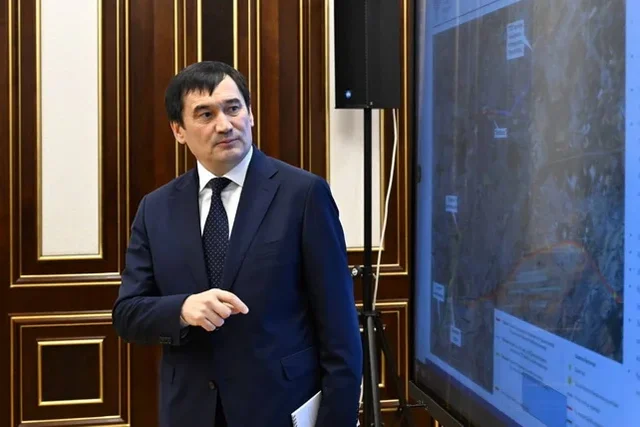
In addition, Jamshid Khodjaev spoke at the plenary session titled “From Points on the Map to Growth Points,” emphasizing the need to combine infrastructure, technology, financial instruments, and entrepreneurial initiatives for sustainable regional development.
A meeting was also held with the Head of the Republic of Mordovia, Artyom Zdunov, where discussions covered agro-industrial supplies, pharmaceuticals, biotechnology, veterinary cooperation, and the introduction of modern technologies, including flexible solar panels and facade materials.
The sides agreed to explore the possibility of organizing a business mission from Mordovia to Uzbekistan, focusing on practical B2B contacts.
At the end of the two-day visit, officials emphasized that the key task is to transform negotiations into concrete projects, investments, and production links.
In this context, the “Russia–Islamic World” format is seen as an effective platform for combining capital, technology, industrial cooperation, and logistics capabilities.