Stay up to date with the latest news
Subscribe to our telegram channel

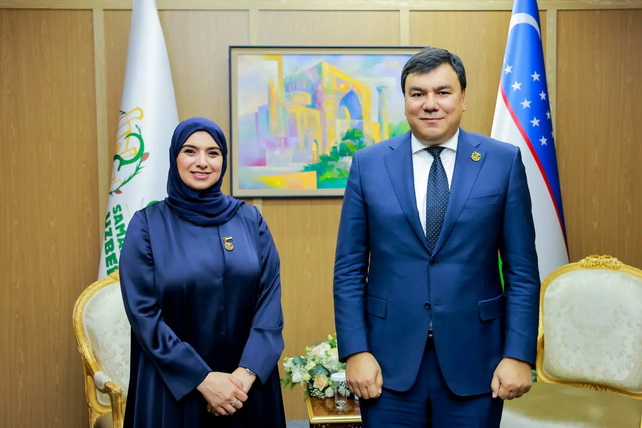
Uzbekistan and UAE Discuss Environmental Cooperation at CITES CoP20
Tashkent, Uzbekistan (UzDaily.com) — In Samarkand, on the sidelines of the 20th Conference of the Parties to the Convention on International Trade in Endangered Species of Wild Fauna and Flora (CITES CoP20), a meeting was held between Aziz Abdukhakimov, Advisor to the President on Ecology and Chairman of the National Committee on Ecology and Climate Change, and Amna bint Abdullah Al Dhahak Al Shamsi, Minister of Climate Change and Environment of the United Arab Emirates and member of the Cabinet of Ministers.
The parties discussed expanding bilateral cooperation in environmental protection, sustainable ecosystem management, and the conservation of rare species. Minister Amna Al Dhahak highlighted the significance of the regional center in Uzbekistan, established jointly with the Xinjiang Institute of Ecology and Geography of the Chinese Academy of Sciences, emphasizing that it represents an important scientific and practical contribution to advancing environmental monitoring in Central Asia.
The UAE side also expressed readiness to develop cooperation with China on the sustainable development of desert territories within the framework of the “Desert Economy” concept and to establish trilateral partnership formats involving Uzbekistan.
Special attention during the meeting was given to the protection of predatory birds and improving monitoring mechanisms. Minister Amna Al Dhahak called for support of UAE initiatives on falcon registration and digital identification, including the implementation of a digital passport system, which would strengthen control over the movement of rare species and expand international cooperation under CITES.
Aziz Abdukhakimov expressed interest in further developing cooperation with the UAE and noted the importance of exchanging experiences to address the region’s growing environmental challenges.
Both sides agreed to continue practical collaboration and to explore new joint initiatives at the level of relevant agencies and scientific organizations.