Mirziyoyev: Construction Industry Key to Sustained Economic Growth

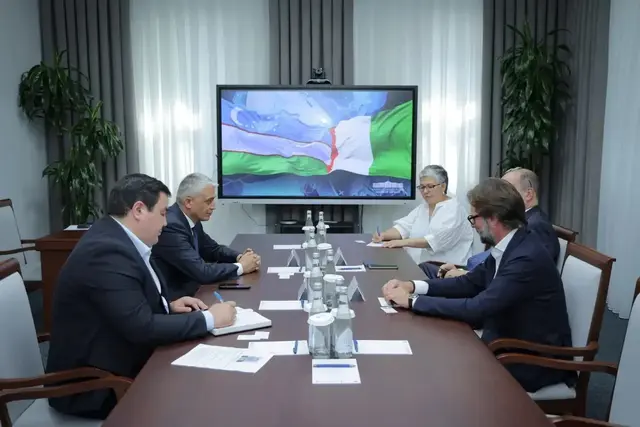
Tashkent, Uzbekistan (UzDaily.uz) — President Shavkat Mirziyoyev has convened a video conference dedicated to ongoing efforts and priority objectives in the fields of housing construction and urbanization.
The meeting was attended by more than 500 developers, contractors, designers, architects, and urban planners from national and regional studios across the country.
The president emphasized that the construction sector plays a special role in achieving the country's ambitious economic growth targets across all sectors and regions.
Over the past nine years, approximately 10,000 new construction companies have begun operations in Uzbekistan. Among them are 20 large firms with annual turnover exceeding one trillion soums, and 365 companies with turnover above 100 billion soums. The number of design organizations has surpassed 2,000, of which 650 hold international certifications.
Within the sector, permit processing times have been cut by a factor of three, and the duration of administrative procedures has been reduced fourfold. Through the consolidation of 420 urban planning standards and the repeal of outdated documents, 140 new urban planning codes and regulations have been approved.
As a result of the work carried out over this period, 210 million square meters of buildings and structures have been completed, including more than 15,000 apartment buildings containing 647,000 units. The volume of construction work, which stood at 30 trillion soums in 2016, reached 314 trillion soums last year. Today, 3.5 million people are employed across construction, building materials production, and related industries.
Globally, the construction industry is evolving rapidly, with modern design solutions, new technologies, and updated standards transforming the sector. The president raised pointed questions about whether Uzbekistan's construction system is keeping pace with these changes, whether industry leaders are aware of their responsibility to meet current demands for speed and quality, and whether new solutions are being developed that account for seismological risks and earthquake-resistance requirements.
Each year, 6,500 hectares of land are allocated for business activity, buildings and structures totaling 600,000 square meters are offered for sale, and resources amounting to 140 trillion soums are made available to small and medium-sized enterprises. However, it was noted that entrepreneurs who have already resolved the key issues of land and financing still encounter obstacles when they attempt to break ground.
The president stressed that entrepreneurs are charged taxes on undeveloped land and interest on loans, yet bureaucracy, corruption, and red tape delay the start of construction by months or even years. In response, consultations were held with industry representatives and proposals were gathered from more than 1,000 construction and design organizations. The meeting discussed new measures developed on the basis of those proposals and initiatives.
Uzbekistan's population has exceeded 38 million, the urbanization rate has reached 51 percent, and nearly 20 million people now live in cities. "It is important to understand one thing clearly: when the urbanization rate rises by one percent, the economy also grows by at least one percent, while investment flows, business activity, startups, and labor productivity increase several times over. To achieve this, the country must adopt a unified approach to sustainable urbanization," the president stated.
Between 200 and 250 billion soums are allocated from the budget annually for the development of master plans. It was noted that these funds should be directed toward areas where master plans are either absent or outdated. The meeting also highlighted that entrepreneurs in small towns and settlements are ready to implement large-scale projects, but their activity has been put on hold due to the absence of urban planning documentation. Many investors are themselves interested in expediting the development of master plans and are prepared to commit their own funds to the process.
Regional governors and the Committee on Urbanization were instructed to complete, using budgetary funds this year, the development of master plans for six cities and 44 settlements, as well as detailed plans for 104 villages. They were additionally directed to begin preparing urban planning documentation for a further 50 localities in partnership with proactive business representatives.
In 2025, 14 percent of 112,000 land privatization applications were rejected on the grounds that master plans were unavailable. It was noted that this resulted in the failure to bring 4,000 hectares of land into active use and cost the budget an estimated 550 billion soums in foregone privatization proceeds. Officials were directed to transition within three months to a system in which land privatization applications are processed without human involvement, with an online response provided within five to ten minutes.
Over the past four years, construction has never begun on 3,000 of the 11,500 hectares of land sold at auction. This translates into a lost opportunity to create an additional 100,000 jobs and generate between 20 and 25 trillion soums in added value. Furthermore, 582 hectares of land plots and 122 state-owned facilities put up for auction have remained unsold for more than a year.
It was noted that regional governors play an insufficient role in shaping privatization programs and that entrepreneur preferences are not canvassed in advance. The president stressed that every asset sale must prioritize regional investment and job creation for the local population. Going forward, regional governors will bear equal responsibility alongside the State Assets Management Agency for the inclusion of assets in privatization programs, their sale, and the effectiveness of the resulting investments. The annual 14 percent surcharge on outstanding balances for assets sold through installment-based privatization has also been abolished.
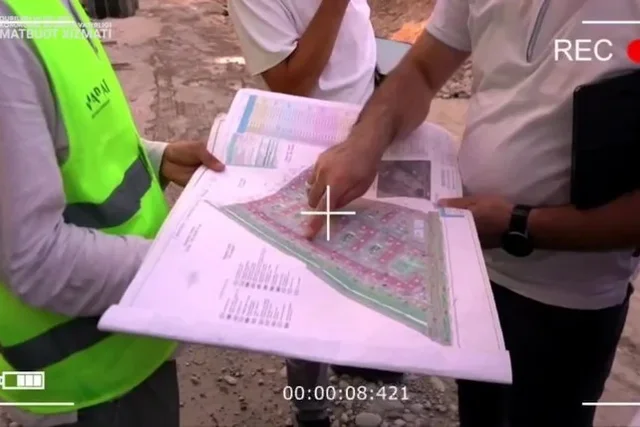
Criticism was directed at the practice of approving master plans with ambitious goals and targets while providing no clear answers as to when, in what sequence, and through what funding sources engineering networks — water supply, sewerage, heating, gas, electricity, and roads — will actually be built. The president stressed that each master plan must be accompanied by phased, comprehensive implementation programs with annual breakdowns communicated to residents, entrepreneurs, and responsible officials. The absence of such programs has led to infrastructure costs running two to three times higher than necessary, while chaotic construction continues unchecked. Each regional governor was instructed to develop, within two months, comprehensive implementation programs for approved master plans covering regional and district centers.
Responsible authorities were also tasked with clearly defining which measures under these programs will be financed from the national and local budgets, and which will be covered by international financial institutions.
Last year, one third of the more than 2.6 million construction-related applications submitted were rejected. "Responsible officials say they were returned due to deficiencies. But a deeper analysis reveals far more serious problems. Everyone knows, but pretends not to notice — this is corruption, plain and simple. The only way to put an end to it is digitalization and artificial intelligence," the president declared.
It was noted that residents and entrepreneurs seeking construction permits must first obtain a design permit and then separately apply for an architectural and planning brief — a process that takes months. Tashkent has already implemented the simultaneous processing of both services, cutting document approval times by a factor of three to four. This practice was directed to be rolled out nationwide by July 1.
Currently, obtaining technical connection conditions for electricity, gas, water supply, and sewerage requires separate applications to each utility. From July 1, entrepreneurs will be able to obtain technical conditions for all utility connections through a single application and a single payment.
It was also noted that one cause of bureaucratic delays is the lack of adequate coordination among the 26 agencies that make up local urban planning councils. Accordingly, urban planning councils in Tashkent and regional centers will henceforth be chaired personally by the respective governors, who will hold final decision-making authority on issues raised by entrepreneurs.
The meeting also addressed a shortcoming in the Transparent Construction rating system: equipment acquired by construction firms through leasing is not currently counted. If included, at least 500 companies would be able to advance one to two places in the rankings and gain access to a market worth 17 trillion soums. The Ministry of Construction was directed to launch an electronic database of leased equipment, integrate it with the Transparent Construction system, and begin awarding corresponding scores. The restriction limiting contracting organizations to importing no more than one piece of special equipment per year from abroad was also flagged for removal.
Overall, officials were instructed to analyze all processes — from construction permitting to commissioning — within three months and to submit proposals for cutting requirements, timelines, and fees by at least half.
Last year, designers and client representatives recorded 42,000 deficiencies at construction sites, while the Construction Inspectorate identified more than 250,000 violations. The root cause was identified as a lack of incentive among designers and clients to carry out authorial and technical supervision. In response, from June 1 of this year, the performance of state clients will be fully tied to a KPI system and staff salaries will be tripled. Up to five percent of an object's value will be allocated for design documentation, and authorial supervision will be separately remunerated under contract. In cases where gross violations are detected at a site, strict measures will apply not only to the contracting organization but also to the supervising officials themselves. A designer's rating in the Transparent Construction system will be downgraded accordingly.
Last year, 400 construction inspectors were equipped with body cameras, and video surveillance systems were installed at 1,221 social and infrastructure facilities. Going forward, online video monitoring will be extended to the construction of budget-funded social facilities costing more than 3 billion soums, as well as apartment buildings, major commercial and industrial enterprises, hotels, and tourism facilities. The Committee on Urbanization was directed to draft legislation introducing financial penalties for serious violations of urban planning standards.
Infrastructure projects worth more than US$20 billion are currently being implemented in partnership with international financial institutions. However, it was noted that not only small and medium-sized construction companies but even large domestic firms with high ratings, adequate financial resources, and equipment are unable to fully access this market — and when they do participate, they do so only as subcontractors.
Criticism was leveled at responsible officials and at client ministries and agencies, which, in negotiations with international financial institutions, fail to demonstrate the capabilities of domestic construction companies, do not protect their interests when contract terms are being set, and do not train them in the requirements of international tendering. As a result, even companies offering the lowest bids are unable to compete successfully. A system was therefore directed to be established for training local designers, builders, and consultants to participate in international tenders. At the same time, it was noted approvingly that domestic construction companies are beginning to participate in international projects in neighboring countries as general contractors.
The president stressed that meeting the population's housing needs must remain a constant priority. In recent years, 4.1 trillion soums have been allocated for infrastructure development across 56 Yangi Uzbekistan residential districts, with an additional 1.4 trillion soums directed toward these purposes in the current year.
It was nevertheless noted that in 2025, 2,100 apartments in the Tashkent region, 1,500 in Samarkand, 1,300 in Ferghana, 1,000 in Tashkent city, and 380 in Jizzakh remained unfinished and were not commissioned. Officials and governors were directed to complete the construction of 34,000 apartments across Yangi Uzbekistan districts during the current year. It was also established that the expansion of residential districts under construction will only be permitted once at least 85 percent of apartments in a given complex have been transferred to their owners.
Drawing on the experience of Tashkent and Samarkand, investment companies have been established that, starting October 1, will auction land plots for apartment construction already pre-packaged with construction permits, architectural briefs, and preliminary designs. In total, apartment buildings containing 140,000 units must be commissioned across the country this year.
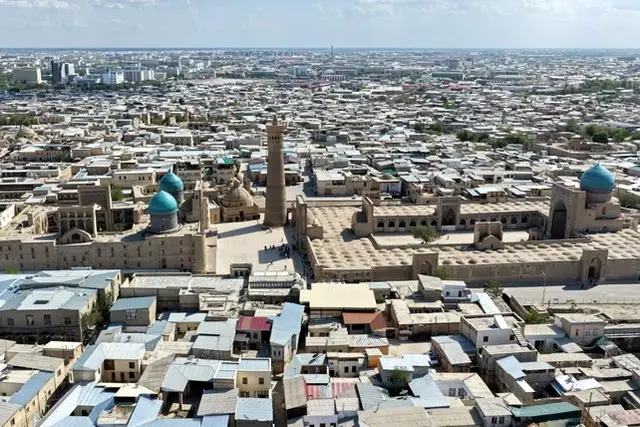
Special emphasis was placed on urban renewal. The president noted that expanding cities outward multiplies infrastructure costs by a factor of four to five, increases distances to schools, kindergartens, and clinics, and reduces thousands of hectares of agricultural land. In particular, the districts beyond the railway line in Samarkand, as well as the towns and settlements of Kattakurgan, Oqtosh, Ishtixon, Bulungur, Juma, and Jomboy, still contain large numbers of dilapidated barrack-style housing. Construction of apartment buildings through urban renewal was directed for these areas. Overall, the importance of commissioning no fewer than 30,000 apartments in multi-story buildings within urban renewal zones this year was underscored.
In February, the president signed a separate decree providing tax and other incentives for the development of the creative economy. Accordingly, officials were directed to establish Tashkent's first creative park for architects, designers, and urban planning specialists, and to begin work on creating similar parks in the regions. Starting from the new academic year, a self-financing higher education institution for training specialists in urbanization, cadastre, and geodesy will be established in Tashkent, accompanied by a technical college for mid-level specialist training.
During the meeting, the president heard reports from sector and regional leaders, as well as proposals and initiatives from entrepreneurs active in the construction industry.