EDB Proposes Eurasian Transport Network Framework

Tashkent, Uzbekistan (UzDaily.uz) — The Eurasian Development Bank has proposed a concept of a “Eurasian transport framework” designed to increase regional transport capacity by up to 40% through the creation of intersecting trade routes, according to the bank’s chief economist.
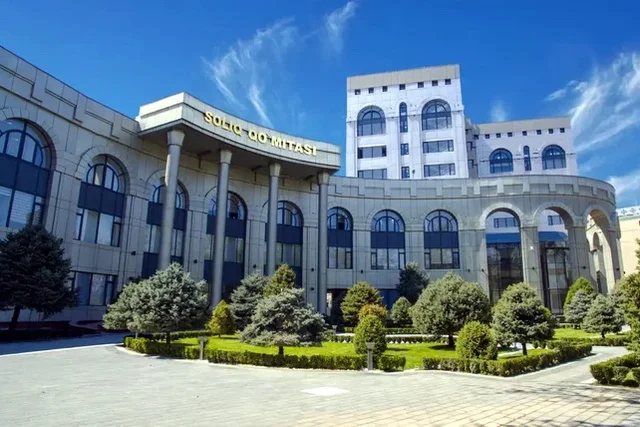
The strategic proposal was presented by EDB Chief Economist Evgeny Vinokurov in an interview on the sidelines of the EDB Day event in Tashkent, held to mark the official opening of the bank’s representative office in Uzbekistan.
Vinokurov said analytical work is a key foundation for initiating high-quality investment processes, noting that transport corridors are critically important for Central Asia as a region of landlocked countries.
He said the bank’s analytical unit developed the Eurasian transport framework as a network of interconnected routes aimed at improving access to major export and import markets for countries in the region.
The core idea of the framework is that intersections between transport routes generate a synergistic effect that creates additional trade flows. Freight movement would no longer be limited to north–south or west–east directions but would expand into multiple cross-directional flows, unlocking new logistical opportunities.
Vinokurov noted that historically, transport development in Central Asia and across Eurasia has primarily followed west–east corridors, while north–south routes remained underdeveloped in the 19th and 20th centuries. He cited historical examples, including limited connectivity through the Caspian Sea and the later development of the Turkestan railway in the late 1920s.
He said the current priority for regional countries is to strengthen north–south connectivity.
As an example, he referred to the China–Kyrgyzstan–Uzbekistan railway project, which has already been approved. According to EDB estimates cited by Vinokurov, approximately 100,000 containers currently pass through Uzbekistan annually, a figure that could rise to 400,000 after the railway is completed.
He also mentioned the Trans-Afghan corridor, which the EDB supports as a strategically important initiative, as well as the north–south corridor, particularly its eastern Caspian route, which he said is highly significant for Uzbekistan.
Vinokurov said the transport framework becomes fully effective when both west–east and multiple north–south routes exist simultaneously. He added that for Uzbekistan, the only country in the world that is doubly landlocked, transport connectivity is of strategic importance.
He emphasized that route intersections are essential, as a single corridor alone does not generate the same economic impact as a network of intersecting routes, which he said could increase transport capacity by up to 40%.
EDB Board Chairman Nikolai Podguzov said the bank plans to develop transport projects in the region within this strategic framework.
He highlighted the importance of projects connecting Uzbekistan with neighboring countries, including the Uchquduq–Kyzylorda transport route.
The bank said improving transport connectivity, infrastructure, and logistics will remain one of its main priorities in Uzbekistan, alongside industrial projects, energy, water management, and food security.