Uzbekistan to simplify regulations for catering sector

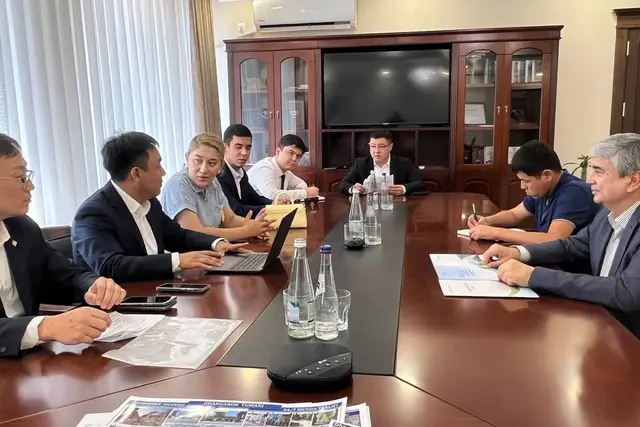
Tashkent, Uzbekistan (UzDaily.uz) — Uzbekistan is planning to simplify a range of administrative procedures related to doing business in the catering sector. The issues were discussed during an open dialogue of the Chamber of Commerce and Industry with representatives of the business community.
One of the key topics was the formalization of employment relations with staff. Participants noted that although labor legislation sets unified requirements across sectors, current regulations do not fully reflect the specifics of cafes and restaurants.
In particular, entrepreneurs pointed to high staff turnover, short-term employment, and irregular working schedules. According to business representatives, these factors complicate formal hiring processes and in some cases lead to informal employment practices.
To address the issue, participants proposed introducing a digital system for simplified employee registration.
Under the proposal, employers would be able to register staff using a passport or ID card through a personal account, record working hours, calculate hourly or daily wages, and automatically compute taxes and mandatory payments.
Environmental fees were also discussed during the dialogue. Currently, compensation for exceeding waste limits can be subject to multiplying coefficients of up to 20 times.
Business representatives said that such mechanisms are also applied to catering establishments, creating a significant financial burden that in some cases reaches 80–100 million soums.
Entrepreneurs emphasized that cafes and restaurants are not industrial facilities and consider the application of such coefficients excessive for their sector.
In this context, it was proposed to revise the methodology for calculating environmental payments for catering businesses, as well as reduce or eliminate multiplying coefficients for small establishments, including those located on the ground floors of residential buildings with an area of up to 200 square meters.
Participants of the dialogue noted that such facilities already undergo approvals from relevant authorities on gas supply, electricity, fire safety, and other requirements, confirming their operational safety.