German Professor Highlights Central Asia Education Potential

Tashkent, Uzbekistan (UzDaily.uz) — Professor Dr. Thomas Kruessmann, a law professor at a British university and member of the European Expert Association, called for expanded educational cooperation between Central Asia and Europe while speaking at the Central Asia–Germany Experts’ Forum in Khiva.
He noted that the development of academic ties is becoming an important element of the humanitarian dimension of partnership, as it is directly linked to strengthening human capital and ensuring the long-term sustainability of regional development.
The expert emphasized that Central Asia has significant potential in higher education and applied research.
According to Kruessmann, recent political decisions, including the outcomes of the EU–Central Asia summit held in Samarkand in 2025, have created additional opportunities for systematic cooperation in this area.
He paid particular attention to new institutional mechanisms initiated at the summit, including the establishment of a permanent dialogue between universities of Central Asia and Europe, as well as the development of joint scientific and educational centers in water resources, energy, agriculture, and digital development. He said these steps would create a sustainable political foundation for long-term academic cooperation.
Summing up, the expert expressed confidence that Germany and its European partners could move from fragmented projects to an institutionally structured model of cooperation.
He argued that existing mechanisms and programs make it possible to combine efforts and develop several flagship initiatives.
In this context, Kruessmann effectively urged Germany to make more active use of available tools and initiatives to establish long-term educational and research centers that would strengthen human capital in Central Asia.
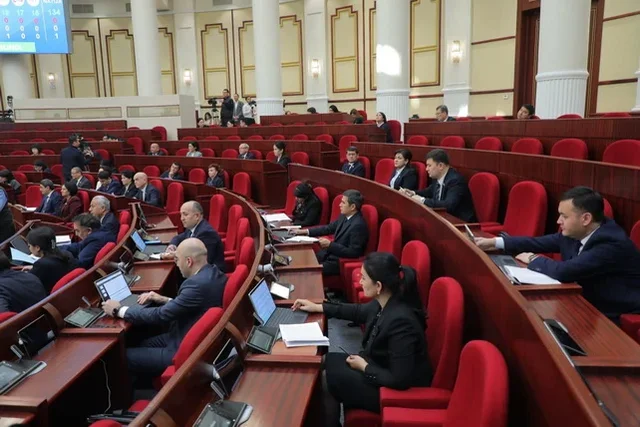
The forum in Khiva, organized by the Institute for Strategic and Regional Studies under the President of the Republic of Uzbekistan together with the Friedrich Ebert Foundation and the Konrad Adenauer Foundation, brought together a wide range of participants, including representatives of academia, business communities, and think tanks from Central Asia and Germany.