Bakhtiyor Mustafayev: Central Asia Is Emerging as One of the Centers of the New Global Architecture

Bakhtiyor Mustafayev: Central Asia Is Emerging as One of the Centers of the New Global Architecture
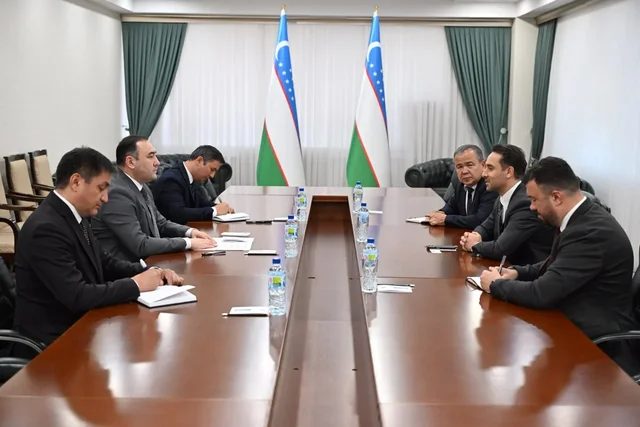
Tashkent, Uzbekistan (UzDaily.uz) — On 16 May, the Tashkent State University of Oriental Studies hosted the international scientific and practical conference titled “Central Asia in Contemporary International Relations: Prospects for Stability and Development.”
Bakhtiyor Mustafayev, Deputy Director of the Institute for Strategic and Regional Studies under the President of the Republic of Uzbekistan, addressed the conference.
In his remarks, the expert examined the evolution of the concept of the “middle power.” According to him, this status today is determined not by material indicators, but by a state’s ability to act effectively within the international system — to build partnerships with neighboring countries and regional and global centers of power, respond to contemporary challenges and threats, and ensure sustainable development.
Citing data from the Institute for Economics and Peace, Mustafayev noted that the number of states classified as middle powers had increased from 9 in 1991 to 16 by 2024. This reflects a structural shift in the distribution of international influence amid the ongoing crisis of the global order.
Speaking about the state of the global system, the speaker pointed to a set of interconnected trends driving its transformation. In particular, global military expenditure reached a record $2.7 trillion in 2024. By early 2026, the number of active armed conflicts had approached 60, reaching its highest level since the end of World War II. At the same time, key international institutions in the fields of security and economics are gradually losing their ability to maintain the stability of the international order.
According to the ISRS Deputy Director, during periods when new rules are taking shape, middle powers increasingly assume the role of “local stabilizers” where major actors seek to avoid responsibility. Central Asia is among the regions where this shift is becoming most apparent.
Examining the evolving role of Central Asia in contemporary international relations, the expert identified several factors contributing to the strengthening of the region’s strategic agency.
First and foremost, Mustafayev drew attention to the region’s institutional consolidation, linked to the launch in 2018, at Uzbekistan’s initiative, of the Consultative Meetings of the Heads of State of Central Asia. As the speaker emphasized, this format has become a platform exclusively for intra-regional dialogue and has contributed to strengthening political coordination across the region.
The expert described the adoption of the Treaty on Friendship, Good-Neighborliness and Cooperation for the Development of Central Asia in the 21st Century as a logical continuation of this process, characterizing it as a “regional constitution” that enshrines the principle of the indivisibility of security and sustainable development among the five states. According to him, the region’s strategic agency is reflected in the ability of Central Asian states to develop common approaches to transboundary challenges without the involvement of external arbiters.
Mustafayev also placed particular emphasis on Central Asia’s growing geoeconomic significance. In the expert’s view, the region is strengthening its position within global transport, energy, and resource supply chains. Significant reserves of uranium, lithium, copper, and rare earth metals are turning Central Asia into an indispensable partner in advancing the green transition.
Against this backdrop, the region’s diplomatic role is also increasing. In this context, a multi-vector foreign policy is viewed not as a euphemism for neutrality, but as a system of network balancing in which each area of cooperation serves specific national interests.
This approach was clearly reflected in the first-ever “EU–Central Asia” Summit held in Samarkand in April 2025, following which relations between the parties were elevated to the level of a strategic partnership and an investment package worth up to €12 billion was announced. The continued expansion of the region’s foreign policy engagement was further demonstrated by the second “Central Asia–China” Summit in Astana, which concluded with the signing of the Treaty on Eternal Good-Neighborliness.
According to the expert, the intensification of Central Asia’s external engagement is largely underpinned by the region’s sustained economic growth. Over the past decade, the region’s economy has grown at an average annual rate of 6.2%, nearly twice the global average. The combined GDP of the Central Asian states is approaching $500 billion.
In conclusion, Mustafayev expressed confidence that the strengthening of Central Asia’s strategic agency is a consistent and long-term process.
“Effective mechanisms of regional cooperation, large-scale infrastructure investment, and a diversified foreign policy are creating a foundation of resilience that is independent of external conditions,” he stated.