Stay up to date with the latest news
Subscribe to our telegram channel

Uzbekistan’s NDC 3.0: from promises to reality — why declarations don’t protect against smog
Tashkent, Uzbekistan (UzDaily.com) — In November 2025, Uzbekistan officially presented the third version of its nationally determined contribution (NDC 3.0), increasing its climate ambitions: the country committed to reducing the carbon intensity of its greenhouse gas emissions by 50% by 2035 compared to 2010.
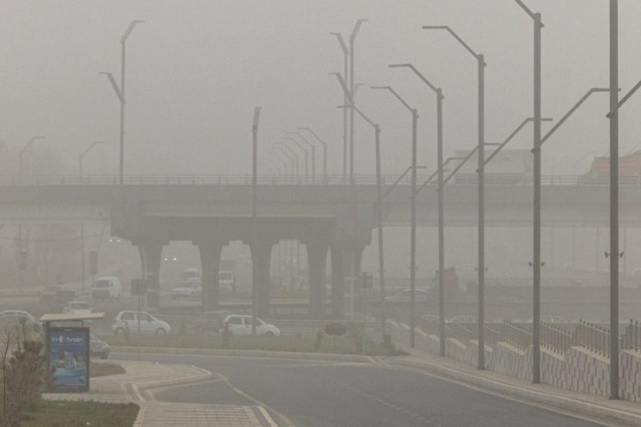
However, the declarations were followed by real-world challenges: by late 2025, Uzbekistan found itself at the epicenter of severe smog — AQI and PM2.5 levels reached hazardous ranges, tens of thousands of people experienced breathing difficulties, demand for air purifiers surged, and public discussions emerged about forced migration.
This article examines that contrast and explains why NDC macro-targets, in practice, do not protect the population from local environmental crises.
What NDC 3.0 declares
The document outlines the republic’s ambitious goals:
a) a 50% reduction in greenhouse gas emissions intensity by 2035 (relative to 2010);
b) continued deployment of renewable energy and energy efficiency measures;
c) adaptation, biodiversity, and gender/social dimensions — within a broadened approach to resilience.
NDC 3.0 is an important signal to international partners. But by its nature, the document is a framework: it records targets, yet it does not automatically solve problems of local ecology or urban safety.
What is happening in the cities: facts and evidence
The situation in November–December 2025: a sharp smog episode in Uzbekistan, with the capital topping the global ranking of the world’s most polluted cities. AQI reached the “hazardous” zone, while doctors, teachers, and business owners publicly reported chronic symptoms; air purifiers were bought en masse; families discussed the possibility of relocating. Public posts and local media noted that the pollution peak coincided with a period of inversion — yet systemic causes had also been accumulating for years.
Systemic reconstruction of the crisis causes
Statistical picture: a city growing faster than its climatic capacity
In recent years, Tashkent has been developing at a pace that far exceeds the region’s climatic and environmental resilience. A massive expansion of the vehicle fleet, construction sector, and industry coincided with a sharp deterioration in climatic conditions — droughts, lower wind speeds, and changes in prevailing wind patterns. The number of cars in Tashkent has increased by 50%, emissions by 40%, and housing construction by more than sevenfold.
Natural and climatic factors
One contributing factor is that the city has not experienced significant precipitation for an extended period.
If in October 2024 the city received 46 mm of precipitation, then in October 2025 it received only 1 mm. This is one of the lowest levels in the sweeee170 years, comparable to the record-dry year of 1917.
Weakened wind intensity also contributed to the deterioration of air quality.
If in the 1950s–80s the average wind speed in Tashkent was 1.7 m/s, then in 2011–2024 this indicator dropped to 1.3 m/s. This intensifies the accumulation of pollutants.
The industrial sector has also contributed significantly to air pollution
In January–September 2025, Uzbekistan’s industrial output grew by about 6.8% compared to the same period in 2024, with Tashkent accounting for the largest share of production in the country.
The construction sector grew by more than 14%.
If from 1991 to 2016 an average of 2,200 apartments were built annually, then in 2017–2023 the number rose to 15,800. In 2024 alone, 22,500 apartments were constructed.
The number of vehicles in the capital is also growing rapidly. Since 2020, it has increased from 417 000 to 624 000 today — a 50% rise.
The volume of atmospheric emissions in Tashkent and the Tashkent region increased from 345 000 tons in 2016 to 486 000 tons in 2024 — a 40% rise.
This comes despite the fact that the World Bank has already published data showing that 3,042 people die annually in Tashkent due to air pollution. The largest share of deaths is linked to strokes (33%) and ischemic heart disease (28%), followed by chronic lung diseases, lung cancer, and respiratory infections.
Analysis of systemic failures — Yuri Sarukhanyan
International relations specialist Yuri Sarukhanyan views the November smog as a logical outcome of systemic governance failures rather than a natural force majeure. He identifies three key narrative lines:
1.“Everyday problems bring power back down to earth.” When the authorities are focused on “grand projects,” it is the simple, everyday realities — air, water, roads — that dismantle any propaganda constructs. Smog became the factor that exposed the gap between state self-promotion and real responsibilities.
2. Smog is a consequence, not a cause. According to Sarukhanyan, dirty air is a symptom of a deep crisis in urban governance: the absence of a master plan, uncontrolled construction, chaotic building standards, deforestation, non-functioning infrastructure, and decisions that shifted greenhouses to coal. All of this accumulated over years before erupting into a catastrophe.
3.The system prefers “sacrifices” over solutions. Instead of addressing the roots of the crisis, the authorities often choose harsh measures against “convenient culprits” — greenhouses, individual officials, or construction companies — without reforming the system itself. After temporary measures and short-lived improvements, the situation inevitably returns to its previous state.
Sarukhanyan emphasizes that the air-quality crisis is not an isolated incident but part of a broader pattern, visible in scandals over tree cutting, violence, and energy failures. The laws of nature cannot be overridden by decrees, and no propaganda can alter objective reality.
A Hydrological and Urbanistic Perspective — Khurshida Yakubova (Hydrologist)
According to hydrologist Khurshida Yakubova, Tashkent is caught in a system of negative feedback:
-The city is built on loess — an extremely dust-forming substrate; without moisture and greenery, loess generates massive dust uplift.
-The aryk system (open irrigation canals) has been partially destroyed or closed, leading to the loss of evaporative moisture and natural “air conditioning.”
-The city’s green framework is shrinking: mature trees are being cut down and replaced with saplings, construction density is increasing, and wind corridors are disappearing.
-Engineering networks cannot keep up with rising density: water, gas, heating, and electricity systems are operating in a near-emergency state.
Yakubova’s conclusion: Tashkent has entered a phase in which local microclimatic and infrastructural errors create a mutually accelerating collapse — requiring the restoration of the aryk network, wind and green corridors, and a revision of the master plan that accounts for prevailing wind patterns.
Expert opinion (Svetlana Khan, retired architect-urban planner)
According to architect and urban planner Svetlana Khan, a significant share of dust emissions in Tashkent is linked not only to natural factors but also to human activity. Loess — often described as a “natural” source of dust — actually enters the air primarily as a result of construction processes: earthworks, the use of heavy machinery, and the disturbance of the surface layer turn this dense sediment into fine particulate dust that nature cannot process quickly enough.
In addition, she notes that cement plants around the city and concrete batching units located directly on construction sites contribute substantially to the dust burden. They create a persistent background level of emissions that gradually accumulates in the urban environment.
Khan also draws attention to a new potential source of pollution — the widespread use of basalt thermal insulation wool. Under high summer temperatures, the binding agents in this material may degrade rapidly, allowing particles to become airborne. The material is used in large volumes, yet its impact on air quality, plants, and animals, she says, remains insufficiently studied.
Finally, she suggests that the combination of dust emissions and high-rise construction may be contributing to the formation of a dense “cap” of pollution over the city, which obstructs normal air circulation. This may partially explain the observed decline in wind speed and the weakening of urban ventilation flows.
Scientific evidence of the anthropogenic nature of the smog — climatologist Erkin Abdullakhotov
Climatologist Erkin Abdullakhotov emphasizes that while natural dust contributes to airborne particulates, it is anthropogenic emissions that have become toxic and hazardous to human health. The symptoms residents report (chest burning, coughing, tearing, headaches) are not caused by natural dust but by combustion products from coal, transport, and industry, which “under inversion conditions turn into a poisonous mixture.”
According to him, Tashkent is experiencing the second driest year in 170 years, which intensifies dust uplift. However, it is the combination of drought and anthropogenic pollution that created the crisis. The scientist also explains that at high concentrations of CO₂, part of it can convert into CO (carbon monoxide), which poses a danger to the population.
These findings reinforce a central point: the smog of 2025 is not a natural disaster but the result of governance failures and accumulated anthropogenic emissions.
Destruction of the Wind Rose — official acknowledgment
Abdullakhotov confirms a key conclusion shared by experts: chaotic high-rise development has destroyed Tashkent’s wind corridors.
In the past, winds would carry polluted air toward Yangiyul and further into the desert zone. Today, according to the climatologist, Tashkent has lost its air corridors, and the wind has weakened — it is no longer able to clear the city. The capital has become a place where the wind blows from all directions but exits nowhere.
This is an official acknowledgment that urban development has become a factor of environmental risk rather than a neutral element.
Transboundary emissions: the impact of Kazakhstan’s greenhouses
Abdullakhotov introduces an important regional context: part of Tashkent’s pollution originates across the border.
According to him, in southern Kazakhstan, thousands of greenhouses operate exclusively on coal — cheap and low-quality. Satellite data also detect “black smoke” coming from the Kazakh side. These air masses, the climatologist says, “directly affect Tashkent.”
This underscores the need for regional climate cooperation (Kazakhstan-Uzbekistan) within the implementation of NDC 3.0.
If the decree is not fully implemented, the problem will not diminish
The climatologist emphasizes that the presidential decree will not solve the problem if its provisions are implemented only partially or selectively — something that has already occurred multiple times with environmental documents.
This conclusion reflects the central message of the article: without implementation and accountability, no climate document — neither NDC 2.0 nor NDC 3.0 — will work in practice.
Entrepreneurial analysis — Dmitry Seredin
Entrepreneur Dmitry Seredin offers a “step-by-step” reconstruction: combine a construction boom without a master plan, the blocking of wind corridors by high-rise development, the shift of greenhouses and thermal power plants to coal in 2022–2023, the mass import of vehicles running on low-quality fuel and with removed catalytic converters, the cutting of mature trees, and construction dust — and you get a “layered cake of errors” that resulted in the catastrophic smog of 2025.
Economic and institutional critique — Yuliy Yusupov
Economist Yuliy Yusupov emphasizes that administrative decisions played a key role (gas shutoffs, forced conversion to coal), made without compensation and without considering expert warnings. He points to the absence of accountability mechanisms — no one compensated greenhouse owners for their losses, and no one faced consequences for the deterioration of public health.
Usmanov: A domestic market without gas increases CO₂ emissions
Political analyst Elyor Usmanov emphasizes that because the use of natural gas as a fuel has been almost eliminated, the domestic market — including greenhouses, heating stations, schools, kindergartens, and the food service sector where traditional dishes are baked in tandoors — now generates active CO₂ emissions that sharply worsen air pollution.
Active gasification (instead of prioritizing the export of Uzbek gas to external markets) would significantly reduce the volume of harmful emissions produced by these sectors and facilities.
Overall conclusion: this is not only an environmental failure but also an institutional one: weak regulatory mechanisms, the absence of penalties for violators, and the misalignment of tariff and industrial policies with the goals of environmental safety.
Official Recognition of the Causes of Smog as Early as 2024
Already in January 2024, the Ministry of Ecology publicly acknowledged all key sources of air pollution in Tashkent. The agency stated that around the capital, “a grey ring has formed instead of a green one” — a dense belt of greenhouses that had switched to coal and were producing large-scale soot emissions.
According to the ministry’s analysis, the number of greenhouses increased 2.5 times nationwide between 2019 and 2024 (and doubled in the Tashkent region).
The Ministry of Ecology also recorded a sharp rise in coal and fuel oil consumption at thermal power plants, an increase in the number of vehicles to 4.6 million, a daily inflow of up to 1 million cars into Tashkent, the cutting of 49,000 trees, the absence of a master plan, and an explosive surge in construction (+5,400 new projects over five years).
In other words, the main causes of the crisis were known long before the smog of 2025 — and had been officially confirmed by the state.
What the authorities promised — and what happened a year later
In January 2024, the Ministry of Ecology presented an extensive plan of “urgent measures,” which included dozens of actions — from banning AI-80 fuel and fuel oil to relocating industrial zones, installing thousands of monitoring sensors, placing filters on greenhouses, expanding urban greenery, and introducing a moratorium on construction.
However, a year after these promises, in November-December 2025, Tashkent topped IQAir’s global ranking of the world’s most polluted cities, reaching an AQI level of 453 — and in some districts even exceeding 900 AQI — a category classified as extremely hazardous.
This contrast shows that the measures adopted were either insufficient or failed to address the key sources of pollution that independent experts had warned about.
Greenhouses, energy, and local sources of pollution
A key element is the “greenhouse belt” surrounding the metropolitan area. The mass conversion of greenhouses and parts of industry to coal during the period of energy shortages created local hotspots of low-quality fuel combustion. Coal with high ash content, tires, and other solid fuels generate an explosive increase in PM and black smoke — especially dangerous under inversion conditions.
The “back-and-forth” transition (from gas to coal, and then partially back to gas) is costly and creates a debt burden for agribusiness, while local externalities (health impacts, pollution) remain uncompensated.
Air quality vs. GHG emission intensity: explaining the difference
The NDC focuses on reducing the intensity of CO₂ emissions — an economic metric. Air quality indicators (PM2.5, NOx, SO₂), however, are a local issue that directly affects public health. A country may show improvement “on paper” in terms of tons of CO₂ per unit of GDP while simultaneously experiencing worsening air quality in its major cities.
Conclusion: If NDC 3.0 remains solely a macroeconomic document, it will not provide protection against smog episodes. The document needs to be supplemented with explicit, measurable air-quality KPIs and with monitoring and accountability mechanisms.
Transparency, public participation, and workshops (reference to BTR/CBIT)
On 27 June 2025, a public workshop on NDC 3.0 and Biennial Transparency Reports (BTR) was held in Tashkent, organized by Uzhydromet with the participation of FAO, relevant ministries, research institutes, and NGOs. The workshop was a positive sign: it creates a platform for aligning indicators and building capacity. But its practical impact depends on the full chain: workshops - roadmaps - financing - implementation.
The smog episode of November-December 2025 shows that discussions were either insufficient or their conclusions were not linked to timely actions to protect public health.
Social consequences: migration, health, inequality
Evidence includes publications, petitions and social media posts, residents’ appeals to international organizations, rising demand for air purifiers, and reports of chronic bronchitis. This is translating into real decisions: some families are seriously considering relocation, while skilled professionals (doctors, teachers) are thinking about moving their families — a loss of human capital that will become a long-term blow to the economy.
NDC 3.0 must account not only for abstract economic metrics but also for direct social consequences, including mechanisms for compensation and adaptation for vulnerable groups.
Specific requirements for NDC 3.0
Recommendations from environmental analyst Pavel Volkov: developing ecological culture and preventing systemic errors
Pavel Volkov emphasizes that achieving the goals of NDC 3.0 is impossible without a profound transformation of environmental culture, education, and public behavior. His recommendations complement the technical and institutional measures with the following key directions:
1) Environmental education and culture from an early age — introduction of mandatory environmental literacy classes in schools; teaching students practical skills such as planting trees, maintaining green spaces, and protecting urban nature; educational programs for adults through media, district centers, and NGOs.
2) Building a culture of sustainable consumption — promoting reuse, recycling, and purchases of goods made from recycled materials; explaining to the public the benefits of separate waste collection and reprocessing; developing eco-entrepreneurship based on recycling; financial incentives for residents who sort their waste.
3) Reducing dependence on fuel-powered cars — promoting the value of “fewer cars — cleaner air”; encouraging cycling and walking; reforming and making public transport more affordable so that it becomes an attractive alternative to private vehicles; encouraging the refusal of personal cars as an act of environmental responsibility.
4) Protection and professional care of trees — banning destructive pruning practices; introducing standards and certification for arborists; prohibiting unqualified personnel from performing tree work; establishing a public registry of plantings and removals.
5) Including mandatory air-quality indicators (PM2.5 / PM10 / NOx / SO₂) with reduction targets and real-time public monitoring in major cities.
6) Linking financing to KPIs — international and national support should be allocated only to projects with strict air-quality KPIs and transparent reporting.
7) Accountability mechanisms — fines and criminal liability for systemic violators; public “roadmaps” with responsible institutions and deadlines.
8) A heating-system replacement program for the greenhouse sector — loans for heat pumps and cleaner technologies; compensation programs for farmers to prevent a shift back to coal.
9) Urban policy aligned with the master plan and wind corridors — banning point-based high-rise construction in key wind trajectories; establishing green corridors; mandatory environmental impact assessments.
10) Transport decarbonization — banning high-sulfur Euro-2 fuel; fleet-modernization programs and restoration of catalytic converters; incentives for public transport.
Public distrust and the crisis of legitimacy in environmental policy
The November smog became not only an environmental catastrophe but also a communication failure.
Under news posts about new measures announced by the Ecology Committee, thousands of citizens left comments demonstrating deep institutional distrust. People pointed out directly: everything the authorities now present as “urgent measures” are actions that citizens had been requesting for years — stopping chaotic construction, protecting trees, preventing the filling of water bodies, combating illegal dumps and unlawful emissions.
Residents’ quotes:
“Where were your working groups when our trees were being cut down and lakes were being filled in? When gravel was being extracted for years right in the riverbeds?”
— comment from a resident of Tashkent region
“We wrote, demanded, begged to stop the chaotic construction. And now you are telling us obvious truths.”
— comment by E. Muminova
“Why did your employees send formal replies for years? Why is trash being burned in Kibrai even now?”
— comment from a resident of Kibrai
Citizens emphasize that their appeals were ignored for years, government responses were formal and lacked real action, complaints were allegedly marked as “anonymous,” and violations in construction, greening, gravel extraction, and waste management continued unchecked.
How other states respond — and how Uzbekistan responded
During the days when the AQI in Tashkent exceeded 400, Uzbekistan’s capital formally continued to operate as usual: schools, universities, and workplaces remained open, and public events were held despite numerous appeals from residents on social media. For comparison: under similar conditions in Tehran, authorities close educational institutions, shift employees to remote work, and impose restrictions on vehicle movement. In one of Kazakhstan’s cities, schoolchildren were also moved to remote learning due to smog.
Against this backdrop, the official response from the Tashkent City Ecology Department to a legal inquiry is particularly telling. In a letter dated 28 November 2025, the agency stated that the current level of pollution “does not have a serious impact on human health” — despite the fact that international AQI classification places such levels in the “Hazardous” category, where health risks are considered maximal even with short-term exposure.
This gap between international standards and the official position highlights a key problem: the absence of a response system for extreme air-pollution episodes and the disregard for risks to the population, including children.
Additionally, the President of Uzbekistan signed a decree to double the volume of housing construction in the country — up to 421 000 units — precisely at the moment when the entire republic was facing a critical smog situation.
Practical steps for rapid response (a short 100-day roadmap)
To stop the acute crisis and reduce the burden on the population, it is necessary to:
Announce a temporary moratorium on the burning of biomass and waste across the entire metropolitan area; enforce strict fuel controls for greenhouses; and switch schools and kindergartens heated with coal back to gas;
Deploy mobile health units and provide free masks to vulnerable groups;
Fund a program for boiler replacement and maintenance of green spaces in high-risk areas.
These steps will not solve the systemic problems, but they will reduce pressure on public health in the short term.
Conclusion
NDC 3.0 is an opportunity for Uzbekistan not only to demonstrate international ambition, but also to protect people inside the country. For this to happen, the document must go beyond macro-economic targets and include strict, local, and measurable measures on air quality, water resources, and urban adaptation. Otherwise, the declarations will remain beautiful words, while residents will continue breathing what official reports do not consider “carbon metrics.”
Kamila Fayzieva
The views expressed are those of the author and do not necessarily reflect the views of UzDaily.