Stay up to date with the latest news
Subscribe to our telegram channel

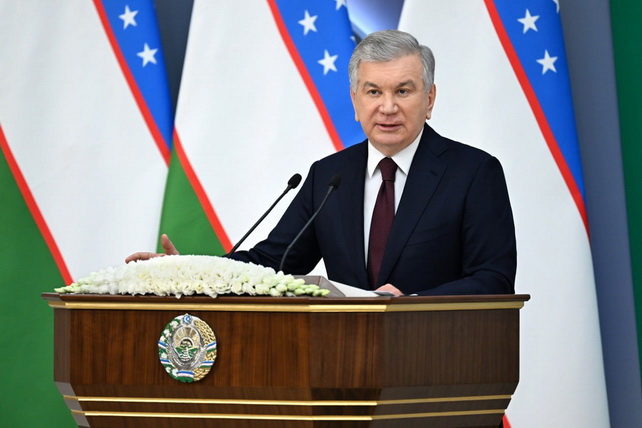
President of Uzbekistan Holds Expanded Security Council Meeting, Outlines Priorities for Modernizing the Army and Defense System
Tashkent, Uzbekistan (UzDaily.com) — On 13 January, under the chairmanship of the President of the Republic of Uzbekistan and Supreme Commander-in-Chief of the Armed Forces Shavkat Mirziyoyev, an expanded meeting of the Security Council was held to discuss strengthening the country’s military security and defense capabilities.
The session was attended by members of the Security Council, representatives of the Cabinet of Ministers, heads of ministries and agencies within the Armed Forces, commanders of military districts, leaders of military-administrative sectors, as well as representatives of public organizations.
In recent years, Uzbekistan has undertaken comprehensive measures to enhance defense capabilities. The national army has been equipped with modern weaponry and equipment, the combat readiness and morale of personnel have been strengthened, and the potential of the defense industry has been expanded. New tactical approaches have been introduced in the Ministry of Defense forces, the number and intensity of exercises have increased 1.5 times, and specialized drone units and training centers have been established.
The ongoing digitalization of the armed forces has improved command efficiency, information security, and service delivery.
Under the President’s initiative, the military education system has undergone a fundamental overhaul with the establishment of the University of Military Security and Defense, staffed with highly qualified professors, instructors, and trainers. Advanced digital technologies, including AI-based tools and modern knowledge assessment systems, have been integrated into the curriculum, significantly improving the quality of military training.
During the meeting, priority tasks for ensuring national security and further strengthening defense capabilities were discussed. The President emphasized that the nature of modern armed conflicts has changed radically. Contemporary warfare involves artificial intelligence, digital command systems, long-range precision weapons, cyber and robotic technologies, as well as political and economic pressure. He stressed that peace and stability remain the nation’s most valuable resources, and that every sector must adopt a proactive approach to anticipate and respond to potential risks and threats.
Key priorities include improving military personnel training. Modernizing military education forms the foundation for reshaping the army. Conscription will not only serve as a stage for physical and combat preparation but also as an opportunity to acquire professional skills. Programs of three to six months will be developed, culminating in qualification exams and professional certification.
Annually, about five thousand conscripts will be able to participate in programs such as “One Million Programmers” and “Five Million AI Leaders.” Military personnel will have the opportunity to take university entrance exams directly in their units and, upon passing, continue higher education after completing service. Returning servicemen and women will receive support for foreign language and specialized subject training, interest-free educational loans, employment incentives, and assistance with entrepreneurial initiatives.
Special emphasis is placed on training experts in engineering, cyber security, and countering information threats. Military-scientific infrastructure and defense technology parks will be strengthened. Spiritual development will be an integral part of personnel training: all military units will receive one million copies of literary works, and reading competitions with prizes from the Supreme Commander-in-Chief will be organized for servicemen and cadets.
The President also instructed the development of sports programs, including e-sports and disciplines involving drones and robotic systems. The need to equip forces with modern robotic complexes, AI-enabled unmanned systems, light military equipment, reconnaissance tools, and advanced weaponry was highlighted.
Other priorities include the development of the defense industry, implementation of digital technologies and artificial intelligence in defense enterprises, ensuring cybersecurity and resilience of national digital infrastructure, and the construction and repair of defense facilities.
Measures for social support of military personnel were announced: from April 1, the length-of-service allowance for Ministry of Defense officers will double; the monthly pay of contract soldiers will increase by 10%; wages of civilian personnel in territorial defense departments will rise by 20% this year and by 50% next year. For servicemen with over 30 years of service, the monthly pay considered for pension calculation will increase from 75% to 100%. Housing construction for military personnel continues, and a draft law on military pensions is being prepared.
Given the changing nature of modern threats, the President noted the need to revise the Defense Doctrine adopted eight years ago and the 1997 National Security Concept. The new doctrine will focus on maintaining a non-alignment policy, advancing multilateral diplomacy, integrating high technologies, ensuring military self-sufficiency, and promoting regional stability.
The session concluded with congratulations to servicemen, veterans, and their families on the 34th anniversary of the Armed Forces of Uzbekistan and Defender of the Fatherland Day. The President highlighted that courage, loyalty to the oath, and selflessness in defending the homeland serve as an example for the nation, wishing the country peace, calm, and unity. Reports were presented by the Minister of Defense, military district commanders, and other responsible officials.