Mirziyoyev Sets New Development Tasks for Ferghana

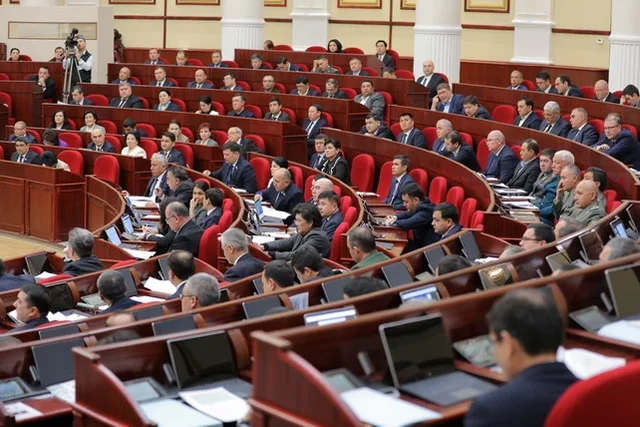
Tashkent, Uzbekistan (UzDaily.uz) — President of Uzbekistan Shavkat Mirziyoyev held a meeting in the city of Ferghana on April 28 dedicated to the socio-economic development of the Ferghana region, reviewing progress achieved in recent years and outlining new priority tasks for the future.
The head of state noted that the region has attracted US$8.2 billion in investments, leading to the commissioning of around 8,000 modern production facilities. Business support worth 100 trillion sums has been provided, while commercial space has expanded by 10 million square meters. In total, 13,500 small and medium-sized enterprises have been established, nearly doubling their number in the region.
According to the president, these developments have driven strong economic performance. The gross regional product has increased 1.7 times, industrial output 1.5 times, and the services sector has tripled. Unemployment has fallen from 9.2% to 4.6% over the past four years, while the poverty rate declined from 11.6% to 5.2%.
Significant attention was given to housing improvements. In Margilan, 241 outdated housing units were replaced with apartment buildings comprising 2,500 apartments. This year, 6,500 families are expected to move into the Yang Uzbekistan residential area in the Navruz mahalla. Similar housing projects are being implemented in Yazavan and Kuva districts, as well as in Kokand and Ferghana.
Over the past decade, the region has built new schools for 74,000 students, kindergartens for 145,000 children, and hospitals with 3,000 beds. In addition, 167 private schools now operate in the region, educating more than 40,000 students. Due to improvements in education quality, Ferghana ranks third nationally in university admission rates among graduates.
In agriculture, 15,000 hectares of industrial orchards and vineyards have been established, while 6,000 hectares have been restored. Fruit and vegetable exports have tripled, reaching US$400 million.
Tourism has also shown strong growth. Ferghana, Sokh, and Kuva districts, as well as Margilan and Kokand, are actively developing tourism infrastructure. Last year, the region welcomed more than 500,000 foreign tourists, while domestic tourist flows exceeded 3 million. Tourism exports reached US$185 million.
However, the president emphasized the need for higher targets. For the current year, officials were tasked with achieving 9.1% regional economic growth, 9% industrial growth, attracting US$4.5 billion in foreign investment, and increasing exports to US$2 billion.
Special emphasis was placed on digital technologies and artificial intelligence. Ferghana region leads in the number of young people certified under the “Five Million Leaders of Artificial Intelligence” program.
Local authorities were instructed to actively use youth potential for digitalizing public services and improving accessibility. AI technologies are also expected to be applied to analyze the potential of mahallas and design employment and income-generation projects.
The Yazavan district was cited as an example, where analysis identified logistics as a promising sector. Around 30,000 vehicles pass daily along the A-373 highway, creating opportunities to expand logistics infrastructure and increase economic turnover by 1 trillion sums.
In information technology, services have grown fourfold in recent years, with exports exceeding US$23 million. Starting from the new academic year, training in programming, robotics, and other modern fields will be expanded across technical colleges in 16 districts. A branch of the IT Park University will open in Ferghana, and an Inha University branch will be established in Margilan.
E-commerce development was also highlighted as a priority. A logistics warehouse infrastructure of at least 100,000 square meters will be created, with 30,000 square meters planned for completion this year. Entrepreneurs in 126 mahallas will be trained in using electronic trading platforms.
In agriculture, further potential remains in improving land efficiency. Out of 370,000 hectares of irrigated land, a significant portion requires modernization. Full realization of this potential could add 300,000 tons of fruit and vegetable production and generate 2 trillion sums in added value.
Positive results were noted in the Quva Agrostar agricultural complex, where farmer cooperation, processing, and export support have been established. Similar practices are expected to be scaled across the region, along with the renewal of 5,500 hectares of outdated orchards.
Plans include establishing super-intensive orchards on 50,000 hectares and increasing agricultural output to 611,000 tons of fruit, 252,000 tons of grapes, and 1.8 million tons of vegetables. Fruit and vegetable exports are projected to reach US$500 million.
In industry, authorities were tasked with efficiently utilizing 1,077 hectares of industrial zones, ensuring at least 50 billion sums of production per hectare. Investment projects worth US$5 billion are planned.
Initiatives to establish a free trade zone in Besharyk district and a major commercial complex in Kokand were supported. In tourism, the goal is to increase foreign tourist arrivals by two to three times through the development of pilgrimage, medical, and eco-tourism.
Infrastructure development projects, including those based on the Karkidon reservoir and other sites, were also emphasized. By the end of next year, 50 tourism projects worth US$300 million are expected to be implemented.
The meeting also addressed cultural heritage preservation and literature promotion. A proposal was made to create an anthology of the Kokand literary environment, establish creative schools, and open model libraries in 100 mahallas. Tax incentives will be provided for entrepreneurs opening book cafés.
Support for the art of askiya was also discussed, including its development in cultural institutions and the promotion of young talent.
At the conclusion of the meeting, reports from regional leaders and proposals from entrepreneurs and public representatives were heard. The president issued specific instructions aimed at ensuring sustainable economic growth, increasing employment, and improving living stan