Khiva Forum Confirms Central Asia’s Strategic Maturity

Tashkent, Uzbekistan (UzDaily.uz) — The outcomes of the Central Asia–Germany Experts Forum held in Khiva on April 16–17 demonstrate the emergence of a new paradigm of cooperation, according to First Deputy Director of the Institute for Strategic and Regional Studies under the President of Uzbekistan Akramjon Ne’matov.
Commenting on the event, he said the forum confirmed that Central Asia is moving beyond its previous perception as a peripheral space and is consolidating its status as an independent geo-economic and political actor.
The expert noted that this assessment aligns with views expressed by German analysts, who describe a shift from viewing the region as a transit corridor toward recognizing it as a key node in the emerging Eurasian architecture.
Ne’matov stressed that the current stage of cooperation is developing within a framework of equal strategic partnership, the institutional foundations of which were established at the Berlin summit in 2023.
In this context, the “C5+1” format is increasingly seen not merely as a foreign policy dialogue mechanism, but as an instrument for strengthening regional subjectivity.
He highlighted a broader discursive shift in which Central Asia is seeking to shape its own agenda rather than integrate into externally defined geopolitical frameworks. In this logic, external partners, including Germany, act not as architects of processes but as equal participants in joint decision-making.
A significant part of his remarks focused on the transformation of the economic cooperation model. He noted a shift from prioritizing transport connectivity and transit functions toward deeper integration into global value chains.
In this regard, he called for moving the focus of cooperation from infrastructure to industrialization, technology localization, and the development of joint production capacities.
According to him, this approach complements Germany’s diversification strategy and risk-reduction agenda while making it more practical and long-term oriented.
Ne’matov also emphasized that Afghanistan should be viewed not as a peripheral security issue but as a structural component of regional stability. He argued that isolation policies carry risks of destabilization, whereas integration into infrastructure, energy, and trade systems could support gradual normalization.
He proposed that Central Asia could serve as a mediator and facilitator of a more flexible engagement model, encouraging Germany to use existing regional mechanisms for pragmatic dialogue.
Another key element of the proposed agenda was strengthening institutional cooperation. Moving beyond project-based interaction, he advocated for durable mechanisms such as joint educational platforms, investment funds, and technology centers.
In a broader analytical context, he said the forum reflects an effort to align two strategic logics: the European approach focused on managed interdependence and risk reduction, and the Central Asian approach aimed at strengthening autonomy and internal resilience.
This alignment is reflected in the complementary roles assigned to both sides, with Germany seen as a technological and institutional partner, and Central Asia emerging as a growing hub of economic activity and regional coordination.
Concluding his remarks, Ne’matov said the Khiva forum confirmed Central Asia’s maturity as a political and strategic space. Dialogue with Germany, he added, is now entering a new phase of equal partnership, where recognition of regional subjectivity becomes both a political principle and a practical condition for effective cooperation.
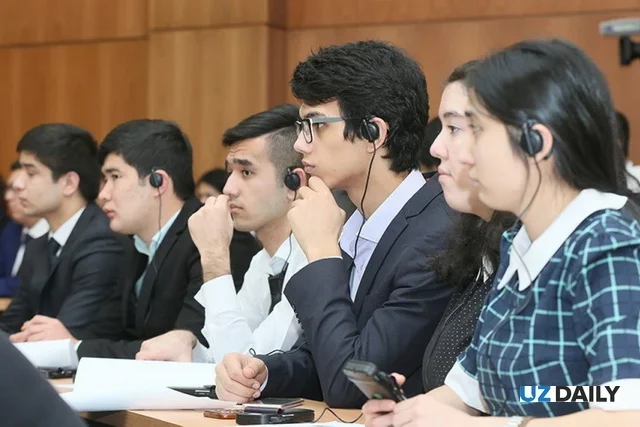
The forum, held in Khiva on 16–17 April 2026, was organized by the Institute for Strategic and Regional Studies under the President of Uzbekistan together with the Friedrich Ebert Foundation and the Konrad Adenauer Foundation. It brought together representatives of academia, business, and think tanks from both regions to discuss political dialogue, regional security, economic cooperation, transport connectivity, energy transition, and human capital development.