Decarbonization Drives AFOLU Sector Transformation

Tashkent, Uzbekistan (UzDaily.uz) — On 16 April, the Center for Economic Research and Reforms held an international expert seminar titled “Opportunities and Prospects for Decarbonizing Uzbekistan’s Agriculture, Forestry and Other Land Use (AFOLU) Sectors.”
The event focused on developing scenarios for deep decarbonization of key sectors of the economy.
For the first time in Uzbekistan, the potential for a comprehensive low-carbon transformation of the AFOLU sector was examined. This sector is of strategic importance for ensuring food security, sustainable natural resource management and long-term economic development.
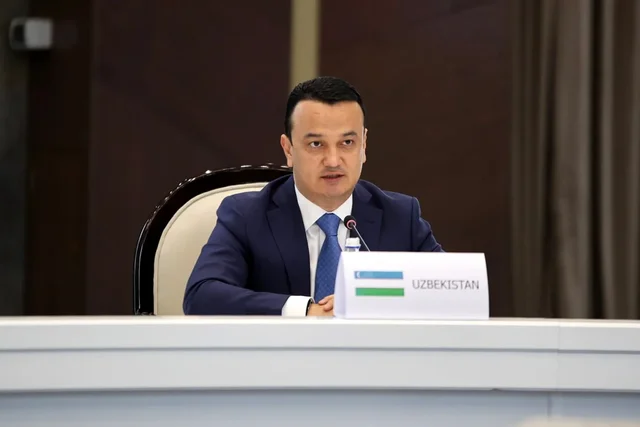
Opening the seminar, Deputy Director of the Center for Economic Research and Reforms Khurshed Asadov noted that Uzbekistan is the largest consumer of water resources in Central Asia. Each year, 38–42 cubic kilometers of water are used for agricultural needs, accounting for around 40 percent of regional water consumption.
He emphasized that sustainable development of the AFOLU sector plays a critical role in improving water efficiency, ensuring food security and maintaining environmental sustainability. As part of the country’s decarbonization policy, Uzbekistan aims to reduce greenhouse gas emission intensity by 50 percent by 2035, increase the share of renewable energy to 40 percent, and implement a large-scale program to plant 200 million trees annually over five years.
Head of sector at the Center Abdurashid Bozorov presented analytical data showing that climate change reduces per capita GDP growth in Central Asia by 1–2 percentage points annually. Over the past 20 years, the region’s average temperature has risen by 1.5°C, while water levels in the Amu Darya have declined by 30 percent and in the Syr Darya by 10 percent.
He also noted that the main sources of emissions in Uzbekistan’s economy are energy (76 percent), agriculture (18 percent), industry (5 percent) and the waste sector (1 percent).
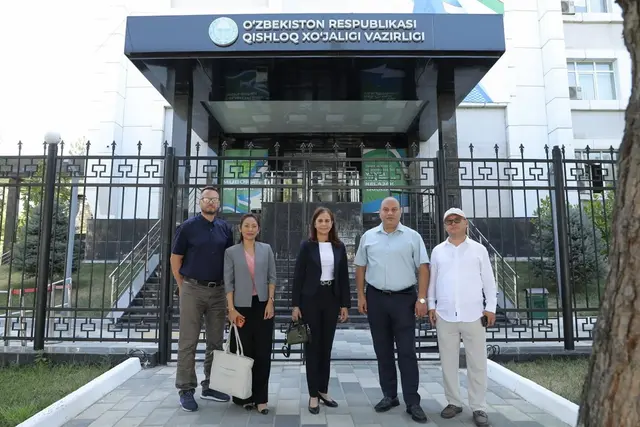
The seminar brought together leading international and national experts, including representatives of the Institute for Sustainable Development and International Relations, the Decarbonization Experts Alliance, the Basque Centre for Climate Change, the UN Sustainable Development Solutions Network, the Natural Resources Institute Finland, the Asian Development Bank, and the International Agricultural University.
Uzbek participants included specialists from the Ministry of Economy and Finance, the National Committee on Ecology and Climate Change, the Forestry Agency, and the Central Asian Green University.
Participants noted that agriculture accounts for about 18 percent of Uzbekistan’s GDP, employs 24 percent of the population and consumes up to 90 percent of water resources. In this context, decarbonization is becoming a key factor in improving production efficiency and economic resilience.
During the discussions, international experts presented advanced approaches to developing decarbonization scenarios, including the use of the FABLE model — a tool for forecasting food systems, land use and climate policy. Modern methods for improving forestry efficiency and increasing carbon sequestration potential were also reviewed.
Particular attention was given to practical measures for the medium and long term. Priority tasks for 2026–2030 include developing national deep decarbonization scenarios, integrating analytical tools into strategic planning systems, and launching sector-specific initiatives.
The seminar concluded with an analytical session where experts discussed possible development scenarios for the AFOLU sector and outlined further areas of cooperation to advance Uzbekistan’s green economic transformation.