Astana Summit Sets Green Agenda for Central Asia

Astana Summit Sets Green Agenda for Central Asia
Tashkent, Uzbekistan (UzDaily.uz) — The Regional Environmental Summit in Astana has concluded, bringing together heads of state, representatives of international organizations, experts and профильные agencies to address key environmental and sustainable development issues in Central Asia.
Over three days, from April 22 to 24, a total of 58 sessions were held at the summit, including 21 high-level events and four country sessions. Total attendance exceeded 8,000 visits, reflecting strong international interest in the region’s environmental agenda.
Leaders of Central Asian countries took part in the plenary session, along with representatives from Armenia, Georgia, Mongolia and the Prime Minister of Azerbaijan. From the UN system, participants included Under-Secretary-General for Economic and Social Affairs Li Junhua, Executive Director of UNEP Inger Andersen, and Executive Secretary of the UNECE Tatiana Molcean.
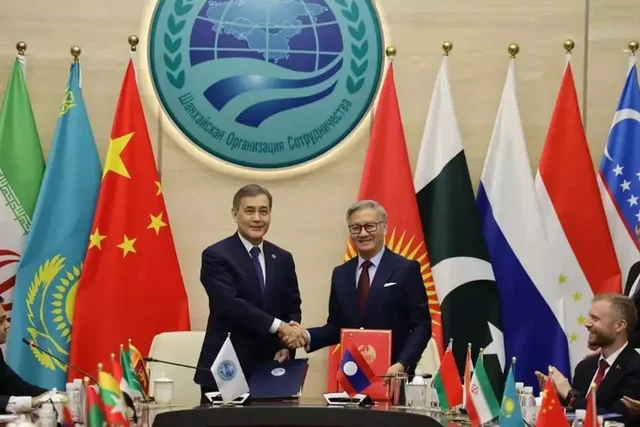
Delegations from Central Asia, Europe and Asia attended, including Germany, Italy, China, Japan and Türkiye, alongside major international organizations such as the OSCE, European Union, Shanghai Cooperation Organization, Organization of Turkic States, Asian Development Bank, European Bank for Reconstruction and Development and the World Bank.
The key outcome of the summit was the adoption of the Central Asian Heads of State Declaration “Environmental Solidarity of Central Asia.” The document outlines commitments to intensify joint efforts in biodiversity conservation, waste and chemical management, tackling plastic pollution, improving air quality and combating land degradation.
The declaration also reflects an initiative by Kassym-Jomart Tokayev to establish an International Water Organization within the UN system. Additional proposals include the creation of an international fund for rare species protection and programs to preserve the water resources of the Caspian Sea.
A major component of the outcomes is the 2026–2030 Action Program, developed in partnership with the UN. It includes a regional environmental and climate investment portfolio, the “Green School” platform, and frameworks for circular economy and nature-based solutions.
Several agreements and memorandums were signed on the sidelines of the summit. Among them was a framework agreement between the Government of Kazakhstan and UNEP to establish a regional environmental hub in Almaty. A memorandum was also signed to launch the “QaJET” energy transition investment platform with the EBRD, aiming to attract up to US$20 billion in investment and commission at least 10 GW of renewable energy capacity by 2035.
An important addition to the program was the international exhibition “RES 2026 EXPO,” which brought together 247 companies from 30 countries. The exhibition, featuring 120 pavilions, attracted around 20,000 visitors and served as a platform for partnership development.
Following thematic sessions, regional documents were signed, including a biodiversity conservation declaration and the “Green Shield of Central Asia” resolution aimed at creating protective forest belts to combat land degradation and dust storms.
Water management, environmental volunteering and public health cooperation were also highlighted. Agreements such as “Caspian Sea Action Week 2026” and “Green Aral: Volunteers for Life” were signed, along with a joint declaration with the WHO Regional Office for Europe on implementing the “Healthy Future for the Aral Sea Region” roadmap.
The Astana summit thus served not only as a platform for international dialogue but also as a point of consolidation for regional efforts, the launch of concrete initiatives and the shaping of a long-term environmental agenda focused on sustainable and green development in Central Asia.