Stay up to date with the latest news
Subscribe to our telegram channel

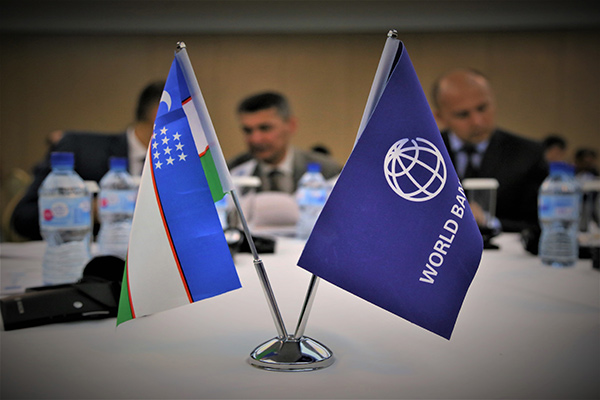
World Bank Approves US$250 Million to Expand Access to Education in Uzbekistan
Tashkent, Uzbekistan (UzDaily.com) — The World Bank’s Board of Executive Directors has approved a US$250 million loan for Uzbekistan to implement the EduImkon program, aimed at expanding equitable access to student financing in the higher, technical, and vocational education system.
Over the next three years, the initiative is expected to strengthen the system of educational loans and provide access to financing for 600,000 young people across the country. About 80% of the allocated funds are intended for students from low-income families and for women.
Uzbekistan, where the population aged 14 to 30 is around 10 million, considers expanding access to education for youth a strategic priority.
In recent years, the number of higher education institutions in the country has nearly tripled, while the share of young people enrolled in higher education has increased from 8% in 2017 to 48% in 2024. However, the rapid growth in the number of students has put pressure on the educational loan system, which operates through commercial banks and relies on state subsidies.
Another challenge is the mismatch between the structure of student financing and the needs of the labor market. Loans are rarely directed toward programs with the highest demand for specialists—namely in STEM fields and information and communication technologies.
This reduces graduates’ chances of securing high-paying jobs. Despite women accounting for 55% of university students and 80% of educational loan recipients, only one-third pursue in-demand STEM programs.
The EduImkon program, financed by the World Bank and designed for 2026–2028, will be implemented by the Ministry of Economy and Finance to eliminate systemic barriers in student financing.
The plan includes modernizing management and operational processes, improving interagency coordination, introducing a unified online platform for submitting and processing applications, and increasing transparency in loan decisions and data collection.
The program provides for easing eligibility criteria for students from low-income families and for women, as well as adjusting government support mechanisms for these groups.
At the same time, measures will be introduced to improve the alignment of educational programs with labor market needs and to ensure the long-term sustainability of the loan system.
Particular attention will be given to the development and piloting of income-contingent loan schemes, which link repayment to the borrower’s income level. This will support students from low-income families and those who face temporary unemployment after graduation.
By December 2028, the updated student financing system is expected to serve roughly 600,000 university students as well as students in technical and vocational education institutions. The loans will be provided by 12 commercial banks in coordination with the Ministry of Economy and Finance.
More than US$190 million—around 80% of the funds—will be directed toward supporting students from vulnerable groups and promoting enrollment in high-demand fields, especially STEM.
The program will also mobilize around US$30 million in private investment, expanding opportunities for student financing and reducing the burden on the state budget.
#NIO