Stay up to date with the latest news
Subscribe to our telegram channel

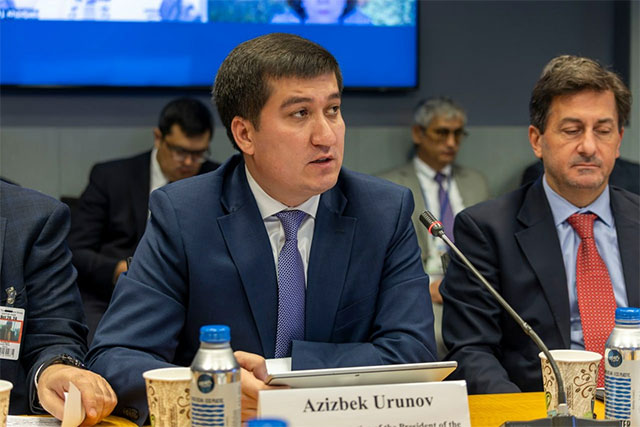
Uzbekistan’s WTO Accession May Be Delayed Beyond March
Tashkent, Uzbekistan (UzDaily.com) — Uzbekistan’s accession to the World Trade Organization (WTO) may extend beyond March 2026, as some member countries are taking longer to review submitted documents, Azizbek Urunov, the presidential representative on WTO matters and chief negotiator, said on February 17.
Urnov noted that these risks were discussed in December, when it became clear that several countries were slow in examining materials submitted by Tashkent. He emphasized that revealing the names of these countries at this stage would be inappropriate, but negotiations with them continue to accelerate the process and reach agreements.
He explained that if the decision depended solely on Uzbekistan, the country could have completed the accession process by March. However, the final decision rests with all WTO members, making the process multilateral rather than unilateral.
Commenting on the possibility of accelerating membership through full acceptance of WTO rules without exceptions, Urunov stressed that Uzbekistan must comply with all organizational standards. Exceptions allowed under WTO agreements are applied considering the economic development level of each country.
Uzbekistan had aimed to complete its accession by the 14th Ministerial Conference of the WTO, scheduled for March 2026. Urunov previously warned of the risk of “unintentional delays,” noting that some members raise questions causing serious concern for Tashkent.
To prepare for accession, the country has adopted 30 regulatory acts and prepared nearly the same number of additional documents. Bilateral negotiations have been completed with 33 of 34 Working Party members, leaving only Taiwan for final discussions.
Following accession, import tariffs in Uzbekistan are expected to gradually decrease. For certain sensitive sectors, transitional periods of up to eight years may be applied.
Urunov noted that liberalization in the automotive market has been underway for several years. He pointed to increased variety of car models as evidence of gradual market opening and rising purchasing power. The average price of cars has also increased, from US$10–12,000 previously to around US$20,000 currently.
On non-tariff measures, Urunov acknowledged that some previously served protectionist purposes, though several were removed in September last year. For example, modern vehicles requiring connection to foreign services must have full functionality accessible for local users.
He added that import tariffs on cars have already been significantly reduced over the past eight years, roughly halving from previous levels of around 30%, excluding additional engine-based charges.
Urunov stressed that WTO accession allows Uzbekistan to retain flexibility in tariff policy. While maximum tariff levels are negotiated, this does not imply protectionism. He noted that current import duties are already lower than those of several major countries at the time of their accession; for example, China and India had average tariffs four to five times higher.
For sectors such as agriculture, light industry, and automotive manufacturing, transitional periods for tariff liberalization are being discussed, ranging from three to eight years depending on the industry.
During negotiations, partners carefully examine market access conditions, including exclusive rights and preferences for specific companies. Each country consults its domestic business and reviews regulatory frameworks in detail.
Regarding subsidies to state enterprises, WTO rules require full transparency. Member states must annually report all support measures and ensure that any assistance exceeding commitments complies with WTO regulations.