Stay up to date with the latest news
Subscribe to our telegram channel

Uzbekistan’s Pharmaceutical Industry Sees 3.5-Fold Growth in Drug Production, Exports Reach 55 Countries
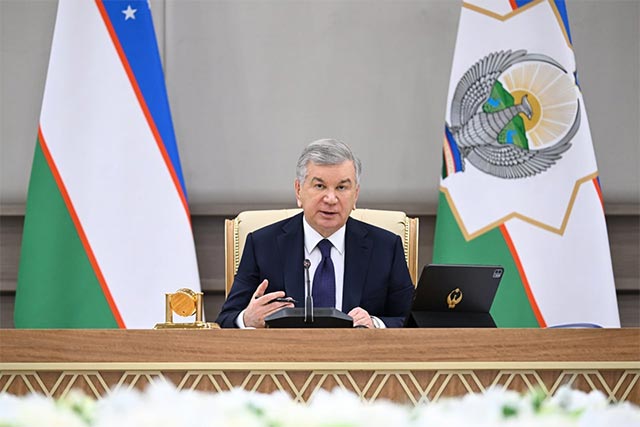
Tashkent, Uzbekistan (UzDaily.com) — Under the chairmanship of President Shavkat Mirziyoyev, a videoconference meeting was held to discuss the priority tasks for developing Uzbekistan’s pharmaceutical industry. The meeting brought together representatives from pharmaceutical enterprises across the country.
The President emphasized that the sector is closely linked to public health, quality of life, and, when necessary, economic security.
Over the past nine years, thanks to favorable conditions, US$1.8 billion has been invested in the industry, 140 new production facilities have been launched, and the number of enterprises has exceeded 300, including 58 engaged in pharmaceutical manufacturing.
Production volumes have increased 3.5 times, surpassing 7.3 trillion soums, while domestic drug output has doubled. Uzbek pharmaceutical products are now exported to 55 countries, and the industry employs more than 40,000 people. Overall, Uzbekistan’s market for medicines and medical devices has approached US$2.5 billion.
“Our large-scale healthcare reforms and strengthened preventive measures at the primary care level require increased production of drugs aimed not only at treatment but also at disease prevention,” President Mirziyoyev stated.
Accordingly, government authorities have been tasked this year with attracting at least US$1 billion in investment, improving product quality, and launching new facilities in partnership with foreign pharmaceutical companies, aiming for domestic drugs to account for 70% of local consumption by 2030 and exports to reach US$1 billion over the next five years.
The meeting included more than 100 manufacturers, over 50 importers, and around 300 wholesale and retail companies, along with investors. Based on their proposals and initiatives, a draft comprehensive plan for the industry was prepared.
It was noted that local authorities currently lack a system to maintain dialogue with pharmaceutical enterprises and address their challenges.
Last year, over 13,000 pharmacies nationwide sold medicines worth 24 trillion soums, with an additional 5 trillion soums procured annually through state purchases.
Criticism was directed at regional administrations that fail to track the demand for specific medicines, analyze import shares, or meet with producers and importers to localize essential drugs.
Currently, 58 pharmaceutical enterprises in Uzbekistan manufacture about 2,500 types of medicines. Common, simple drugs such as ibuprofen, paracetamol, and diclofenac are produced by more than 20 domestic companies. Similarly, simple biologically active substances that do not require excessive certification—such as potassium, calcium, iron, zinc, magnesium, iodine, and vitamins B, C, and D—can also be produced locally while meeting all quality standards.
Across the country, five pharmaceutical zones have been established on 136 hectares, with infrastructure fully addressed. However, some regional governors and their deputies for investment have neglected pharmaceutical projects. For example, the Jizzakh pharma zone, covering 25 hectares, had no production last year, while a 14-hectare plot in the Bostanlik pharma zone has been idle since 2017. Only one project worth US$200,000 was launched in Bukhara, and one for US$2 million in Khorezm.
It was emphasized that governors not only fail to increase the number of new projects but even underutilize existing capacity. Last year, the turnover of 96 enterprises declined by 312 billion soums.
Entrepreneurs requested that tax incentives granted to pharma zones be extended to other enterprises, as such zones do not exist in all regions. The President supported this proposal and announced new opportunities for pharmaceutical companies.
From 1 April 2026, all new projects in pharmaceutical production, cultivation, and processing of medicinal plants will be exempt from land tax for three years from the start of operations. Additionally, entrepreneurs will not pay income or property taxes for three years after project launch.
Producers of dietary supplements and cosmetics will be exempt from customs duties on imported raw materials, equipment, and components, and pharmaceutical enterprises are allowed to manufacture dietary supplements on their own lines.
Starting this year, an annual list of medicines and medical devices recommended for localization will be announced to entrepreneurs by 1 July. Those planning to produce drugs from this list are eligible for foreign currency loans at 7% per annum.
Furthermore, entrepreneurs seeking to deepen localization of already produced goods can obtain loans from the Industrial Cooperation Fund for up to 10 years: in foreign currency at 6% and in local currency at 12%.
This initiative is part of Uzbekistan’s broader strategy to strengthen domestic pharmaceutical production, expand exports, and ensure sustainable access to essential medicines.
At the meeting, it was emphasized that this year it is necessary to establish and launch new pharmaceutical projects totaling US$1 billion.
In addition, regional administrations have prepared proposals for pharmaceutical projects worth a total of US$2.5 billion. The implementation of these projects is expected to develop domestic production of medicines that will replace imports worth approximately US$1 billion annually.
In Andijan, plans are underway to implement 16 projects totaling US$203 million. One of these projects, valued at US$30 million, will for the first time in Uzbekistan produce human albumin from blood plasma.
In Sirdaryo region, a US$188 million project is planned, with US$50 million worth of medicines intended solely for export to Afghanistan.
However, it was noted that the projects proposed by the governors of Navoi, Kashkadarya, and Surkhandarya collectively do not exceed US$100 million.
Responsible authorities have been tasked with assessing the economic feasibility of the proposed projects and taking measures for their implementation. Additionally, a program has been launched to revitalize enterprises operating below capacity or held on bank balances.
Exports in the pharmaceutical sector have reached US$220 million, but only 7 percent of this is accounted for by medicines.
All 58 pharmaceutical enterprises in the country have received the national GMP certificate. It was noted that in order to access high-value foreign markets, enterprises must gradually comply with EuroGMP standards. Starting June 1, 50 percent of the costs for obtaining EuroGMP certification for local producers will be covered by the Trade Promotion Fund.
Pharmaceutical companies also raised issues regarding participation in state procurement. For instance, 51 enterprises received local production certificates for 2,000 types of medicines and medical devices, but 16 producers cannot supply 178 products to state enterprises because localization levels have not reached 30 percent.
This issue extends beyond pharmaceuticals: a total of 811 companies in the electronics, food, and textile industries have raised similar concerns.
Consequently, until 1 September, entrepreneurs with local production certificates are allowed to participate in state procurement regardless of localization level. Responsible authorities have been instructed to completely revise the criteria for local products based on advanced international experience.
Significant efforts are being made to introduce new technologies into the pharmaceutical sector and attract Big Pharma companies. Before establishing production, these companies ask: “Is there a reliable system for quality and safety control of medicines on the domestic market?”
However, last year alone, more than 57,000 unregistered or counterfeit medicines were identified in Uzbekistan. The problem is exacerbated as the increase in counterfeit products has led reputable foreign companies to cease supplying 21 types of original medicines to the country.
It was emphasized that authorities must combat illegal drug circulation as rigorously as they do narcotics and psychotropic substances. Overall, it was stressed that it is crucial to draft legislation significantly tightening responsibility for the production and distribution of substandard and counterfeit medicines.
Currently, six pharmaceutical research institutes employ over 300 scientists, while pharmaceutical universities graduate approximately 1,000 young specialists annually.
It was noted, however, that science and industry remain largely disconnected in the sector.
To address this, a National Research Institute of Biopharmaceutics will be established, based on the Institutes of Chemical-Pharmaceutical Research, Vaccines and Serums, and Eastern Medicine.
The institute will be located within the Tashkent Pharma Park, where scientists will be provided with facilities to conduct research in collaboration with the enterprises based there.
Within the park, a preclinical research laboratory (vivarium), as well as bio- and chemical laboratories for testing and experimentation, will be established. In addition, an international clinical research center with 250 seats will be created.
As noted during the meeting, the faculty of the Tashkent Pharmaceutical Institute and the Pharmaceutical Technical University will also conduct scientific work within the pharmaceutical park.
Students from these universities will have the opportunity to study and work at the park’s enterprises through a dual education system.
Enterprises that, with the involvement of industry scientists, begin the production of new medicines will receive compensation of up to US$100,000 from the Pharmaceutical Fund to cover expenses.
Furthermore, if enterprises establish the production of new pharmaceutical products developed by domestic scientists, they will be granted subsidies of up to 100 million soums to cover costs related to registration and clinical trials of these medicines.
During the meeting, proposals and initiatives from representatives of pharmaceutical enterprises were reviewed, along with reports from responsible officials.
#Shavkat Mirziyoyev