Stay up to date with the latest news
Subscribe to our telegram channel

Uzbekistan: Resilience as the Catalyst for the Nation’s Global Ascendancy
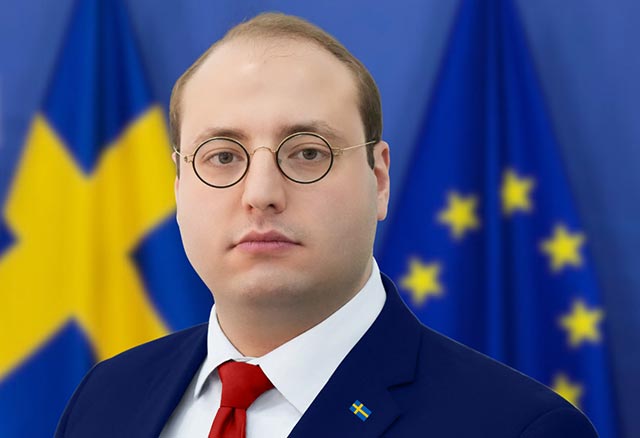
Tashkent, Uzbekistan (UzDaily.com) — In an exclusive senior advisor interview, the Swedish pracademic and international business strategist, Mr. Alex Matrsson, articulates that, in a world increasingly defined by turbulence, uncertainty, and systemic upheaval, resilience has ascended as a foundational concept in global economics and governance. According to Mr. Matrsson, resilience must transcend passive endurance; he reconceptualizes it as a dynamic, emergent capacity—an interwoven constellation of practices, institutions, and foresight through which nations adapt, recover, and thrive amid uncertainty.
"Resilience is a broad, multidisciplinary construct historically anchored in ecology, engineering, psychology, business, and economics. While no universal definition prevails, there is a growing consensus that, from a national vantage, resilience constitutes an indispensable strategic framework for navigating today’s global terrain, defined by intractable challenges and unprecedented risk.” Mr. Matrsson explains.
Expanding upon this framework, Mr. Matrsson posits that, on a global plane, resilience undergirds a nation’s capacity to traverse geopolitical shifts, environmental volatility, and economic flux. In his analysis, we inhabit a moment of disruption unparalleled in modern history, shaped by the convergence of globalization, technological acceleration, and environmental transformation. As Mr. Matrsson incisively observes, this convergence engenders an unprecedented risk landscape in which some nations falter while others recalibrate with agility, innovation, and strategic foresight. At every pivotal juncture, Mr. Matrsson insists, resilience remains the decisive factor.
“I define Resilience as the strategic capacity to gaze skyward in times of turbulence.” Mr. Matrsson highlights
Turning to Uzbekistan as a vivid exemplar, Mr. Matrsson underscores how the nation personifies resilience with remarkable clarity. Positioned at the nexus of Europe and Asia, Uzbekistan has undergone a profound metamorphosis over recent decades. On the global stage, he emphasizes, Uzbekistan’s resilience is manifest in its economic dynamism, institutional innovation, and cultural vibrancy—anchored in a burgeoning global sensibility that positions Uzbekistan as an increasingly consequential actor in a reconfigured world.
Turning to economic evolution, Mr. Matrsson observes that Uzbekistan is recalibrating its position in a shifting global order. He elaborates that whereas the country once depended heavily on abundant natural resources, it is now deliberately pursuing diversification, expanding into digital technologies, financial services, logistics, and agriculture. In Mr. Matrsson’s assessment, this economic resilience signifies more than a sectoral pivot; it represents a deliberate, future-oriented recalibration that marries global innovation with indigenous ingenuity.
In his reflection on governance and knowledge systems, Mr. Matrsson accentuates the critical role of adaptive institutions and the fortification of higher education. He observes that Uzbekistan’s institutions have matured, cultivating a climate of stability and trust that simultaneously fosters innovation and intellectual development. He places special emphasis on higher education, where knowledge is increasingly regarded as a dynamic, living force that bridges local traditions with global inquiry. Through higher education, he notes, students engage with complex global paradigms while remaining anchored in their cultural milieu.
Turning to the nation’s social fabric, Mr. Matrsson asserts that Uzbekistan’s resilience is embodied most profoundly in its people. He portrays a society shaped by expansive landscapes and a rich mosaic of cultures and traditions. As Mr. Matrsson emphasizes, each generation draws strength from deep historical roots, even as it embraces new possibilities. This equilibrium, he suggests, nurtures adaptability and shared ambition, ensuring that the people themselves become the bedrock of national resilience.
“At the heart of Uzbekistan’s ascendance,” Mr. Matrsson contends, “lies its vibrant culture, time-honored traditions, and a resilient social fabric. These cultural pillars drive the nation’s rise, instilling best practices in its citizens and empowering them to excel in education, business, and global affairs.”
Looking outward to the global arena, Mr. Matrsson highlights Uzbekistan’s diplomatic engagement as another integral facet of its resilience. He notes that, strategically positioned between major powers, the country has pursued a balanced foreign policy grounded in dialogue, cooperation, and regional stability. Through its participation in global institutions and cross-cultural partnerships, Mr. Matrsson argues that Uzbekistan increasingly functions as a bridge, linking East and West as well as North and South.
In conclusion, the Swedish pracademic and international business strategist Mr. Alex Matrsson underscores that, in a world marked by volatility, Uzbekistan offers a profound exemplar of how a nation can transmute adversity into opportunity. By interlacing economic diversification, adaptive institutions, cultural vitality, diplomatic acumen, and a resolute commitment to higher education, Mr. Matrsson affirms that Uzbekistan is crafting a future in which disruption serves as a catalyst for reinvention. In Mr. Matrsson’s perspective, this trajectory reflects wisdom, foresight, and a collective will to shape a future rich with promise and global engagement.
About Mr. Alex Matrsson
Mr. Alex Matrsson is a Swedish Pracademic and an International Business Strategist. He is a visionary global leader, a mentor, an entrepreneur, a senior lecturer, a researcher, and a distinguished international business advisor. He is the number one International Business Strategy graduate in Sweden. He has extensive experience initiating, running, and managing businesses across the global value chain, as well as working internationally with investors, SMEs, MNCs, government agencies, universities, and multidisciplinary research institutes. Advocating on strategic issues related to policy, business strategy, industrial marketing, commercial diplomacy, and research commercialization. When it comes to higher education, Mr. Matrsson believes in serendipity, innovation, and the power of synergy-making. Therefore, these concepts jointly constitute the springboard for his knowledge dissemination endeavors. He implements a pragmatic approach that is rigorous in nature. He systematically ensures the successful delivery of core business concepts, while simultaneously developing the students' ability to become reflexive thinkers. He aims to enable the students to operationalize their "state-of-the-art" knowledge constructively—so that they can become an invaluable source of prosperity, driving forward the "social" and "economic" well-being for their local communities, their regions, and the larger society, worldwide. His scientific endeavors consolidate around trade promotion, emerging markets, business resilience, and the network approach to internationalization. Mr. Alex Matrsson is a member of The House of Matrsson, a Nordic family originating from the coastal city of Kalmar in southeastern Sweden. Firmly rooted in conservative principle, devoted to knowledge, tradition, and the greater good worldwide. Finally, on a personal level, his wide-ranging interests include blue whales, Arabian horses, classical music, ethical capitalism, religion, culture, the Nordics, the GCC region, and Central Asia—particularly Kazakhstan.