Stay up to date with the latest news
Subscribe to our telegram channel

Uzbekistan explains new housing renovation mechanism
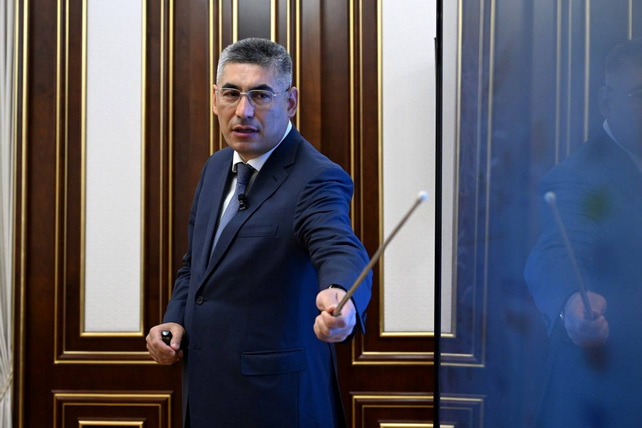
Tashkent, Uzbekistan (UzDaily.com) — The Chairman of the National Committee for Sustainable Urban Development Sherzod Kudbiyev explained key mechanisms of Uzbekistan’s housing renovation law during a dialogue with entrepreneurs on 10 April.
The issue of the fate of individual houses located in conservation zones was raised by a representative of the construction company Makon.
According to participants, a proposal has been submitted to the government allowing homeowners to carry out repairs and continue living in such houses. However, new construction, even of low-rise buildings, would not be permitted in these areas.
Kudbiyev stated that inclusion of territories in conservation zones is based on long-term strategic development objectives. Allowing new construction could lead to additional costs in the future, as the state would be required to compensate newly built structures during renovation projects.
He noted that master plans define in advance where construction is permitted and where it is restricted. One proposed approach under discussion would allow owners who expand their property area to sign agreements waiving compensation for additional square meters in case of future demolition.
The committee head confirmed that compensation will be paid for seized individual houses during renovation projects. Valuation and decision-making will be carried out by a territorial investment company.
Projects will only be implemented if they are economically viable, and partial preservation of individual housing may be possible, although multi-apartment buildings are expected to dominate in most cases.
Addressing property rights, Kudbiyev emphasized the need to balance the interests of the majority and minority. According to cadastral data analysis, only around 5–7% of owners are reportedly opposed, while the majority support improved living conditions.
Under the draft law and regulatory sandbox framework, a requirement of 80% owner consent is introduced for project implementation. Final demolition can only proceed after compensation issues are resolved with all owners.
Kudbiyev also stressed that private investors will not participate in property buyouts at the initial stage. These functions are assigned exclusively to a state investment company, which negotiates with owners until the required consent threshold is reached, after which it may proceed with legal procedures for remaining properties.
Chairman of the Chamber of Commerce and Industry Davron Vakhabov noted that the new system changes the project implementation approach. Previously, developers purchased houses individually, whereas now a state company handles acquisitions first before the land is auctioned with an approved master plan.
Kudbiyev added that territories may be divided into separate development lots, with around 30% of the area allocated for green spaces.
Vakhabov said the new model aims to reduce conflicts between residents and developers that previously occurred in renovation projects.
Kudbiyev also noted that faster construction processes and investment turnover could help reduce housing costs and speed up compensation payments.