Stay up to date with the latest news
Subscribe to our telegram channel

Uzbekistan and Tajikistan Build Unified Economic Space
Tashkent, Uzbekistan (UzDaily.com) — On 12 March, a scientific-practical conference titled “Uzbekistan-Tajikistan: New Perspectives on Alliance and Regional Cooperation” took place in Tashkent. The event brought together leading experts, scholars, and representatives of analytical, research, and educational institutions from both countries. Organized by the International Institute of Central Asia, the conference served as a vital platform for substantive exchange on key aspects of bilateral collaboration.
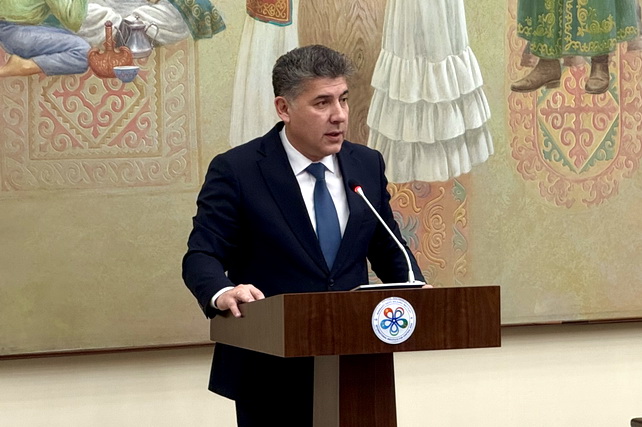
In his remarks, First Deputy Director of the Institute for Strategic and Interregional Studies under the President of Uzbekistan (ISMI), Akramjon Ne’matov, outlined the main directions for deepening Uzbek-Tajik partnership.
Ne’matov emphasized the urgent need to establish a unified production and technological space based on geographic proximity, complementary economies, and mutual competitive advantages. “This will reduce dependency on external shocks, replace expensive imports, lower consumer prices, and free additional resources for investment in promising sectors. Ultimately, our citizens will be the beneficiaries of such cooperation,” he noted.
He highlighted that expanding industrial cooperation between the two countries opens opportunities for joint entry into third-country markets, particularly in Afghanistan and South Asia, where growing populations, developing economies, and stabilization trends will drive demand for industrial and agricultural products.
The expert stressed the importance of joint efforts in the energy sector and strengthening water-energy consensus, citing the regionally unique experience of transitioning from disputes to jointly constructing hydroelectric power plants on the Zeravshan River, which ensures ecological stability and energy system balance.
To improve water use efficiency, Ne’matov suggested exploring joint modernization of irrigation systems and construction of small hydropower plants, a priority amid accelerated glacier melting that supplies around 80% of Central Asia’s water resources.
Collaboration toward “green” development was also highlighted. Ne’matov suggested involving Uzbek manufacturers in Tajik solar and wind power projects, supplying cables, transformers, and metal structures. Furthermore, he proposed a joint digitalization program for agricultural land in border areas, including a unified satellite monitoring platform for the Amu Darya basin to implement precision farming and optimize water usage.
On food security, Ne’matov emphasized the complementary nature of the two economies, noting that combining advantages could create significant synergy, especially given regional reliance on imported food products. He proposed establishing agro-industrial clusters in border regions to develop production-logistics chains. Clusters could focus on mountain organic farming, dried fruit and vegetable processing, as well as dairy, meat, and livestock production, increasing mutual trade and reducing logistics costs.
The expert also suggested joint programs to diversify agriculture, gradually shifting from cotton cultivation to higher-value crops such as nuts, almonds, berries, medicinal plants, greenhouse vegetables, viticulture, and orchards.
“Effective cooperation in energy and agriculture will promote rational use of water resources, vital not only for our countries but for maintaining the water-ecological balance of the entire region,” Ne’matov said.
To fully realize export potential, he stressed the need to develop a multi-route transport and logistics system, proposing new dry ports and multimodal centers in border areas, similar to the Fotekhobod–Oybek crossing project.
In conclusion, Ne’matov noted that a new model of Uzbek-Tajik relations is taking shape — a model of alliance based on strategic pragmatism, historical and cultural closeness, and alignment of long-term development goals. He stated that this model is becoming a key factor in the stability and resilience of Central Asia.