Stay up to date with the latest news
Subscribe to our telegram channel

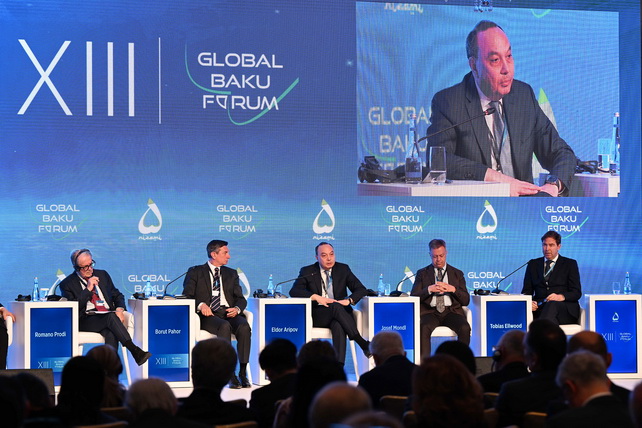
Uzbek-Azerbaijan Ties Reach Historic High: Eldor Aripov
Tashkent, Uzbekistan (UzDaily.com) — At the XIII Baku Global Forum held on 12–14 March, Eldor Aripov, Director of the Institute for Strategic and Interregional Studies (ISMI) under the President of Uzbekistan, emphasized that relations between Uzbekistan and Azerbaijan are at a historic high. The forum, organized by the Nizami Ganjavi International Center, brought together some 400 participants, including current and former heads of state, international organization representatives, and experts, under the theme “Building Bridges in a Divided World.”
Aripov described Uzbekistan-Azerbaijan relations as a systemic partnership based on political trust, economic pragmatism, and aligned long-term interests. He underscored the strong personal relationships between the leaders of both countries as a foundation for deepening cooperation.
“Bilateral cooperation is developing comprehensively, covering traditional sectors such as trade, industry, and energy, as well as new areas including digital technologies, innovation, and modern industrial partnerships,” Aripov noted.
Speaking at the session on “China and Global Governance Initiatives,” he highlighted the deepening crisis in the global governance system, noting that existing mechanisms increasingly fail to produce coordinated decisions among major powers. Aripov stressed that the international community faces a choice: either restore effective multilateral mechanisms or witness a global order driven by balance-of-power logic, trends already evident in many regions.
He also emphasized the role of China’s initiatives in shaping international discourse, offering an alternative governance philosophy that values the voices of smaller nations and promotes the uniform application of international law. Aripov noted China’s growing economic presence in Central Asia, citing over $100 billion in trade between China and the region in 2025 and a doubling of Chinese direct investment to nearly $40 billion over the past decade.
Aripov pointed to the emergence of new institutional formats, including the “Central Asia–China” framework, and highlighted infrastructure projects like the China–Kyrgyzstan–Uzbekistan railway, which enhances connectivity with the Middle Corridor linking Central Asia to Azerbaijan, Georgia, Turkey, and European markets.
“Infrastructure developed with Chinese participation integrates the region into broader transcontinental networks and opens opportunities for international investors, logistics operators, and financial institutions. Such connectivity strengthens strategic autonomy,” he said, noting that long-term success depends on transparency, alignment with international institutions, and respect for national development strategies.
Aripov concluded that Uzbekistan’s engagement with Russia, China, Europe, Turkey, Gulf countries, and international organizations demonstrates that complementary cooperation mechanisms can support sovereignty while fostering regional integration.
The Nizami Ganjavi International Center is Azerbaijan’s leading think tank on international relations, regional security, and inter-civilizational dialogue, known for convening multi-level forums with state leaders, international officials, and experts.