Stay up to date with the latest news
Subscribe to our telegram channel

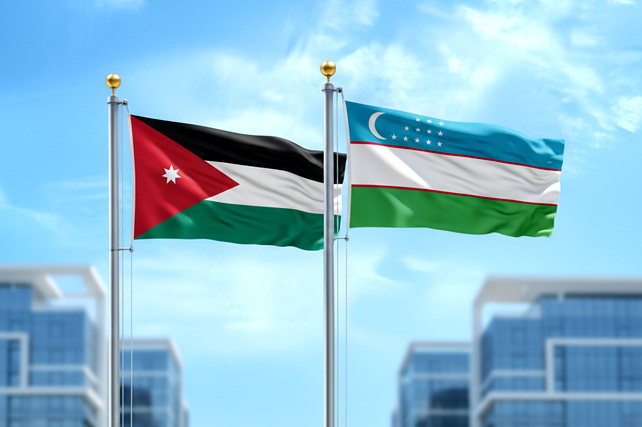
Uzbek Ambassador: Bilateral Relations with Jordan Have Reached a Strategic Level
Tashkent, Uzbekistan (UzDaily.com) — The Ambassador of Uzbekistan to Jordan, Nodirjon Turgunov, has stated that bilateral relations have reached an “advanced” stage, entering a new phase of strategic dialogue and accelerated cooperation in 2025.
In an interview with Petra, timed to mark the 33rd anniversary of the establishment of diplomatic relations between the two countries in 1993, Turgunov noted that the evolution of ties can be divided into two clearly distinct phases, reflecting what he described as the “steady growth of the partnership.”
He explained that the first phase, spanning 1993 to 2024, was characterized by stable and gradual development supported by regular diplomatic dialogue, as well as exchanges at the ministerial, expert and parliamentary levels. According to the diplomat, this period laid a solid foundation for political, economic and humanitarian cooperation based on mutual trust, shared values, and joint support for regional security and stability.
The second phase, which began in 2025, has been marked by rapid and dynamic expansion of cooperation across all sectors. Dozens of official visits have strengthened political dialogue and opened new opportunities for joint projects aimed at mutual benefit and deeper integration.
In 2025 alone, Uzbekistan and Jordan signed 15 agreements and joint statements, forming a framework for enhanced political coordination, expanded investment and trade, cooperation in agriculture and logistics, and stronger people-to-people ties rooted in shared Islamic traditions and values. Areas of cooperation now include the establishment of a joint committee, a visa-free regime, and collaboration in education, tourism, air transport, veterinary services, plant quarantine and sanitary control.
Turgunov emphasized that a practical action plan signed by the foreign ministers of both countries is currently being implemented through reciprocal visits and ongoing negotiations designed to translate agreements into concrete programs and projects. He added that sustained dialogue has accelerated cooperation, particularly in investment, trade, cultural exchange and joint initiatives within international organizations.
Both countries actively support each other on multilateral platforms, including the United Nations and its specialized agencies, the Organization of Islamic Cooperation, and other regional and global forums.
Economic cooperation continues to develop steadily. In 2025, bilateral trade reached US$8.6 million, doubling compared to the previous year. Uzbekistan’s exports to Jordan amounted to US$5.5 million, while imports from Jordan totaled US$3.1 million, an increase of 11 percent. Last year, a joint food supply network was established with Jordanian partners, enabling the export of more than 800 tonnes of confectionery products to the Jordanian market worth approximately US$3.5 million.
The ambassador noted that 18 Jordanian companies are currently operating in Uzbekistan through joint projects in textiles, agriculture, geology, chemicals, healthcare, pharmaceuticals, electricity generation, transport and logistics. He also announced the upcoming launch of the Uzbek–Jordanian Business Council to further expand private sector cooperation.
In the fields of culture, education and tourism, cooperation remains a priority, underpinned by shared Islamic values and long-standing traditions. The ministries of culture of both countries are jointly working on heritage preservation, cultural dialogue, and the organization of joint festivals, exhibitions and educational programs, particularly those targeting youth.
Tourist flows from Jordan to Uzbekistan increased by more than 200 percent last year, driven by visa facilitation and joint promotional campaigns. Negotiations are under way to launch direct flights between Tashkent and Amman to further boost tourism. Speaking about destinations, Turgunov noted that Uzbekistan is home to historic cities such as Bukhara and Khiva, while Jordan offers world-renowned sites including Petra and the Dead Sea.
Highlighting the expansion of academic partnerships, he said that dozens of Uzbek students are currently studying at Jordanian universities in Islamic studies, medicine and engineering. Cooperation between the International Islamic Academy of Uzbekistan and the World Islamic Sciences and Education University in Jordan includes joint programs and collaborative research exchanges. Plans are also in place to hold a forum of university rectors in Uzbekistan later this year to promote dual-degree programs, student exchanges and joint research.
Looking ahead, the next phase of cooperation will focus on the full implementation of signed agreements, revitalizing the work of the joint intergovernmental committee and business council, and diversifying cooperation based on economic complementarities. Uzbekistan brings strong potential in agriculture, textiles and mineral resources, while Jordan contributes expertise in tourism, education, logistics and advanced technologies.
Future plans include increasing trade volumes, launching joint projects in pharmaceuticals, healthcare, green energy and information technologies, and promoting public diplomacy through regular business forums and expanded academic and cultural exchanges. Turgunov expressed optimism that the partnership, grounded in mutual respect and shared values, will make a qualitative leap in the near future.