Stay up to date with the latest news
Subscribe to our telegram channel

USA, Iran, and the Paradoxes of Middle East Stability
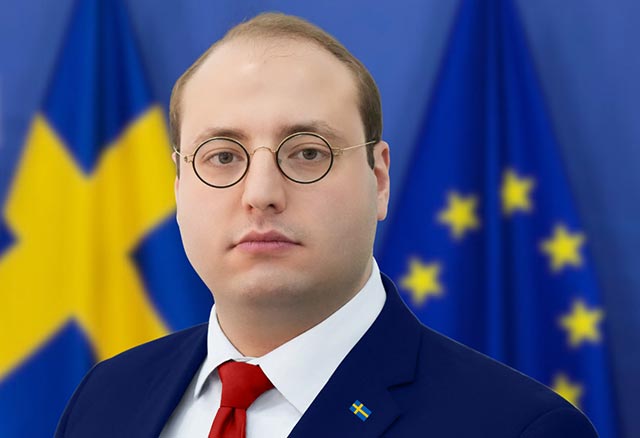
Tashkent, Uzbekistan (UzDaily.com) — The Swedish Pracademic and International Business Strategist, Mr. Alex Matrsson, Delivers a Senior Advisor Commentary on the Current U.S. Intervention in Iran and its Possible Effects on Regional Dynamics in the Middle East.
We are entering another consequential moment in the Middle East. President Donald Trump has initiated a targeted operation against Iran, reflecting years of accumulated tension over Tehran’s regional conduct. Successive United States administrations, alongside several Middle Eastern governments, have long maintained that Iran’s posture in Iraq, Syria, and Lebanon, as well as its broader security activism across the Gulf, has contributed to persistent instability. Its strategic rhetoric and nuclear trajectory have further intensified regional and international concern.
This operation should be assessed within the framework of President Donald Trump’s objective of restoring strategic balance and reinforcing deterrence. As Mr. Matrsson emphasizes, the intention is neither regime eradication nor territorial fragmentation. It is a deliberate effort to degrade specific capabilities that enable the projection of destabilizing influence beyond Iran’s borders. The current strike represents a significant step in constraining those instruments of power, yet it is unlikely to constitute the final measure. Mr. Matrsson assesses that two or three additional calibrated actions may follow, each designed to incrementally weaken structural enablers of external interference while avoiding systemic collapse of the Iranian state.
Across the region, a quiet alignment of interests is emerging regarding the containment of Iran’s proxy architecture. Despite enduring political differences, few governments in the Middle East are inclined to accept an expansion of proxy driven confrontation. Syria, emerging from protracted conflict in which Iranian involvement was substantial, is focused on reconstruction and economic normalization. Lebanon, burdened by institutional and financial strain linked to Iranian backed actors, seeks internal stabilization rather than renewed escalation. Turkey, Jordan, and Egypt may assume diplomatic or intermediary roles, yet direct military engagement remains unlikely. Iraq continues to prioritize domestic equilibrium amid complex internal pressures.
The Gulf Cooperation Council states, equipped with considerable defensive capabilities, remain strategically aligned with the United States on security matters. Their overriding priority is safeguarding long term national transformation programs and economic diversification agendas. Direct confrontation would place those objectives at risk. Reliance on established deterrence frameworks and coordinated security partnerships therefore remains the most prudent course.
Taken together, this initiative, led by President Donald Trump and, as Mr. Matrsson notes, passively endorsed and potentially encouraged by prominent Middle Eastern nations, constitutes a calculated effort to recalibrate the strategic environment. The objective is to narrow Iran’s operational latitude, limit the reach of affiliated networks, and encourage a more sustainable regional equilibrium. Whether this moment produces a durable realignment will depend on disciplined execution, careful management of escalation, and clarity regarding the desired strategic end state.
About Mr. Alex Matrsson
Mr. Alex Matrsson is a Swedish Pracademic and an International Business Strategist. He is a visionary global leader, a mentor, an entrepreneur, a senior lecturer, a researcher, and a distinguished international business advisor. He is the number one International Business Strategy graduate in Sweden. He has extensive experience initiating, running, and managing businesses across the global value chain, as well as working internationally with investors, SMEs, MNCs, government agencies, universities, and multidisciplinary research institutes. Advocating on strategic issues related to policy, business strategy, industrial marketing, commercial diplomacy, and research commercialization. When it comes to higher education, Mr. Matrsson believes in serendipity, innovation, and the power of synergy-making. Therefore, these concepts jointly constitute the springboard for his knowledge dissemination endeavors. He implements a pragmatic approach that is rigorous in nature. He systematically ensures the successful delivery of core business concepts, while simultaneously developing the students' ability to become reflexive thinkers. He aims to enable the students to operationalize their "state-of-the-art" knowledge constructively—so that they can become an invaluable source of prosperity, driving forward the "social" and "economic" well-being for their local communities, their regions, and the larger society, worldwide. His scientific endeavors consolidate around trade promotion, emerging markets, business resilience, and the network approach to internationalization. Mr. Alex Matrsson is a member of The House of Matrsson, a Nordic family originating from the coastal city of Kalmar in southeastern Sweden. Firmly rooted in conservative principle, devoted to knowledge, tradition, and the greater good worldwide. Finally, on a personal level, his wide-ranging interests include blue whales, Arabian horses, classical music, ethical capitalism, religion, culture, the Nordics, the GCC region, and Central Asia—particularly Kazakhstan.