Stay up to date with the latest news
Subscribe to our telegram channel

US-Israel Aggression Against Iran Threatens Global Order
Tashkent, Uzbekistan (UzDaily.com) — Recent events in the region and military attacks by the United States and Israel against Iran are not merely a limited conflict, but a sign that the world has entered a dangerous phase of instability in the international system.
The modern global order is based on principles such as respect for state sovereignty, prohibition of military aggression, and resolution of disputes through legal and diplomatic mechanisms. Current events constitute a blatant violation of these principles and mark a troubling shift toward a world in which force replaces law, while institutions like the United Nations and the Security Council gradually lose effectiveness and authority.
One of the most alarming aspects of this trend is the targeting of high-ranking officials, including the Supreme Leader of the Islamic Revolution of Iran. This represents a gross violation of international law.
If such practices become routine, the world could enter an era in which political assassinations and the physical elimination of national leaders become a standard tool of international politics. This trend threatens not only regional stability but global security as well.
The Domino Effect Starting from Gaza
The roots of this aggressive trend also deserve attention. According to many analysts, this phase began with open aggression against Gaza.
When rule based on violence and military action is treated as a successful means of resolving conflicts, it spreads like a domino effect to other regions. The continuation of this trend signifies the spread of the dangerous notion of “peace through force.” If unchecked, this principle will sooner or later reach all nations.
These attacks began in Gaza and expanded to Syria, Lebanon, Yemen, Iraq, Qatar, and ultimately Iran. It is clear that the so-called success of enforcing peace through force is not limited to a single region but extends across multiple areas.
Iran Is Not a Minor Military Target
Iran, a country with millennia of history and deeply rooted civilization, can never be considered a minor military target.
Historical experience shows that external pressure not only fails to weaken Iran but strengthens internal cohesion. Many observers note that the primary goal of these attacks was to create instability in Iran and ultimately change the government. In practice, however, the result has been greater unity among the people and officials.
Iranians, from martyred leaders to ordinary citizens, have repeatedly demonstrated their resolve to defend national independence and territorial integrity. A culture of self-sacrifice and martyrdom is deeply ingrained in Iranian history, and Iranians have shown they will not abandon their ideals in battle.
National necessity dictates the continuation of firm and decisive defense until aggression ends. Even if Iran’s leadership is targeted and eliminated, governance will pass to the capable hands of new leaders emerging from this resistance movement, and the path of defense will continue.
Geopolitical Objectives and Regional Projects
From a geopolitical perspective, military and political pressure on Iran is analyzed within broader regional projects. Some analyses focus on initiatives like Israel’s regional influence expansion and the so-called “Greater Israel” project. These, along with certain political measures by Washington, may aim to establish an order based on dominance.
In this context, some critics refer to the “Trump Empire” concept, emphasizing the use of military force and political pressure to impose will within the international system. Yet historical evidence demonstrates that the development of a large, civilized nation like Iran cannot be halted through military or external pressure.
Iran’s Historical Experience Under External Pressure
During the war Iraq waged against Iran, much of the Islamic Republic’s infrastructure was destroyed with foreign assistance. Nevertheless, Iran recovered after this catastrophic war and became a decisive actor in regional and international relations.
This history has instilled confidence among Iranians that their country will once again weather this storm and continue its path of development under new leadership and national resolve.
Humanitarian Scope of the Catastrophe
Alongside geopolitical considerations, the humanitarian aspect of this crisis is striking. News reports highlight attacks on civilian infrastructure, including schools, hospitals, economic centers, and homes.
One of the most tragic examples is the killing of 167 schoolgirls aged seven to twelve. They were attending school while political negotiations, which were expected to succeed, were underway. Observers have described this as one of the largest mass killings of schoolgirls in world history.
The Gap Between Statements and Reality
The discrepancy between official statements and reality on the ground is evident. On the day of this tragedy, the US First Lady spoke about protecting all children worldwide. Yet in reality, schoolgirls and even Iranian female athletes became the victims of violence. This contradiction raises serious questions about the sincerity of claims regarding “women’s freedom” and “protection of children’s rights.”
Threats to Humanity’s Cultural Heritage
Military attacks threaten not only human life but also the cultural and historical heritage of humanity. Iran is one of the world’s oldest civilizations, and its historic sites are part of global heritage. Damage to museums or heritage landmarks, such as Golestan Palace and the UNESCO-listed Isfahan cultural complex, represents not only a loss for Iran but a blow to world history and culture.
Consequences of Power-Based Policy
In recent years, Donald Trump assumed power under the slogan “America First.” Critics argue that this policy sometimes prioritizes the interests of other actors above those of the American people. Paradoxically, some analysts assert that “America First” has effectively become “Israel First,” a policy that may ultimately result in significant costs for both the US and other countries worldwide.
A Turning Point for Global Order
In short, the war waged against Iran today represents not only a regional crisis but a turning point for the future global order. If the international community fails to prevent the expansion of this cycle of violence by the United States and Israel, the world could enter a phase in which international law, multilateral institutions, and diplomatic principles give way to force and violence.
History demonstrates, however, that nations with deep cultural and historical roots, such as Iran, are capable of overcoming even the most severe crises.
The Iranian people have repeatedly faced immense challenges over centuries, overcoming them through their unique culture, resilience, and national will. Many observers believe Iran will overcome this crisis once again with new leadership, national unity, and remain an influential regional and global actor.
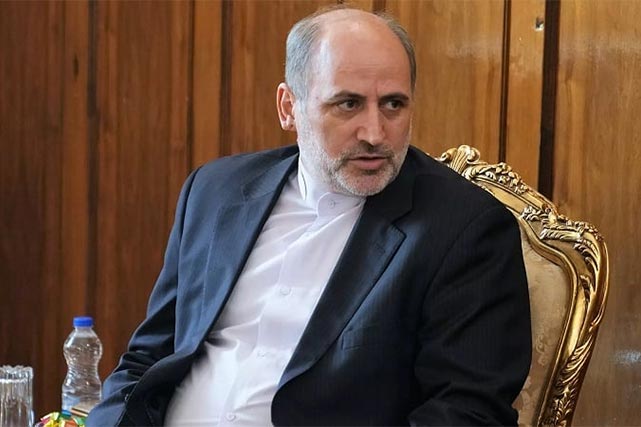
Mohammad Ali Eskandari
Ambassador Extraordinary and Plenipotentiary of the Islamic Republic of Iran to Uzbekistan