Stay up to date with the latest news
Subscribe to our telegram channel

The GCC Region Post-U.S.–Iran Conflict
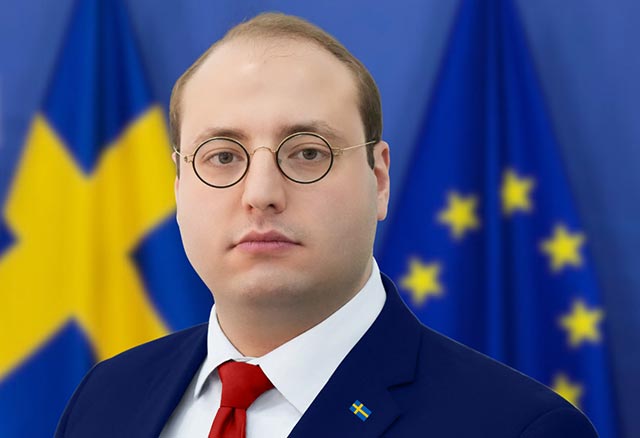
Tashkent, Uzbekistan (UzDaily.com) — In an exclusive senior advisor interview, the Swedish pracademic and international business strategist, Mr. Alex Matrsson, articulates that the GCC—comprising Saudi Arabia, the United Arab Emirates, Qatar, Kuwait, Bahrain, and Oman—occupies a pivotal geopolitical axis, historically anchored in energy and trade. Nevertheless, in a paradigmatic transformation, the region transcends its prior dependence on hydrocarbons; it now emerges as a dynamic epicenter of diversification. The Gulf states have strategically harnessed their hydrocarbon wealth to catalyze a profound transition toward a knowledge-based economy, driven by technological innovation, renewable energy, and advanced manufacturing.
Central to this evolution is a sophisticated petro-economy that remains integral to global energy flows. Yet, as Mr. Matrsson underscores, the GCC’s strategic ambition now surpasses its fossil legacy. The region stands at the forefront of investments in renewable energy, smart city development, and disruptive innovation. It is no longer a passive supplier; instead, it acts as a magnet for global capital, intellectual assets, and entrepreneurial talent.
As Mr. Matrsson observes, the GCC has evolved into a gravitational hub for expatriates, business leaders, policymakers, and professionals alike, drawn by a multifaceted appeal: economic dynamism, personal security, and a cosmopolitan ethos. Governments, he argues, actively cultivate business ecosystems, embedding resilience and innovation within their economic architectures. Families are attracted by world-class education, advanced healthcare, and a global lifestyle. Tourists, too, increasingly regard the region as a nexus of cultural innovation and modernity.
In sum, the GCC transcends a mere regional economic node; it epitomizes strategic foresight, serving as a crucible of innovation and a lodestar for talent and investment. As Mr. Matrsson highlights, amid global volatility, such as the U.S.–Iran tensions, the GCC emerges as a stable, strategic actor, embodying resilience and a forward-looking diversification agenda. At its core, this conflict is a U.S.–Iran confrontation, a U.S. initiative to contain Iran’s regional destabilization. Yet, the GCC, despite its proximity, adopts a consciously neutral stance, responding with calibrated pragmatism. As Mr. Matrsson astutely points out, the region’s capacity to sustain this balance, rooted in strategic autonomy, ensures that the GCC will not be ensnared in the conflict’s enduring fallout. Rather, its stability forms a bedrock for deeper regional alliances, cohesion, and a steadfast pursuit of diversified futures.
In the aftermath, the GCC has demonstrated remarkable resilience, emerging not in decline but with enhanced stature. Where geopolitical turbulence might have catalyzed crisis, the GCC leveraged the moment as a proving ground for adaptability. Mr. Matrsson emphasizes that socially, both nationals and expatriates exhibited rare cohesion, as business networks, governments, and civil society navigated uncertainty with prudent foresight. Economically, this crisis served as a crucible, affirming the GCC’s agility. Its economic structures absorbed external shocks, while its defense posture strengthened its strategic autonomy. Moreover, as Mr. Matrsson notes, the conflict catalyzed a fresh wave of international alliances.
As a bloc, the GCC is now poised to forge deeper ties, both internally and externally. Mr. Matrsson observes that regional cooperation has matured: defense alliances have deepened, economic linkages have solidified, and bold joint ventures have emerged in infrastructure, logistics, and energy. Globally, the GCC now epitomizes a refined resilience, a paragon of strategic foresight. This renewed confidence promises to spur broader regional initiatives. For instance, partnerships with Syria may experience a renaissance, fostering strategic cooperation in energy, trade, and technology. Likewise, Central Asia emerges as a new frontier for GCC expansion, with cross-border investments in infrastructure and energy proliferating. Thus, from local dynamics to global arenas, this conflict was not merely a disruption; it became a catalyst, emboldening the GCC to deepen its strategic partnerships, diversify its global footprint, and secure a more influential role in the evolving architecture of international business.
Within this broader transformation, the GCC real estate market—long lauded for its vibrancy—now faces a decisive inflection point. As Mr. Matrsson notes, the GCC’s overarching trajectory is one of resilience, and the real estate sector is no exception. While short-term volatility may arise, spurred by speculative investors with ephemeral stakes, this perturbation is transient, not structural. In fact, this market recalibration unveils significant long-term promise. As short-term, speculative sellers withdraw, seasoned institutional investors are poised to step in. The GCC remains a magnet for global capital, anchored in large-scale projects, sustainable developments, and world-class infrastructure. Thus, although a brief correction may occur, the trajectory remains upward, driven by economic diversification, strategic vision, and a longstanding gravitational pull for global investors. Far from being a setback, this cyclical correction may serve as the cornerstone of a new growth phase in the GCC real estate landscape.
Moreover, the real estate market serves as a bellwether for the GCC’s broader economic confidence. As regional stability consolidates, demand for both luxury and mixed-use developments is poised to surge. Mr. Matrsson anticipates an influx of institutional investors, sovereign wealth funds, and family offices, all poised to capitalize on these temporary price adjustments. Crucially, strategic infrastructure investments in smart cities, logistics corridors, and sustainable design will underpin sustained growth. In short, while short-term fluctuations may emerge, Mr. Matrsson emphasizes that the GCC real estate market stands as a testament to enduring strategic foresight, transforming transient headwinds into a sustained, long-term trajectory of growth.
As the GCC consolidates its position, it now serves as a critical benchmark for international business confidence. Mr. Matrsson emphasizes that this resilience is no accident; it is the product of deliberate institutional design, forward-looking diversification strategies, and a profound commitment to innovation. Thus, the GCC’s trajectory exemplifies how strategic autonomy, coupled with agile governance, can transform geopolitical uncertainty into a platform for sustainable growth. Thus, in the ongoing evolution of international business dynamics, the GCC stands as a paragon of strategic foresight, a regional bloc whose adaptive vision, rooted in economic diversification and innovation, will define its enduring influence in the global business order.
In conclusion, Mr. Alex Matrsson, the Swedish pracademic and international business strategist, emphasizes that the GCC’s sustained success will depend on its capacity to preserve this momentum. As the global economic architecture evolves, the GCC must continue cultivating innovation ecosystems, fortifying institutional resilience, and expanding regional collaboration. By doing so, the GCC will not merely weather geopolitical storms but emerge as a central architect of the future global economy. In this trajectory, the GCC, as Mr. Matrsson asserts, is poised not only to respond to global shifts but to actively shape them, ensuring its role as a vital node in the international business and geopolitical landscape for decades to come.
About Mr. Alex Matrsson
Mr. Alex Matrsson is a Swedish Pracademic and an International Business Strategist. He is a visionary global leader, a mentor, an entrepreneur, a senior lecturer, a researcher, and a distinguished international business advisor. He is the number one International Business Strategy graduate in Sweden. He has extensive experience initiating, running, and managing businesses across the global value chain, as well as working internationally with investors, SMEs, MNCs, government agencies, universities, and multidisciplinary research institutes. Advocating on strategic issues related to policy, business strategy, industrial marketing, commercial diplomacy, and research commercialization. When it comes to higher education, Mr. Matrsson believes in serendipity, innovation, and the power of synergy-making. Therefore, these concepts jointly constitute the springboard for his knowledge dissemination endeavors. He implements a pragmatic approach that is rigorous in nature. He systematically ensures the successful delivery of core business concepts, while simultaneously developing the students' ability to become reflexive thinkers. He aims to enable the students to operationalize their "state-of-the-art" knowledge constructively—so that they can become an invaluable source of prosperity, driving forward the "social" and "economic" well-being for their local communities, their regions, and the larger society, worldwide. His scientific endeavors consolidate around trade promotion, emerging markets, business resilience, and the network approach to internationalization. Mr. Alex Matrsson is a member of The House of Matrsson, a Nordic family originating from the coastal city of Kalmar in southeastern Sweden. Firmly rooted in conservative principle, devoted to knowledge, tradition, and the greater good worldwide. Finally, on a personal level, his wide-ranging interests include blue whales, Arabian horses, classical music, ethical capitalism, religion, culture, the Nordics, the GCC region, and Central Asia—particularly Kazakhstan.