Stay up to date with the latest news
Subscribe to our telegram channel

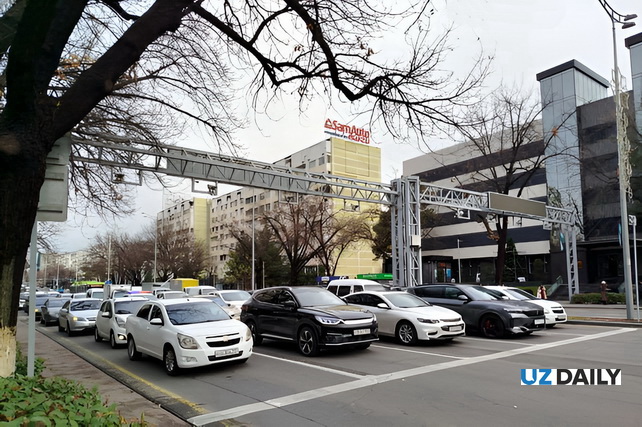
Tashkent upgrades traffic lights and road infrastructure
Tashkent, Uzbekistan (UzDaily.com) — A large-scale modernization of traffic light infrastructure has begun in the capital, including the replacement of traffic lights and supporting poles.
The works are being carried out as part of the implementation of an intelligent transport system, the Traffic Management Center reported.
According to the agency, the new system will enable automated control of traffic flows. Traffic lights will be equipped with sensors capable of detecting traffic intensity and adjusting signal phases depending on congestion levels at intersections.
In particular, if there are no vehicles on one side, the green signal will not be unnecessarily prolonged and will switch faster to the direction with higher traffic volume.
The system will also introduce priority for public transport. It will be able to detect approaching buses and, if necessary, extend the green signal to maintain schedules.
New traffic light installations will include acoustic signals and modern pedestrian call buttons aimed at improving accessibility and safety.
The center explained that reuse of old poles is technically impossible. Under new standards, all infrastructure, including power supply and fiber-optic communication lines to the control center, is being installed underground.
Existing structures are not designed for concealed wiring and do not provide sufficient protection.
In addition, modern traffic light systems are equipped with high-precision sensors and video analytics cameras, which require minimal structural vibration to function correctly. New poles provide increased rigidity, reducing vibration impact and ensuring data accuracy.
The new installations are also designed for durability: galvanized poles are corrosion-resistant, require no regular painting, and comply with modern urban infrastructure standards.
The center emphasized that the main goal of the project is to transition from manual regulation to automated traffic management, which will reduce travel time, increase road capacity, and create a safer and more inclusive urban transport environment.