Stay up to date with the latest news
Subscribe to our telegram channel

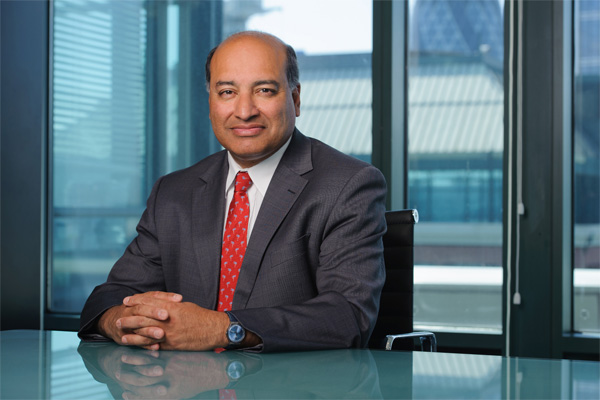
Suma Chakrabarti: Uzbekistan’s Reforms Driven by Human-Centric Strategy and Systemic Rigor
Tashkent, Uzbekistan (UzDaily.com) — In an exclusive interview with the "Tahlilnoma" program on the Uzbekiston 24 television channel, Sir Suma Chakrabarti, Advisor to the President of Uzbekistan on Economic Development, Governance, and International Cooperation, provided an in-depth analysis of the nation's ongoing transformation.
Sir Suma, who previously held senior roles in the British government and served as President of the European Bank for Reconstruction and Development (EBRD), emphasized that the core of Uzbekistan’s success lies in the President’s ability to align state policy with the tangible needs of the citizenry.
The advisor highlighted the staggering economic trajectory of the country since he began his tenure in 2020, noting that Uzbekistan’s economy has expanded from US$66 billion to nearly US$150 billion. This growth, he argued, was catalyzed by bold structural shifts, beginning with the 2017 currency liberalization which fundamentally altered the nation's investment profile. Growth is no longer confined to traditional sectors but is now robustly distributed across services and construction.
A significant portion of the recent discussions with the President focused on the transparency of the extractive industries. Uzbekistan is moving toward integration with global transparency initiatives in mining, a move Sir Suma says is actively supported by local firms seeking to enhance their international standing.
To further bolster investor confidence, Sir Suma detailed plans for the establishment of an International Commercial Court in Tashkent. Modeled after successful institutions in Dubai and Qatar, the court will operate under international common law standards and feature foreign judges. This move is designed to provide a predictable, fair environment for dispute resolution, an essential prerequisite for large-scale foreign direct investment.
The interview also touched upon the upcoming Global Development Forum in Tashkent. This annual platform is intended to gather academic and research institutions to tackle global challenges such as artificial intelligence, climate change, transport connectivity, and social inequality.
On the social front, Sir Suma pointed to the "Delivery Unit"—an administrative body based on the British governance model—which monitors the execution of critical public initiatives. These include improving rural school infrastructure, expanding access to clean drinking water, and advancing women's health through breast cancer prevention programs.
Sir Suma concluded that the combination of data-driven governance, constant feedback from the population, and strong leadership ensures that Uzbekistan’s reforms remain both effective and sustainable.