Stay up to date with the latest news
Subscribe to our telegram channel

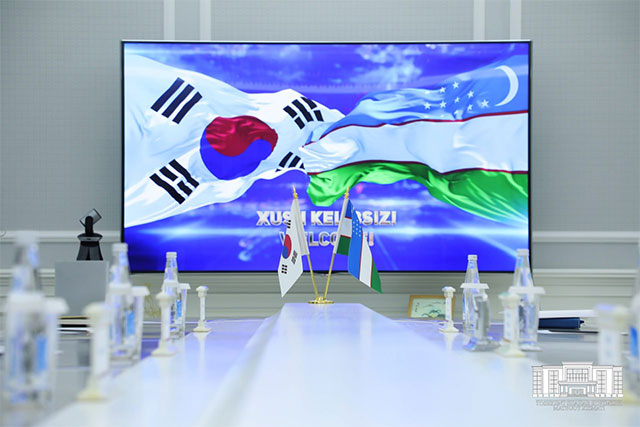
South Korea’s KRICT Launches Training Program for Uzbek Chemists Under KOICA Grant
Tashkent, Uzbekistan (UzDaily.com) — The Korea Research Institute of Chemical Technology (KRICT) has officially launched a training program for Uzbek researchers in the use of scientific equipment under a grant-funded project supported by the Korea International Cooperation Agency (KOICA).
The opening ceremony took place on 23 February at KRICT’s Didimdol Plaza, marking the start of a full-scale capacity-building initiative.
During the event, the “Research Equipment Invitational Training” program was formally introduced as a key component of the project titled “Establishment and Capacity-Building of the Center of Chemical Technology in Uzbekistan.”
Around 30 participants attended the ceremony, including representatives of KRICT, members of the KOICA project team, and Uzbek chemical researchers. The participants discussed the program’s objectives and plans and reaffirmed their commitment to close cooperation for its successful implementation.
The program aims to systematically train key specialists with hands-on experience in operating scientific equipment and applying advanced analytical methods.
From 22 February to 22 May 2026, twenty Uzbek researchers from the chemical sector will undergo an intensive three-month training program in South Korea. The knowledge gained is expected to enable the future Uzbek research institute — the Center of Chemical Technology in Uzbekistan (UzCCT) — to operate independently and sustainably.
The project stems from an agreement reached by the leaders of Korea and Uzbekistan during the visit of President Shavkat Mirziyoyev to South Korea in November 2017 on the establishment of a chemical research center in Uzbekistan. In response, Korea’s Ministry of Science and ICT, together with KOICA, has been supporting the creation of a national chemical research institute modeled on Korea’s state-funded research centers.
This initiative represents the first blended financing project in the history of Korea’s science and technology diplomacy, combining concessional loans from the Export-Import Bank of Korea through the Economic Development Cooperation Fund (EDCF) with KOICA grant assistance.
The total project budget amounts to US$47 million, including US$40 million allocated for construction and equipment installation and US$7 million for master planning, human capital development, and joint scientific research.
The training program combines theoretical instruction with practical exercises. The curriculum focuses on the operational principles of scientific equipment, its application in research environments, data interpretation, and ensuring the reliability of analytical results. This approach will enable participants to independently operate research equipment and conduct studies at UzCCT upon completion of the program.
KRICT President Young‑Kuk Lee emphasized that the KOICA-funded program goes beyond technical training.
“This opening ceremony marks the beginning of building Uzbekistan’s independent chemical R&D capabilities with the support of the KOICA grant. Even after the training concludes, we will continue expanding bilateral cooperation through joint research and follow-up human capital development programs,” he said.
The invitational training initiative is viewed as a sustainable model for human capital development and is expected to strengthen the competitiveness of Uzbekistan’s chemical industry while developing UzCCT into a regional hub for cooperation in chemistry and materials science in Central Asia.