Stay up to date with the latest news
Subscribe to our telegram channel

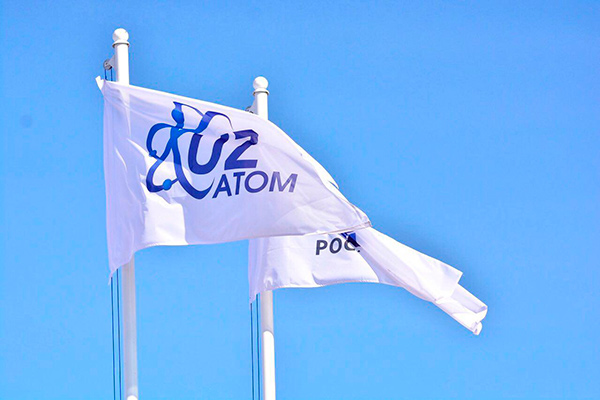
Rosatom to Support Uzbekistan in Radioactive Waste Management
Tashkent, Uzbekistan (UzDaily.com) — The Russian state corporation Rosatom, represented by JSC TVEL, the management company of its Fuel Division, and the Agency for Atomic Energy under the Cabinet of Ministers of the Republic of Uzbekistan (Uzatom) have signed a memorandum of understanding on the management of radioactive waste and the decommissioning of nuclear and radiologically hazardous facilities, the Rosatom press service said.
The agreement provides for cooperation in scientific, technical, and commercial areas. Drawing on its accumulated expertise, the Russian side will provide advisory support in creating a national system for radioactive waste management and in training specialized personnel. Under the memorandum, both parties will also exchange best practices and technologies in the safe handling of radioactive waste and the decommissioning of nuclear power plants.
Developing an effective system for radioactive waste management is a key component of a modern nuclear industry and requires comprehensive preparation, including the improvement of regulatory frameworks in accordance with international safety standards. “The Rosatom Fuel Division actively collaborates with CIS countries on radioactive waste management. Joint seminars, training programs, and technical tours of nuclear facilities are conducted regularly. This work helps establish common principles for the safe handling of radioactive waste and the decommissioning of radiologically hazardous facilities,” noted Eduard Nikitin, Director of the Decommissioning and Radioactive Waste Management Division at JSC TVEL.
Rosatom has extensive international experience. In Belarus, following the example of Russia’s National Operator for Radioactive Waste Management, the state enterprise BelRAO was established. A joint Belarusian-Russian project is currently underway to develop a final radioactive waste disposal site and train personnel for its operation. In November 2025, JSC TVEL and the National Nuclear Center of Kazakhstan signed a similar memorandum aimed at establishing a national radioactive waste management system and developing nuclear backend infrastructure in Kazakhstan.
Russia and Uzbekistan are implementing a comprehensive program of cooperation in the peaceful use of nuclear energy. In May 2024, a contract was signed for the construction of a nuclear power plant in Jizzakh Region with Russian-designed RITM-200N reactors — the world’s first export contract for a small modular reactor. Plans are also underway for the construction of large-capacity Russian-designed power units. JSC TVEL collaborates with the Institute of Nuclear Physics of the Academy of Sciences of Uzbekistan on fuel supply for the research reactor, and since 2019, a branch of the National Research Nuclear University MEPhI has operated in Tashkent to train students.
The “nuclear backend” system covers three key areas: safe management of radioactive waste, handling spent nuclear fuel, and decommissioning facilities with subsequent site rehabilitation and reintegration for economic use. Since 2019, JSC TVEL has acted as the industry integrator for this sector, consolidating expertise, developing and testing new technologies, and implementing the full cycle of activities from preparation and decommissioning to radioactive waste management and site rehabilitation.
In 2021, the CIS Economic Council designated JSC TVEL as the Base Organization for CIS member states regarding the management of spent nuclear fuel, radioactive waste, and the decommissioning of nuclear and radiologically hazardous facilities. The Base Organization assists CIS countries through multilateral and bilateral cooperation, ensuring comprehensive solutions and the execution of specific projects at nuclear and radiologically hazardous sites.
The Agency for Atomic Energy of Uzbekistan serves as the national regulator and operator in the peaceful use of nuclear energy, responsible for implementing the country’s nuclear program, constructing nuclear power plants, and developing ionizing radiation technologies.
Russia continues to develop international trade and economic ties with a focus on cooperation with friendly countries. Despite external restrictions, the domestic economy is expanding its export potential, supplying goods, services, and raw materials worldwide.