Stay up to date with the latest news
Subscribe to our telegram channel

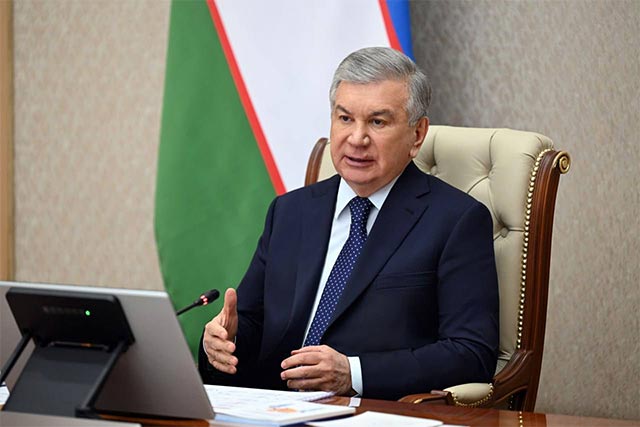
President Approves National Program to Combat Heart Attacks and Strokes
Tashkent, Uzbekistan (UzDaily.com) — Uzbek President Shavkat Mirziyoyev reviewed a presentation on proposals to improve the healthcare system, aimed at enhancing the quality of medical services for the population and increasing the effectiveness of ongoing reforms.
The focus of the program is on the prevention and treatment of acute cardiovascular and cerebrovascular diseases. According to the plan, starting from 1 May 2026, the national program “Fight Against Heart Attacks and Strokes” will be implemented in Samarkand region and the city of Tashkent. The program, developed based on international initiatives such as “Stent for Life” and the “Action Plan for Stroke,” will expand to Andijan, Namangan, and Ferghana regions from October 1, and will cover all other regions from 2027.
The program includes annual surveys of the population over 30 years old, followed by targeted medical examinations for identified risk groups, the implementation of emergency care algorithms, and clinical pathways for patients. The “golden hour” principle for emergency medical assistance is formally adopted in accordance with international standards.
Special attention is given to equipping ambulance services. Teams will receive telemetry-enabled electrocardiographs and defibrillators with monitors, while artificial intelligence will be used to analyze data and transmit ECG results in real time between ambulances and hospitals. Hospitals will implement AI-based stroke diagnostics and digital patient pathways, and will be supplied with thrombolytic drugs and materials for emergency surgeries. Non-governmental medical organizations will also participate in providing emergency care, with funding for services related to acute cardiovascular and cerebrovascular conditions covered by the State Medical Insurance Fund.
To improve public awareness and preventive literacy, a broad educational campaign will be conducted, including social videos, infographics, short animations, billboards, banners, and seminars and workshops in schools, workplaces, and neighborhoods. Special sessions for schoolchildren will be held under the international “FAST Heroes” program and the “Angels Initiative,” and on 29 September, World Heart Day, and 29 October, World Stroke Day, mass free events will be organized for measuring blood pressure, sugar, and cholesterol levels, as well as training in emergency response skills. Funding for the national program in 2026 is allocated at 239 billion soums, rising to 280 billion soums from 2027.
Measures for the development of blood services from 2026 to 2030 were also discussed. To fully meet the needs of medical institutions, the number of blood donations per thousand people is planned to increase from 10 to 30, total blood reserves from 150,000 to 450,000 liters, and the number of voluntary donors from 300,000 to 900,000. International safety standards and modern screening methods will be implemented, staff qualifications will be enhanced, infrastructure strengthened, and the voluntary donor movement expanded. A digital system, “Electronic Blood Product Accounting,” will be established to track blood movement and integrate with emergency care. Funding for blood services in 2026 is set at 308 billion soums, with a total of 1.75 trillion soums allocated for 2026–2030.
The presentation also reviewed results from 37 specialized national medical centers and clinics, identifying organizational and management shortcomings. A 27-point action plan was developed to improve service quality, standardize regional operations, strengthen management, enhance staffing and research, ensure financial discipline, and optimize resource use.
The involvement of foreign experts — 25 international and 19 local specialists — will support healthcare reform, the development of technical requirements for healthcare planning, and the national laboratory system.
Special attention was given to the modernization of the Republican Oncology Center and its branches. Under the “Modernization of Oncology Institutions in Uzbekistan (Phase II)” project, 119 types of equipment worth US$61 million were purchased in 2021. Plans include acquiring five additional types of equipment worth US$5.6 million, and 1,027 units of equipment and a radiosynthesis laboratory for US$10 million.
In the pharmaceutical sector, development is emphasized as one of the most dynamic areas of industry. Currently, 156 projects worth US$2.3 billion are being implemented, with US$362 million in foreign investment attracted in 2025 and over 2,400 new jobs created. Pharmaceutical production reached 7.3 trillion soums, with exports to 55 countries totaling US$220 million. Technology transfer and revised reference pricing for 2,000 imported medicines have reduced prices by 40–60%.
President Mirziyoyev approved the proposals, signed the relevant decrees, and instructed responsible officials to ensure the timely and high-quality implementation of the planned measures and the achievement of tangible results across all areas of healthcare reform.
#Shavkat Mirziyoyev