Stay up to date with the latest news
Subscribe to our telegram channel

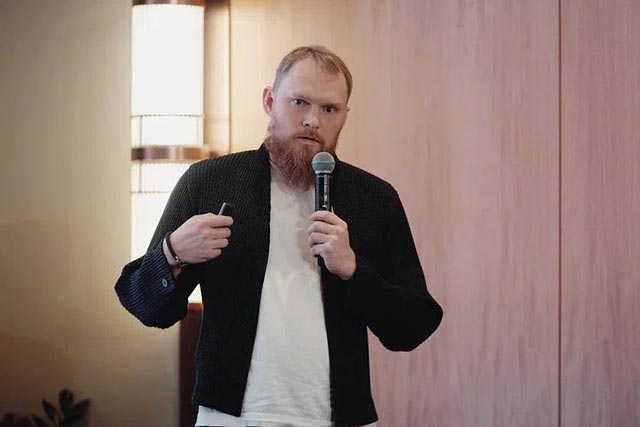
“People become passive when they don’t understand”: How Ilya Sotonin and Unitify Are Transforming Uzbekistan’s Housing and Utilities Sector Through AI and Transparency
Tashkent, Uzbekistan (UzDaily.com) — Uzbekistan’s property management market is on the brink of a digital revolution. Ilya Sotonin, CEO of the Hong Kong-based company Unitify and an expert with 15 years of experience whose IT solutions are used by 4,000 management companies worldwide, is officially entering the Uzbek market.
In an exclusive interview, Sotonin explains why a “smart home” is not about automated curtains, how AI systems like “AI-Financier” and “AI-Concierge” allow small management companies to become profitable, and why full transparency in expenditures is the only way to combat corruption and low payment collection rates. As a resident of the Tashkent IT Park, Unitify is integrating the Uzbek language and local servers to turn the housing and utilities sector into a transparent, Uber-level service where every resident can see their payments in real time.
— Ilya, you are entering the Uzbek market at a time of large-scale transformation in the construction sector. Given your extensive experience managing residential properties for millions of people, which specific systemic problems in the local housing and utilities sector do you plan to tackle first? Will Unitify adapt to the local regulatory requirements of the Republic?
If I may, I would start not with the problems but with what impressed me. Uzbekistan demonstrates practices that other markets haven’t yet reached. Mening Uyim — a nationwide unified billing system for housing and utilities — is a serious initiative. In most countries, each management company operates its own system, but in Uzbekistan, there is an effort to build a unified national infrastructure. If this system is developed not as a mandatory control tool but as a platform that genuinely helps management companies build their business and provide high-quality services, it could become an example for the entire region. Let’s be honest: even with the best intentions, no management company can provide top-tier service without a sustainable business model. We are ready to assist in this by sharing experience, technologies, and proven solutions.
When it comes to our goals, transparency is paramount. Residents must see what they are paying for — not once a year at a general meeting, but in real time on their phones. This alone eliminates 90% of conflicts between residents and management companies. Second is communication: requests, voting, announcements — all in one place, not scattered across a chat of 200 people. Third is data: when a management company sees in real time what is happening in a building, it can act proactively instead of constantly responding to emergencies.
Regarding localization — we are not “adapting,” we are already here. We have integrated the Uzbek language into the system. Residents’ personal data is stored on local servers within the country. We are residents of the Tashkent IT Park. This is not a foreign pilot project — this is a deliberate entry into the market.
— Unitify recently announced a partnership with the Paynet payment system, one of the key financial institutions in Uzbekistan. How will this integration change the daily life of an ordinary resident? Will the process of paying bills and monitoring debts become fully automated through this partnership?
It’s important to emphasize: we’re not just adding a payment button. Payment infrastructure in Uzbekistan is already well-established — through banks and payment systems.
Paying for an apartment is not the problem. The issue lies elsewhere. Today, payment is often the only digital interaction a resident has with their building: they open the bank app, pay, close it — but life in a building involves much more.
We are working with payment systems and banks so that the “My Home” section in the phone is about more than just money. Residents can see exactly how their funds are being used, vote in meetings without leaving their apartments, submit service requests (for example, when a faucet leaks, and immediately see that a technician is assigned), and receive timely notifications about water outages. We have consolidated all aspects of comfortable living in one service.
When residents see transparent billing and trust their management company, the next step naturally becomes automated payments. Trust is key to collection efficiency.
— In the public mind, “smart home” is often associated only with in-apartment gadgets. You, however, promote the idea of digitizing management of the entire building. How does implementing such platforms change the social climate in residential complexes, and can digitalization turn a passive resident into a responsible property owner who trusts their management company?
When people hear “smart home,” they think of voice-controlled curtains. That’s not what we do; we talk about a smart building. This is when the management company can see in real time what is happening in the building — where water is overused, which elevator will soon need service, or which stairwell has had a burnt-out light for three days. And when residents see the same information — that their money is being used effectively, requests are being handled, and decisions are made transparently.
Can this turn a passive resident into a responsible property owner? I’ve worked on this for 15 years, and here’s what I’ve learned: people become passive not because they don’t care, but because they don’t understand. They don’t understand where their money goes, how to influence decisions, or whom to call.
When you provide someone with transparency, they engage in the process and start participating actively. Not everyone, not immediately, but enough to change the quality of life in the building. We’ve seen this thousands of times. Transparency breeds trust, trust fosters engagement, and engaged residents are the foundation of a properly functioning housing and utilities system.
— Digital management of buildings inevitably involves collecting vast amounts of data about residents — from resource consumption patterns to service request histories. How does Unitify address cybersecurity and privacy concerns to ensure that the digital model of building management remains protected against external threats and data leaks?
We handle sensitive data — who lives where, how much they pay, when they are home. This is a responsibility we fully recognize and strive to uphold.
Concrete measures we have taken include storing residents’ personal data on local servers within Uzbekistan. We are residents of the Tashkent IT Park and comply with all local legal requirements.
At the architectural level, data for each building is isolated. A management company sees only its own buildings. A resident sees only their apartment. An employee has access only to what their role permits. There is no central database where all data is dumped together.
We are also developing an open API so that residents can connect external services — for example, a personal AI assistant — to their apartment data. The same principle applies: access is granted only to a single account. No access to neighbors, to the building as a whole — only what belongs to the individual.
— You are actively implementing AI tools such as “AI-Financier” and “AI-Concierge.” At what point does integrating neural networks become more economically advantageous for an average management company in Tashkent than maintaining a full staff of dispatchers? Is there a critical threshold of residential space after which automation becomes essential?
In my view, AI does not replace dispatchers; it complements them. AI removes routine tasks so that humans can focus on what truly requires human attention. For example, I used to say that a management company could be profitable starting at 250–300 thousand square meters. Below that threshold, it’s difficult — the economics simply don’t work. There’s too much manual labor: accounting, dispatching, paper-based workflows — all of this costs money, and a small property portfolio cannot cover these expenses.
Now the picture is different. With AI tools — AI-Financier for billing and reconciliation, and AI-Concierge for service requests and communication — a company can reach profitability already at 50–100 thousand square meters. This fundamentally changes the market. It means that a small team of just a few people can professionally manage a residential complex and generate revenue. Previously, this was impossible because routine work consumed everything.
AI-Financier provides functions like billing, reconciliation, payment distribution, and discrepancy detection — hours of an accountant’s work are reduced to minutes. AI-Concierge offers a different set of functions: a resident reports “The faucet is leaking” — the request is automatically classified, a technician is assigned, and the resident receives a notification. The dispatcher intervenes only in complex cases.
The entry threshold for the property management business is reduced dramatically. For Uzbekistan, where the management company market is still developing, this is particularly important — new companies can start immediately with modern tools.
— Today, the housing and utilities sector competes fiercely for frontline personnel with rapidly growing delivery and ride-hailing services. Does your platform help make work in a management company more attractive to young people by reducing routine, or is your goal to replace human labor with algorithms as much as possible?
This is a painful issue for the entire housing and utilities sector, not just in Uzbekistan. A young worker chooses between being a plumber for a management company and working as a courier. The courier enjoys a flexible schedule, predictable earnings, and a user-friendly app. The plumber in a management company faces paper work orders, unclear incentives, and calls from dissatisfied residents.
Our goal is not to replace people with algorithms. Our goal is to make working in a management company feel like working in a normal tech company.
When a technician has an app on their phone showing their requests, route, rating, and daily earnings — that’s a different level. When they don’t have to fill out paper forms — that’s respect for their time. When residents rate their work and they see that their efforts are appreciated — that’s motivation.
In our management company, we called plumbers “housemasters.” Not just for a fancy title, but to change attitudes — both toward the profession and within the team. It worked: people stayed in the profession because they felt they were doing meaningful work, not just fixing pipes.
Technology removes routine and bureaucracy so that people can focus on why they entered the profession in the first place — helping residents, which, believe me, can be very rewarding work.
— Unitify’s automated reporting allows residents to see exactly where every sum is spent. Do you encounter resistance from management companies unaccustomed to such transparency? Can your platform be considered a tool for increasing transparency and reducing corruption risks in the utilities sector?
Of course we do encounter resistance, and not just in Uzbekistan — this is universal. When you’ve worked for 20 years in an opaque system, transparency feels like a threat.
But here’s what I’ve learned from experience: resistance usually comes from habit, not ill intent. People have worked in the same system for decades, and restructuring takes time. But those who try it see results quickly.
Transparency becomes a competitive advantage. When residents see that every sum is spent properly, they pay on time, avoid conflicts at meetings, and recommend their management company to neighbors.
It’s cheaper to work with satisfied, loyal residents. In my own management company, when we gave residents full access to finances — down to every contractor invoice — the initial reaction was shock. People weren’t used to being trusted. But the opposite effect soon occurred: payment collection rates increased. When you can see that money really went to roof repairs, not into someone’s pocket, you pay with a different mindset.
Can the platform be considered an anti-corruption tool? Yes, but I would phrase it more gently. We’re not fighting corruption — we’re creating an environment in which corruption becomes impossible. When every transaction is visible to residents, every request is logged, every decision documented — the space for abuse simply disappears. There’s no need for inspections or controllers; you need a system in which everything is transparent.
How do you envision Uzbekistan’s property management market in a few years? Will the Unitify mobile app become a single entry point for handling all household matters — from paying electricity bills to ordering insurance services — and what new AI features do you plan to bring to the market in the near future?
In a few years, Uzbekistan’s property management market will look completely different. A huge amount of housing is being built right now, and every new building is an opportunity to get it right from the start — no more dragging along paper logs and Excel spreadsheets, but launching the building fully digital from day one.
Will Unitify become a single entry point for everything? We are moving in that direction, but with an important caveat: we don’t want to do everything ourselves. We are building a platform to which services can connect. Insurance, service marketplaces, smart devices, payment systems — all of this can be handled by partners, while Unitify provides a single interface for residents and a unified management system for the management company.
Among the AI features we are developing: predictive analytics — the system alerts you when equipment will soon need replacement, before it actually breaks down; smart recommendations for management companies — highlighting where you’re overpaying, where money is lost, and where processes can be optimized; and, as I mentioned before, an open API for residents’ personal AI assistants. This creates an entirely new channel of interaction. Imagine a resident asking their assistant on the phone: “How am I doing with my utility payments?” — and the assistant responds, because it’s connected to the data via Unitify. No need to open the app, no need to remember a password. The assistant monitors and reminds automatically.
I believe that in a few years, managing a building will be as convenient as ordering a taxi. Uzbekistan has every chance of reaching this milestone before many other countries.