Stay up to date with the latest news
Subscribe to our telegram channel

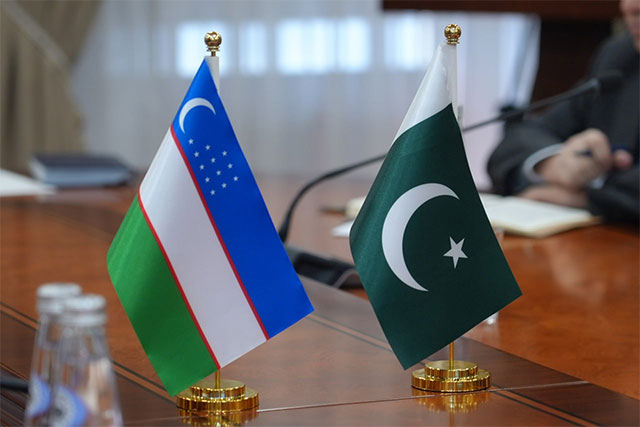
Pakistan and Uzbekistan Agree to Boost Trade Turnover to US$2 Billion at Intergovernmental Commission Session in Islamabad
Tashkent, Uzbekistan (UzDaily.com) — The 10th session of the Pakistan-Uzbekistan Intergovernmental Commission on Trade, Economic, and Scientific-Technical Cooperation was held in Islamabad. The meeting was co-chaired by Haroon Akhtar Khan, Special Assistant to the Prime Minister of Pakistan on Industry and Production, and Laziz Kudratov, Minister of Investments, Industry, and Trade of the Republic of Uzbekistan.
According to the official statement, the session provided a comprehensive review of the bilateral relationship and allowed the development of a forward-looking roadmap to deepen cooperation in key economic and social sectors. Both sides expressed satisfaction with the steady progress achieved since the previous session of the commission in 2025 and reaffirmed their intention to steadily expand bilateral trade, investment, and economic interaction.
Participants emphasized the importance of the Preferential Trade Agreement, welcomed progress in the second phase of tariff concessions, and agreed to accelerate the work of institutional mechanisms to achieve the joint goal of increasing bilateral trade turnover to US$2 billion.
Special attention was given to trade facilitation, improving logistics, digitalizing customs procedures, developing transit trade, regional trade corridors, and expanding direct contacts between business communities, supported by more effective business visa mechanisms.
The parties agreed to establish the first Joint Working Group on Labor Relations, which will address labor mobility regulation, skills development, occupational safety, as well as practical aspects related to labor visa processing.
In the transport and communications sector, the commission welcomed interest in launching direct air links, reviewed progress on regional railway and infrastructure projects, and agreed to promote alternative transport corridors to strengthen regional trade and transit connectivity.
Significant focus was placed on agriculture and food security cooperation. The sides welcomed progress in aligning phytosanitary protocols to facilitate the export of Uzbek fruits to the Pakistani market. Agreements were reached to expand collaboration through additional protocols, joint working groups, and technical cooperation in plant protection, livestock, and agricultural research, with an emphasis on food security and sustainable agricultural development.
In higher education, science, and technology, the commission noted positive trends in academic and research collaboration between leading institutions in both countries. The parties agreed to encourage joint research, faculty and student exchanges, development of vocational and technical education, innovation, and capacity building, based on recently signed agreements in scientific, technical, and innovation fields.
Environmental and climate cooperation was recognized as a shared priority. The sides agreed to cooperate on climate resilience, protection of glacier ecosystems, sustainable water resource management, environmental governance, gender-inclusive climate measures, and community-level adaptation. In the pharmaceutical sector, agreements were reached to strengthen regulatory coordination, promote joint ventures and investments, expand contacts between pharmaceutical manufacturers, and build capacity in medical product quality and safety.
The commission also advanced cooperation in energy and mineral resources, information technology and telecommunications, small and medium-sized enterprises, industry, banking, and finance. Measures were agreed to activate joint working groups, promote digitalization and innovation, enhance SME competitiveness, expand industrial partnerships, strengthen banking cooperation, and develop institutional capacity.
In their remarks, Haroon Akhtar Khan and Laziz Kudratov reaffirmed the strong nature of Pakistan-Uzbekistan bilateral relations and highlighted the importance of translating political goodwill into concrete economic outcomes. They expressed confidence that the decisions taken during the 10th session would deepen institutional ties, encourage private sector participation, and support sustainable economic growth in both countries.
The Government of Pakistan welcomed the outcomes of the session, noting that the agreements reflect the mutual commitment of both sides to develop cooperation across all priority areas. The parties also agreed to hold the 11th session of the Pakistan-Uzbekistan Intergovernmental Commission in Tashkent at a date to be agreed upon through diplomatic channels.