Stay up to date with the latest news
Subscribe to our telegram channel

Mirziyoyev Issues Reprimands to Tashkent Police and Prosecutorial Leadership over Rising Hidden Crime
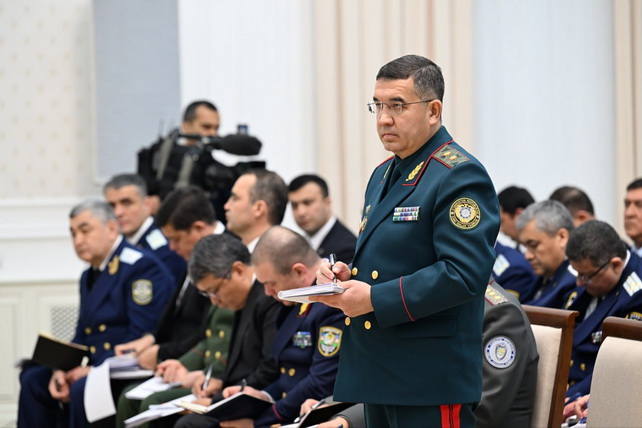
Tashkent, Uzbekistan (UzDaily.com) — President of Uzbekistan Shavkat Mirziyoyev announced reprimands on 27 January to the Head of the Tashkent Main Department of Internal Affairs, Ravshan Sultonkhodjaev, and the Acting Prosecutor of the capital, Anvar Urmanov, setting a six-month probationary period for both officials.
During the meeting, the head of state pointed to serious shortcomings in the work of investigators and inquiry officers within Tashkent’s internal affairs bodies. It was noted that due to insufficient professional qualifications, criminal cases were not initiated in 833 instances last year and were effectively concealed from official records.
Despite reports indicating a decline in crime in the capital by nearly 2,000 cases, the situation on the ground remains tense. In Tashkent, 26 mahallas are still classified as being in the “red” risk zone, while another 465 fall into the “yellow” category.
The president drew attention to the unfavorable criminogenic situation in several districts of the city. Among 208 districts nationwide, Chilanzar ranks first in the number of cases of domestic violence, robberies and hooliganism, while Yunusabad leads in the number of armed robberies. Last year, the highest number of murders was recorded in Yashnabad and Mirabad districts, cases of bodily harm in Almazar district, and robberies in Shaykhantahur district.
In this context, Mirziyoyev recalled that new heads of internal affairs bodies had recently been appointed in a number of districts of the capital. He stressed that they are expected to take proactive and systematic measures aimed at genuinely curbing crime and ensuring public safety at the local level.
The activities of the leadership of the Tashkent Main Department of Internal Affairs and the city prosecutor’s office were also subjected to particular criticism. The president noted that instead of active preventive work and improving crime detection rates, their efforts often amounted to formal inspections of the city conducted from a minibus.
Mirziyoyev emphasized that with effective coordination involving the 12 district khokims, heads of internal affairs bodies, prosecutors, mahalla “sevens,” and representatives of the public, up to 7,500 crimes could have been prevented. He underscored the need to abandon formal reporting in favor of tangible results, strengthen crime prevention efforts, and increase the personal accountability of officials at all levels for ensuring public safety in the capital.