Stay up to date with the latest news
Subscribe to our telegram channel

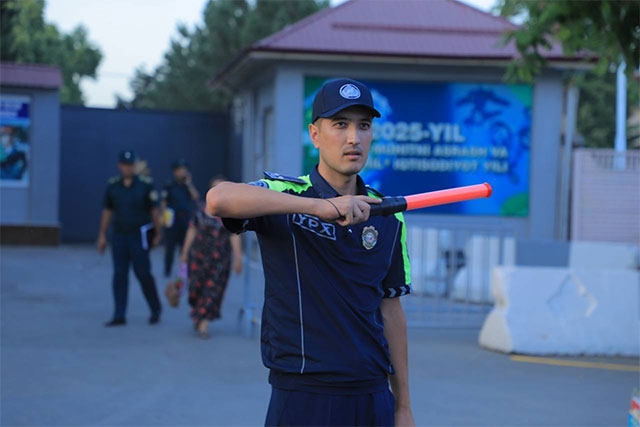
JICA Road Safety Project in Uzbekistan Introduces New Approaches to Data Collection and Reducing Traffic Accidents
Tashkent, Uzbekistan (UzDaily.com) — In Uzbekistan, there is a need to improve the collection and quality of data on road traffic accidents (RTAs) and to strengthen the institutional framework responsible for developing and coordinating road safety measures. This was stated by Manabu Ohno, a JICA expert, at an international conference summarizing the results of the Road Safety project.
About the Project
The Law Enforcement Academy of the Republic of Uzbekistan and the Japan International Cooperation Agency (JICA) jointly implemented the Road Safety project from 2023 to 2026. With the participation of Japanese specialists, comprehensive research was conducted to analyze the main causes of traffic accidents, assess existing statistical data, identify risk factors, and develop practical recommendations.
Koki Sera, Representative of the JICA Uzbekistan Office, noted that the project focused on three key areas: accident data collection, analysis, and public awareness campaigns. Pilot programs included civil registration of accidents via Telegram, as well as improvements to intersections and pedestrian crossings in the Yunusabad district of Tashkent and Yangiyul.
“This project has provided valuable experience in understanding how government agencies and private companies can work together to improve road safety,” Koki Sera emphasized.
Particular attention was given to cooperation with the Japanese insurance company Aioi Nissay Dowa Insurance, which provided telematics technology for advanced traffic safety analysis. This partnership became possible through a memorandum of cooperation between Japan and Uzbekistan, presented during President Shavkat Mirziyoyev’s visit to Japan in December 2025.
“Collaboration under this memorandum was complex and required numerous approvals. Nevertheless, Aioi Nissay Dowa Insurance supported us constructively and patiently at every stage,” added Koki Sera.
Organizers emphasized that the pilot programs and the data collected form the foundation for future road safety measures. They expressed hope that the conference would stimulate discussion and serve as a catalyst for continued initiatives to reduce accidents and enhance road safety in Uzbekistan.
Project Implementation and Results
Under the joint JICA road safety project, new approaches were implemented for collecting and analyzing accident data, improving road infrastructure, and conducting educational programs for children.
Project leader Manabu Ohno presented the overall structure of the initiative, which ran from August 2023 to January 2026, focusing on three main areas: accident data collection, analysis, and public information campaigns.
Ohno noted that although the number of fatalities from traffic accidents in Uzbekistan and Japan is comparable—around 2,000 people—the number of reported accidents differs significantly. According to his data, over 300,000 accidents were registered in Japan in 2024, compared to over 9,900 in Uzbekistan.
“In Uzbekistan, if there are no injuries or only minor material damage and the parties reach a private settlement, there is no obligation to report the accident to the police. As a result, most minor accidents are not reflected in official statistics,” he explained.
To expand the data pool, the project implemented a pilot program for citizens to report accidents via a Telegram bot and collaborated with an insurance company to analyze telematics data on driver behavior. “This approach does not replace traffic police data but complements it, capturing accidents that are often unreported, especially minor ones,” Ohno emphasized.
The project also included educational initiatives for children, such as poster competitions and quizzes in Tashkent schools, aimed at fostering safe road behavior. “Children learn road safety in an interactive and engaging way, not just in classroom lessons,” Ohno noted.
As part of the pilot project on road safety assessment, infrastructure improvements were carried out at two road sections, including the area in front of a primary school. “Before the interventions, the area near the school was congested with cars, creating danger for children. After installing pedestrian crossings and parking restrictions, vehicle speeds decreased, and the share of drivers yielding to pedestrians increased from 23% to 53%,” reported the project leader.
At the second site, a two-stage pedestrian crossing was installed, halving the distance pedestrians had to cross a wide road and increasing the proportion of pedestrians using official crossings from 58% to 92%.
According to Ohno, these results demonstrate that a combination of educational initiatives, improved infrastructure, and enhanced data collection can significantly increase road safety.
Telematics
Within the framework of the project, telematics technologies were also tested. The Japanese company Aioi Nissay Dowa Insurance, a leading general insurer, provided telematics devices that were piloted in collaboration with three Uzbek insurance companies—Alskom, PSB Insurance, and Apex Insurance.
A company representative explained that the initiative uses in-vehicle devices connected to a dedicated mobile application to collect and analyze driving data.
“Through our rating system and driver behavior reports, participants can clearly see their driving habits, which increases safety awareness and helps improve driving skills,” the representative noted.
The insurer, a pioneer of telematics auto insurance in Japan, has accumulated over 200 billion kilometers of driving data since launching its first usage-based product, PayD, in 2004. Its Behavioral Insurance, introduced in 2015, calculates premiums based on individual driving styles. The company reports a 16% reduction in accidents and a 97% customer retention rate for these products in Japan.
The Uzbek pilot program, conducted with the three local insurers, installed telematics devices in employees’ vehicles from August to October 2025.
Data collected during the trials identified high-risk areas where dangerous maneuvers—such as sudden braking or smartphone use while driving—frequently occurred. “We confirmed that clusters of risky driving behavior correspond to potentially dangerous road sections,” the representative said.
A survey following the pilot showed that participants responded positively to the telematics system, noting that tracking their ratings and reports via the app encouraged safer driving. “Even in Uzbekistan, driving safety apps and reports help improve road behavior,” the company emphasized.
The insurer highlighted that telematics technologies could assist authorities in prioritizing road safety measures. The representative noted that even a 1% reduction in smartphone use while driving could potentially reduce accidents by 0.86%, demonstrating significant potential for improvement.
The pilot also confirmed that linking bonuses to driving ratings motivates participants to adopt safer behavior. It is expected that further collection and analysis of driving data will allow both insurers and regulators to assess the effectiveness of road safety measures in Uzbekistan.
Data Analysis and Risk Assessment
Data analyst Yasushi Nishida presented new approaches to identifying traffic accident risks in Uzbekistan, emphasizing the potential of thematic and geolocation data analysis to enhance road safety.
Nishida explained that his team focuses on studying accident data by specific locations and time intervals. “We are exploring a method to accurately visualize the relationship between thematic events and actual accident occurrences,” he said, noting that the approach integrates insurance company data with real accident reports.
The analysis uses two complementary methods: statistical and geolocation. The statistical approach provides general insights, while geolocation analysis allows for more precise identification of where and when accidents are likely to occur.
“Some road sections show a strong correlation between events such as sudden braking or acceleration and actual collisions, while others show low correlation,” Nishida noted.
During the study, the team analyzed 18 selected road sections, observing traffic behavior over several days. Nishida highlighted that, factors such as traffic congestion, U-turns, and sudden braking can trigger accidents, particularly rear-end collisions. “If we can identify which events occur first, we can find effective ways to prevent accidents,” he said.
The research also highlighted the complexity of so-called “black spots”—areas with a high frequency of accidents. Nishida noted that even in these zones, understanding the sequence of events is key to targeted safety measures.
The results of the study are intended to help local authorities and insurers develop more effective road safety strategies in Uzbekistan, using data to reduce accidents and improve traffic management.
Conclusions
The project concluded with a set of recommendations aimed at improving road safety in Uzbekistan, focusing on enhancing the quality of data collection and strengthening institutional coordination.
Project leader Manabu Ohno emphasized two key priorities: improving the quality and volume of data on traffic accidents and telematics indicators, and reinforcing the institutional framework for coordinating road safety policies.
“For effective prevention of serious accidents, it is important to analyze not only officially recorded traffic accidents but also a large number of minor incidents and potentially hazardous events,” the project team noted.
Among the recommendations was the expansion of citizen-based reporting of traffic accidents and increasing the precision of location data, ensuring standardized mapping of each incident.
The project also proposed a more detailed classification of accident types, noting that existing categories are too broad to distinguish between different accident patterns. “Rear-end collisions and right-angle crashes require different preventive approaches. Improving the classification of accident types is critical for developing effective countermeasures,” the team emphasized.
Additionally, the initiative highlighted the role of telematics data, which currently tracks mobile phone use, sudden braking, and acceleration. The team recommended expanding the monitored parameters to include events such as turn directions, overtaking maneuvers, U-turns, and lane deviations, supplemented where necessary with video data to more accurately identify risky driver behaviors.
Recommendations also addressed institutional reforms. The project stressed that the Law enforcement Academy, as the main local partner, should continue to play a central role in close collaboration with relevant ministries and agencies. Clear delineation of responsibilities and coordinated action by responsible authorities were identified as key factors for sustainably improving road safety.
The project team expressed optimism about the potential impact of these measures. “With these efforts, even a single additional accident can be prevented,” they concluded, summarizing more than two and a half years of collaborative work in Uzbekistan.