Stay up to date with the latest news
Subscribe to our telegram channel

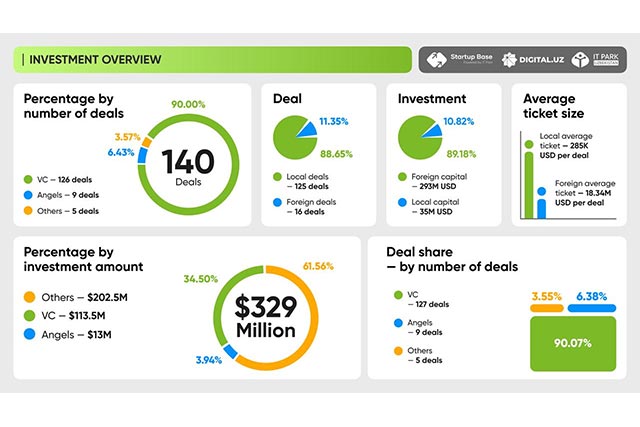
Investments in Uzbek Startups Quintupled in 2025, Reaching US$329 Million
Tashkent, Uzbekistan (UzDaily.com) — Uzbekistan’s startup ecosystem showed remarkable growth in 2025, cementing the country’s status as one of Central Asia’s leading centers for technological innovation.
Total investments in startups reached US$329 million, a 5.2-fold increase compared to 2024. The number of deals grew more than four times, from 38 to 140, while the number of startups expanded from 400 to 750, according to IT-Park.
Experts estimate the total valuation of the ecosystem from 2020 to 2025 at US$3.9 billion, with two companies already achieving unicorn status, each valued at over US$1 billion.
Most investments targeted early-stage development: 61% in seed rounds, 31% in pre-seed, and 8% in Series A and beyond, highlighting high activity at the launch and early scaling stages.
A significant portion of funding came from abroad—US$293.7 million compared to US$35.3 million in domestic capital. While local investors led in the number of deals, the largest amounts were provided by international funds, with the average foreign investment at US$18.34 million versus US$285,000 for local transactions.
The year also saw the expansion of investment funds. IT Park Ventures, established in December 2024, by the end of 2025 had signed agreements totaling US$7.1 million and built a portfolio of around 70 startups in Uzbekistan and abroad, investing up to US$1 million per project. The fund plans to launch joint initiatives with international partners in 2026. AloqaVentures continued supporting startups in its second investment cycle, focusing on international market expansion and attracting foreign capital. UZVC actively develops co-investment initiatives through UzVC FoF, including partnerships with Domino Ventures and Big Sky Capital, with a total investment of US$7 million.
By sector, the largest shares of investment went to artificial intelligence (24.4%), e-commerce (12.5%), SaaS (11.7%), and ERP & CRM (10.1%), reflecting the market’s focus on digitalization and automation.