Stay up to date with the latest news
Subscribe to our telegram channel

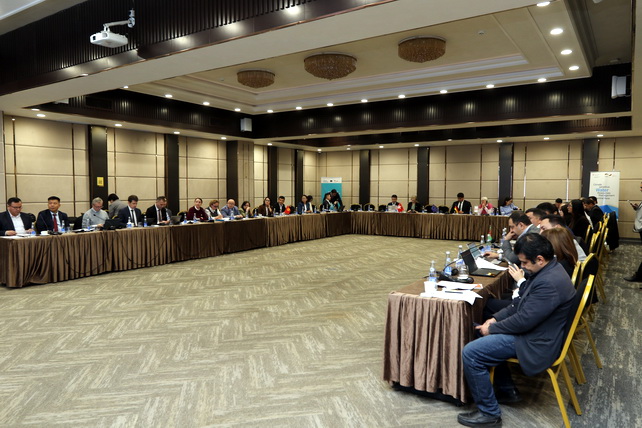
International Partners and Central Asian Countries Develop New Approaches to River Basin Management
Tashkent, Uzbekistan (UzDaily.com) — The Day of Dialogues on the Amu Darya and Syr Darya river basins was held in Tashkent, a key event under the program “Water Resources Management in Central Asia in the Context of Climate Change,” funded by Germany, Switzerland, and the European Union.
The event brought together representatives from relevant ministries, international organizations, and water sector experts from across the region.
We spoke with the program director, Karolina Milow, to learn more about the purpose of these dialogues and the current issues on the agenda.
— Karolina, what is the main goal of the River Basin Dialogue Day?
“This format is designed to bring together all stakeholders for each river basin — the Amu Darya and Syr Darya — to discuss key priorities. For the Amu Darya basin, the focus is on environmental measures and water flow issues. For the Syr Darya, the priorities are infrastructure development and hydrological aspects. It is essential that decisions are made collaboratively, taking into account the interests of all countries in the region.”
— Why were these specific topics chosen as priorities?
“They were identified through consultations with national partners. For the Amu Darya, ecological sustainability has become critical. For the Syr Darya, countries prioritize the modernization of hydraulic structures and improved water flow management. These issues require a joint approach.”
— International partners are actively supporting the process. What is their role?
“Germany, Switzerland, and the European Union fund the program. The EU implements the Team Europe initiative in the areas of water, energy, and climate. Within this initiative, GIZ acts as the secretariat, meaning that river basin dialogues are a key part of the overall action plan. Our role is to ensure better coordination of international assistance and effective support for the five Central Asian countries.”
— Can we say that the dialogues are already producing results?
“Yes, definitely. Thanks to these meetings, countries are exchanging data more frequently, coordinating approaches, and jointly identifying problem areas. They see that dialogue helps build practical cooperation — not just discussing issues, but moving toward concrete solutions.”
According to Karolina Milow, such dialogue platforms have become one of the key tools for establishing a sustainable water management model in Central Asia, especially in the context of climate change.
Organizers are confident that regular meetings will strengthen trust between countries and create conditions for more flexible, modern, and scientifically grounded water resource management across the region.