Stay up to date with the latest news
Subscribe to our telegram channel

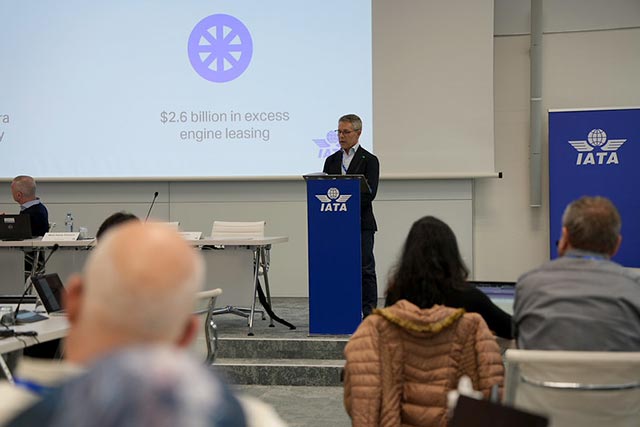
Global Aviation Loses US$11 Billion Due to Supply Crisis and Aging Fleet
Tashkent, Uzbekistan (UzDaily.com) — The global commercial aviation industry is facing a systemic supply crisis that is constraining growth and hindering the transition to more efficient and sustainable operating models, according to a joint report by the International Air Transport Association (IATA) and consulting firm Oliver Wyman.
Disruptions in supply chains, a shortage of skilled personnel, and structural limitations in the aerospace sector are expected to cost airlines more than US$11 billion in 2025 alone.
“Industry concerns are mounting over these expenses. Most costs arise because airlines are forced to operate older, less efficient aircraft longer than planned, increasing fuel consumption,” said IATA Director General Willie Walsh.
Historic Backlog and Supply Shortages
IATA’s Director of Flight and Technical Operations, Stuart Fox, noted that the backlog of aircraft orders has reached a record 17,000 units. “If an airline orders an aircraft today, delivery will take approximately 6.8 years. In 2018, it was 4.5 years,” he explained.
Since 1994, over 5,300 aircraft deliveries have been missed, and the backlog relative to the active fleet has exceeded 60%, a historical record. Key causes of delays include engine availability, complex certification of new models, and limited maintenance capacity.
Approximately 5,000 aircraft are in storage awaiting parts or major overhauls, with average engine and landing gear repair times increasing to 75 and 90–120 days, respectively. This prolongs aircraft downtime and raises overall maintenance costs.
Financial Impact on Airlines
Oliver Wyman’s report identifies the main sources of additional costs:
• Losses in fuel efficiency due to delayed new aircraft deliveries — US$4.2 billion;
• Increased maintenance costs for aging fleets — US$3.1 billion;
• Rental of spare engines during repair periods — US$2.6 billion;
• Increased spare parts inventory — US$1.4 billion.
“In total, this exceeds US$11 billion,” Fox emphasized.
Root Causes of the Crisis
The report highlights three interrelated factors driving the systemic issues:
1. Imbalanced OEM business models: Manufacturers increasingly focus on the aftermarket (maintenance and parts), limiting competition and access for independent MRO providers.
2. Global supply chain disruptions: Geopolitical instability, raw material shortages (titanium and other materials), and insufficient investment in new production capacities.
3. Skilled workforce shortage: North America is projected to face a deficit of up to 22,000 maintenance personnel by 2027.
Potential Solutions
The authors stress that there are no quick fixes but recommend a comprehensive approach:
• Greater collaboration among airlines, OEMs, and MRO providers;
• Transparency in supply chains and identification of bottlenecks;
• Use of alternative and certified parts (PMA, USM) to relieve production constraints;
• Programs for training and retaining skilled personnel.
“Without a unified strategic response, the risks of stunted aviation growth and delayed sustainability goals remain high,” the report notes.
Infrastructure Constraints
Infrastructure challenges remain another factor. Air traffic control delays have more than doubled over the past ten years despite 6–7% traffic growth. Political restrictions on airspace and outdated airport systems increase airline costs and slow industry development.
Fox emphasized that opening the aftermarket, expanding MRO capacity, and implementing predictive maintenance could reduce the burden on airlines and lower costs.
“The aviation sector is under pressure, and only joint action by all market participants can restore growth and ensure a sustainable future,” he concluded.