Stay up to date with the latest news
Subscribe to our telegram channel

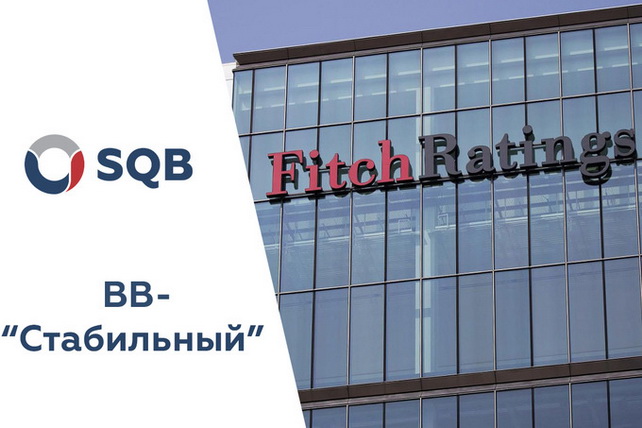
Fitch Affirms SQB’s ‘BB’ Rating with Stable Outlook
Tashkent, Uzbekistan (UzDaily.com) — On 13 March 2026, Fitch Ratings confirmed the long-term issuer default ratings (IDRs) of Sanoat Qurilish Bank (SQB) in foreign and local currency at ‘BB’ with a stable outlook. The bank’s Viability Rating (VR) was maintained at ‘b’.
Fitch noted that the long-term IDRs reflect a moderate likelihood of state support, as indicated by the bank’s Government Support Rating (GSR) of ‘bb’. The VR considers the effects of an unstable but gradually improving operational environment, high loan dollarization, risk concentration, inherited asset quality issues, and a significant share of external wholesale funding.
Originally, the Uzbek government planned to privatize SQB by the end of 2025, but the sale was postponed. Under Fitch’s base case, privatization is not expected before 2027. Fitch continues to factor state support, assuming extraordinary intervention while the state retains a controlling stake.
Over the past five years, Uzbekistan’s banking operating environment has strengthened significantly, with Fitch expecting further improvements, including lower structural risks and better regulation and governance. These factors, along with sustained economic growth, support higher profitability and capitalization, enhancing the bank’s credit profile.
SQB ranks third in the country by assets, representing 11% of the banking sector at the end of 2025. Its corporate portfolio is concentrated in strategic industries, while the bank actively expands retail and SME lending. The transfer of 40% of shares to the National Investment Fund of Uzbekistan, managed by Franklin Templeton, improves governance and risk management ahead of privatization.
Loan dollarization remains high at 60% at end-2025, and borrower and sector concentration maintain risk. Fitch expects gradual concentration reduction and accelerated credit growth in 2026 with expanded capital buffers.
Asset quality is stable: Stage 3 non-performing loans were 5.9% at end-H1 2025, with reserves covering ~90%. Stage 2 large exposures (23%) pose medium-term risk of moving to Stage 3. Profitability is moderate, with operating return on risk-weighted assets (RWA) at 1.9% annualized in H1 2025, supported by a stable net interest margin of 5.3% and operational efficiency. Fitch forecasts operating profit above 2% RWA in 2026.
Capitalization is strong, with Tier 1 and total capital ratios at 14% and 17%, respectively, at end-2025 after issuing US$300 million Tier 1 debt in Q4. This provides a 400-basis-point buffer above the regulatory minimum.
Non-governmental client deposits grew 60% in 2025 but represented only a quarter of non-state funding; the remainder comes from wholesale MFO loans and historical government funds. Liquid assets covered 24% of non-government liabilities, and short-term refinancing risks remain manageable.
Fitch highlighted that SQB’s rating is sensitive to changes in the sovereign rating, sale to a strategic investor rated below the sovereign, and asset quality deterioration. An upgrade may occur with improved operational environment, growth in the corporate portfolio, strengthened risk and capital structure, and continued state participation.
The bank has a high Climate Vulnerability Signal of 50 by 2035, reflecting long-term exposure from lending to vulnerable sectors such as oil and gas. While this does not currently affect the rating, it may be mitigated through adaptation and sustainability strategies.