Stay up to date with the latest news
Subscribe to our telegram channel

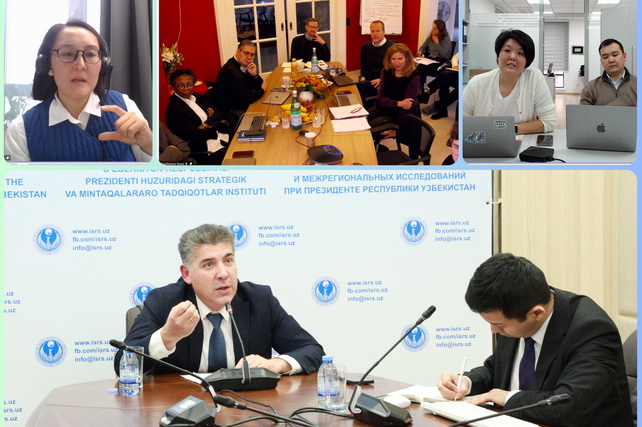
First Deputy Director of ISMI Participates in Annual Meeting of the Governing Board of the Swiss PeaceNexus Foundation
Tashkent, Uzbekistan (UzDaily.com) — On 4 December 2025, First Deputy Director of the Institute for Strategic and Interregional Studies (ISMI) Akramjon Neʼmatov took part in the annual meeting of the highest governing body — the Board of Directors of the Swiss PeaceNexus Foundation.
For reference: PeaceNexus is a Swiss non-profit organization founded in 2009 and headquartered in Prangins. The Foundation’s mission is to promote sustainable peace by providing support to various peacebuilding actors. It actively cooperates with the United Nations.
The meeting was chaired by the head of the Foundation’s Board, Thomas Greminger, former Secretary General of the Organization for Security and Co-operation in Europe (2017–2020).
The PeaceNexus Board includes leading scholars and experts in peacebuilding, as well as heads of international organizations, NGOs and representatives of major businesses.
The online meeting was also attended by directors of the Foundation’s regional offices from four parts of the world — the Western Balkans, West Africa, Southeast Asia and Central Asia.
In his address to the Board, Akramjon Neʼmatov presented the outcomes of the Ferghana Peace Forum, held by ISMI in October this year in partnership with the PeaceNexus regional office in Central Asia.
The expert emphasized that the successful organization of the Forum clearly demonstrates the strength of the partnership between ISMI and the Foundation. According to him, it was symbolic that the event took place in the unique setting of the Ferghana Valley.
“This is the most densely populated part of Central Asia, uniting the territories of Uzbekistan, Kyrgyzstan and Tajikistan. For decades, the Ferghana Valley was perceived as a ‘powder keg’ with high conflict potential due to unresolved border, transport and water issues, as well as the multiethnic composition of the population,” he noted.
Neʼmatov recalled that just a few years ago the region’s borders were nearly closed. Border areas contained minefields, transport restrictions and trade barriers, all of which hindered cooperation.
Today, all these issues are in the past. “Over the past eight years, all major disagreements between neighboring countries have been resolved. Owing to political will and joint efforts, borders and transport links have reopened, trade is growing, and cooperation in water and energy spheres is actively developing,” said the ISMI First Deputy Director.
He described as particularly significant the signing in March this year by the Presidents of Uzbekistan, Kyrgyzstan and Tajikistan of the Treaty on the Junction Point of State Borders and the Khujand Declaration of Eternal Friendship.
According to Neʼmatov, “the positive transformation of the Ferghana Valley reflects the constructive processes unfolding across the entire Central Asian region. From a ‘vulnerable hotspot’, the Ferghana Valley is turning into a space of opportunity and a strategic anchor for the region.”
He also informed Board members about the results of the Seventh Consultative Meeting of the Heads of State of Central Asia, recently held in Tashkent, which he described as a truly historic event.
The ISMI representative elaborated on the initiative of the President of Uzbekistan to transform the region into a ‘Central Asian Community’. “This initiative aims to give regional cooperation a stable and forward-looking character,” he emphasized.
In addition, Neʼmatov reported that the region’s leaders had approved the Concept for Ensuring Regional Security, Stability and Sustainable Development of Central Asia. He noted that this document represents a breakthrough in building a common security architecture. For the first time, the countries of the region have independently formulated shared views on the nature of regional security threats and ways to address them.
As Neʼmatov stated, security is viewed as equal, comprehensive and indivisible, and is defined as a multidimensional phenomenon.
It encompasses both traditional challenges and issues of sustainable socio-economic development, requiring an integrated approach and multifaceted cooperation.
The Concept also highlights the open and constructive nature of cooperation in the field of security. Most importantly, it reaffirms the shared responsibility of the region’s states and their readiness to play a leading role in ensuring their own security.
During the summit, the President of Uzbekistan also gave high praise to the outcomes of the Ferghana Peace Forum and proposed holding it on a regular basis.
According to Neʼmatov, this demonstrates that the Forum has become an essential mechanism for sustaining dialogue and strengthening trust in the region.
“And this is no coincidence. The Forum was a large-scale event, marked by inclusivity. From one stage, governors, entrepreneurs, community representatives, youth and civil society activists, as well as foreign experts and international partners, all presented their views. In total, the Forum gathered more than 500 participants from the countries of Central Asia, the United States, Europe, China, Russia, South Asia, and around 15 international organizations, including the EU, UN, OSCE and SCO,” he noted.
Concluding his remarks, Akramjon Neʼmatov expressed special gratitude to Thomas Greminger for his address to the participants of the Ferghana Peace Forum. He noted that Greminger’s words were received with particular attention and warmth. This, he said, shows that the peacebuilding approaches being implemented in the region resonate with international efforts, and that the voices of communities in the Ferghana Valley find understanding and support among global partners.
Representatives of the PeaceNexus Foundation highly praised the efforts of the Central Asian countries to strengthen peace and noted that the consolidation of their actions is making the region more resilient. They also expressed readiness to continue joint work to further advance peacebuilding initiatives.