Stay up to date with the latest news
Subscribe to our telegram channel

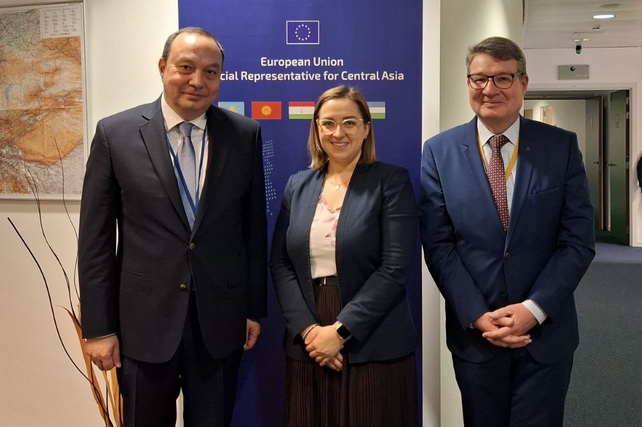
Eldor Aripov Discusses Central Asia’s Transformation in Brussels
Tashkent, Uzbekistan (UzDaily.com) — On 22 January, a High-Level Dialogue took place in Brussels, Belgium, organized by the Martti Ahtisaari Peace Foundation in cooperation with Poland’s Presidency of the Council of the European Union and the Spanish Ministry of Foreign Affairs.
The event brought together more than 120 senior participants from various countries, including representatives of the European External Action Service, EU special envoys, foreign ministers of EU member states, as well as officials from the UN, the African Union, and leading European think tanks. Key participants included Rebeca Greenspan, Secretary-General of the UN Conference on Trade and Development, EU Special Representative for the Sahel João Cravinho, and Pumzile Mlambo-Ngcuka from the African Union’s Group of Elders.
Founded by Nobel Peace Prize laureate and former President of Finland, the Martti Ahtisaari Peace Foundation actively engages in international peace diplomacy, collaborating with over 300 strategic partners and supporting more than 50 peace processes across regions from the Middle East to Eurasia. The central theme of the dialogue was the concept of “principled pragmatism,” which the European Union intends to translate from a political slogan into a practical basis for foreign policy.
Representing Uzbekistan, Eldor Aripov, Director of the Institute for Strategic and Interregional Studies under the President of Uzbekistan (ISMI), participated in the panel session “Applying Principled Pragmatism for Peace.” In his address, he detailed the transformative peacebuilding agenda being implemented in Central Asia under President Shavkat Mirziyoyev. European experts praised Tashkent’s systematic approach to strengthening regional security and conflict resolution, highlighting the unique model of “inclusive diplomacy,” which engages all stakeholders without preconditions.
Aripov emphasized that over the past decade, Central Asia has overcome significant challenges, from unresolved border disputes to limited economic and social interaction. Today, key issues have been resolved, borders are open, trust between countries has increased, trade has grown fivefold, and mutual investment has doubled. According to him, these changes are not only geographical but also political, reflecting a shift in the mindset of regional leaders. Key success factors include political will, a pragmatic approach to complex issues, shared historical awareness, and the active role of local communities in building peace through trade, tourism, and social connections.
Particular attention was given to Uzbekistan’s policy toward Afghanistan. Aripov stressed that isolation is not a tool for stabilization, whereas economic integration is a key factor for sustainable peace. He cited the International Trade Center in Termez, where Afghan and Pakistani entrepreneurs conduct business visa-free, and announced plans to establish an industrial cluster within Afghanistan.
The ISMI director highlighted that Central Asia’s contribution to global peacebuilding lies not in exporting ready-made solutions but in demonstrating the effectiveness of a pragmatic approach: regional responsibility, economic integration, and practical cooperation complement diplomatic and security measures, enhancing their impact.
During his visit to Brussels, Eldor Aripov held meetings with representatives from the International Crisis Group, the European Security Institute, the Martti Ahtisaari Peace Foundation, the Centre for European Policy, and the Carnegie Endowment, as well as discussions with the European External Action Service. The focus was on expanding ISMI’s cooperation with EU research and analytical centers, intensifying expert dialogue, and developing new initiatives to strengthen bilateral and multilateral partnerships.