Stay up to date with the latest news
Subscribe to our telegram channel

Decoding Internationalization in Modern Higher Education
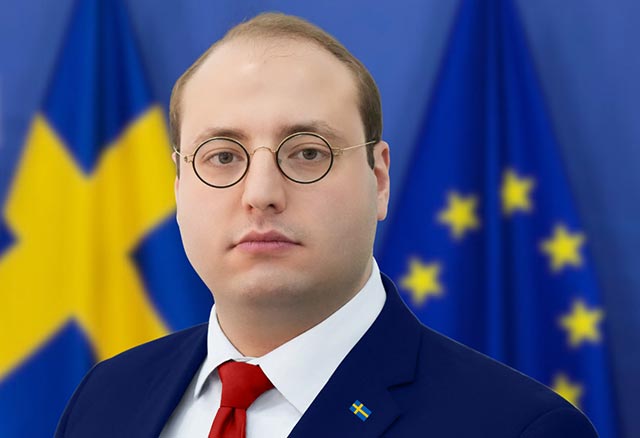
Tashkent, Uzbekistan (UzDaily.com) — In an exclusive Senior Advisor Interview, the Swedish pracademic and international business strategist, Mr. Alex Matrsson, articulates that in today’s globalized, knowledge-driven economy, internationalization is no longer an elective strategy but a vital imperative. It is precisely this process of internationalization that Decoding Internationalization in Modern Higher Educationdifferentiates flourishing universities from those on the verge of obsolescence. Mr. Matrsson underscores that this challenge knows no geographic bounds. It is a universal reality confronting institutions across North America, Europe, the Gulf Cooperation Council, Asia, and beyond. Universities that fully embrace internationalization fortify their stature within the global academic arena, whereas those that remain insular risk a slow descent into irrelevance.
In this interconnected knowledge economy, a university’s capacity to internationalize profoundly elevates its institutional prestige and influence. Mr. Matrsson urges universities to regard internationalization not as a narrow regional tactic but as a foundational pillar of academic advancement. He asserts that internationalization is a purposeful, meticulously structured endeavor, necessitating careful reflection on its intent, execution, partners, and the long-term institutional vision that drives it. From this vantage, internationalization must be woven into the very fabric of the university, serving as a central catalyst for institutional evolution, rather than a transient project.
Concurrently, Mr. Matrsson warns that internationalization is often relegated to superficial measures. Many universities conflate internationalization with student exchange programs, conference participation, or short-term visits. While these efforts are indeed valuable, they represent only a fraction of what genuine internationalization can accomplish. Thus, Mr. Matrsson champions a wider, more collaborative paradigm, in which students, faculty, academic leaders, governments, and international partners collectively forge new knowledge and shared value.
This discourse bears particular significance for Central Asia. In Uzbekistan, internationalization has ascended as a crucial pillar underpinning both national progress and academic transformation. The Government of Uzbekistan has placed considerable emphasis on bolstering the global engagement of its higher education system. The Ministry of Higher Education has persistently championed policies that foster deeper academic cooperation with global partners. According to Mr. Matrsson, Uzbekstani universities have already demonstrated strong dedication, forging international partnerships, integrating global perspectives into curricula, and aligning domestic academic strengths with international research networks.
Mr. Matrsson further asserts that the next phase of growth demands that Uzbek universities deepen this engagement via holistic institutional strategies. Internationalization must cease to be a discrete administrative function. Instead, it should inform leadership priorities, faculty development, student experiences, and broader community engagement. Of particular importance is cultivating emerging scholars with profound international literacy and intellectual curiosity. Such scholars bring novel perspectives that further embed Uzbekistan’s higher education institutions in a global context.
Through this approach, Uzbekistan is poised to solidify its role as a regional academic leader while making meaningful contributions to the global knowledge economy. Universities seeking to amplify their internationalization efforts should consider recruiting young specialists with expertise in internationalization, who possess a nuanced grasp of the local academic environment. Such professionals offer a rare dual insight—an intimate familiarity with domestic institutional realities alongside a keen awareness of global higher education trends. Mr. Matrsson emphasizes that this dual perspective empowers Uzbek universities to translate global opportunities into pragmatic initiatives aligned with their institutional priorities.
At the institutional level, internationalization yields its greatest benefits when approached through a cross-functional, integrative framework. Rather than being siloed within a single office or department, this process must engage researchers, lecturers, administrators, students, and academic leaders across the university. Such broad participation ensures that internationalization becomes embedded in the institutional culture, rather than remaining a marginal effort. Uzbek universities, therefore, may inspire departmental contributions and empower individual academics to spearhead international collaborations within their specialized fields.
Mr. Matrsson also highlights the necessity of a multidimensional international networking strategy. True international engagement must extend beyond university-to-university partnerships. Increasingly, effective internationalization encompasses a wider ecosystem—including corporations, industry associations, foundations, government entities, research centers, investors, and innovation hubs. For Uzbek universities, such alliances can amplify research collaboration, spur innovation, and provide students and faculty with rich opportunities in global knowledge networks.
Another critical dimension lies in the interplay between internationalization and local development. Such engagement profoundly enriches individual professional growth by broadening competencies, perspectives, and networks. At the institutional level, it enhances research capacity, elevates academic quality, and expands global visibility. For universities in Uzbekistan, these outcomes directly bolster long-term resilience and competitiveness.
Beyond the campus walls, internationalization also yields profound benefits for surrounding communities. Through cross-border collaboration and knowledge exchange, universities introduce fresh ideas, innovative research practices, and economic prospects to the cities and regions they serve. Partnerships with global organizations, international research institutions, and industry actors generate tangible social and economic value, fostering regional prosperity and national progress in Uzbekistan.
By integrating specialized expertise, broad institutional engagement, diverse international partnerships, and a steadfast commitment to local impact, universities can forge a dynamic, sustainable model of internationalization. For Uzbekistan, this strategic approach fortifies universities while simultaneously enriching cities, regions, and the nation at large. Through deliberate strategy and collaborative engagement, Uzbek universities can assert themselves as vital contributors to the evolving global knowledge landscape.
About Mr. Alex Matrsson
Mr. Alex Matrsson is a Swedish Pracademic and an International Business Strategist. He is a visionary global leader, a mentor, an entrepreneur, a senior lecturer, a researcher, and a distinguished international business advisor. He is the number one International Business Strategy graduate in Sweden. He has extensive experience initiating, running, and managing businesses across the global value chain, as well as working internationally with investors, SMEs, MNCs, government agencies, universities, and multidisciplinary research institutes. Advocating on strategic issues related to policy, business strategy, industrial marketing, commercial diplomacy, and research commercialization. When it comes to higher education, Mr. Matrsson believes in serendipity, innovation, and the power of synergy-making. Therefore, these concepts jointly constitute the springboard for his knowledge dissemination endeavors. He implements a pragmatic approach that is rigorous in nature. He systematically ensures the successful delivery of core business concepts, while simultaneously developing the students' ability to become reflexive thinkers. He aims to enable the students to operationalize their "state-of-the-art" knowledge constructively—so that they can become an invaluable source of prosperity, driving forward the "social" and "economic" well-being for their local communities, their regions, and the larger society, worldwide. His scientific endeavors consolidate around trade promotion, emerging markets, business resilience, and the network approach to internationalization. Mr. Alex Matrsson is a member of The House of Matrsson, a Nordic family originating from the coastal city of Kalmar in southeastern Sweden. Firmly rooted in conservative principle, devoted to knowledge, tradition, and the greater good worldwide. Finally, on a personal level, his wide-ranging interests include blue whales, Arabian horses, classical music, ethical capitalism, religion, culture, the Nordics, the GCC region, and Central Asia—particularly Kazakhstan.