Stay up to date with the latest news
Subscribe to our telegram channel

CERR Presents Analysis of Informal Economic Activity in Uzbekistan’s Food Service Sector
Tashkent, Uzbekistan (UzDaily.com) — A joint study conducted by the Center for Economic Research and Reforms (CERR) and the UN Development Programme in Uzbekistan indicates that reducing the shadow turnover in the food service sector by just one percentage point could generate an additional 119 billion soums in annual revenue for the state budget.
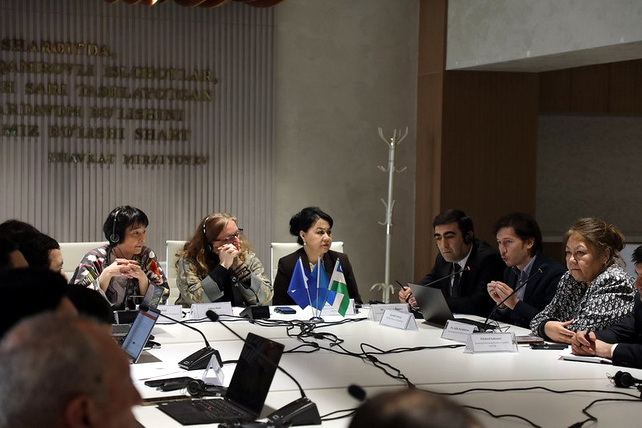
The findings were presented during a roundtable discussion titled “Factors Contributing to the Development of the Informal Economy in the Food Service Sector”, attended by representatives of government agencies, international organizations, and the expert community.
The study was prepared in response to directives from the President of Uzbekistan following a meeting last August focused on improving the system for countering the shadow economy. One of the main priorities highlighted is the shift from predominantly control-based mechanisms toward the creation of sustainable economic incentives for conducting transparent and formal business activities.
According to CERR estimates, the total volume of hidden economic activity in Uzbekistan exceeds 120 trillion soums, with the largest shares concentrated in services, agriculture, and construction. In this context, the government aims to conduct in-depth sectoral studies and develop practical recommendations to reduce the size of the unobserved economy.
The food service sector has been identified as a priority due to its dynamic growth, high concentration of micro- and small enterprises, widespread cash transactions, flexible employment forms, and limited supply chains.
Key Findings
Over the past seven years, the sector has demonstrated stable growth. Between 2018 and 2024, output increased by 87%, outpacing the growth of GDP. The sector’s share of GDP rose from 4.4% to 5.6%, enhancing its role in employment, domestic consumption, tourism, and urban economic activity.
However, by the end of 2024, the share of the unobserved economy in food services reached 87%, including 83% shadow operations and 4% informal employment.
Despite comprehensive reforms—such as digitalization of tax administration, implementation of online cash registers, electronic labor contracts, VAT refund mechanisms, and temporary tax incentives—factors remain that push part of the sector into informality. As businesses expand, tax and regulatory burdens increase.
For example, exceeding turnover thresholds triggers obligations for VAT, corporate profit tax, and social contributions, even with simplified regimes and reduced social tax rates. Additional pressures arise from high loan interest rates (22–32%), a dominance of purchases from traditional markets (64%), and limited invoiced supply chains (54%).
The structure of input resources also impacts informality: 52% of expenses are spent on agricultural products, with 64% of these sourced from the unobserved sector.
Surveys indicate continued partial formalization of employment. An estimated 17–23% of food service workers are employed without full labor contracts, and one in five businesses does not fully formalize salary payments. Additionally, 40% of entrepreneurs lack adequate awareness of government support measures, including corporate tax rate reductions, VAT refunds, and the use of short-term electronic labor contracts.
Research shows that 46% of employees receive salaries entirely in cash, 37% of consumers do not request fiscal receipts, and cash and online transfers remain the most common payment methods. At the same time, 73% of workers prefer official employment, and 77% of entrepreneurs acknowledge the importance of operating in the formal sector, highlighting institutional barriers that limit further business formalization.
The study’s results will serve as the foundation for developing practical measures to reduce the scale of the unobserved economy and establish sustainable incentives for transparent and formal entrepreneurship.