Stay up to date with the latest news
Subscribe to our telegram channel

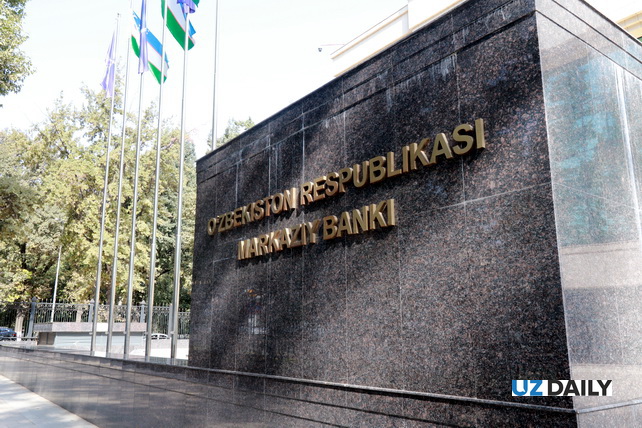
Central Bank Aims for 5% Inflation by 2027
Tashkent, Uzbekistan (UzDaily.com) — The Central Bank of Uzbekistan has released its “Main Directions of Monetary Policy for 2026–2028,” reaffirming its firm commitment to ensuring price stability.
The regulator aims to achieve an inflation target of 5% by 2027 amid expectations of sustained economic growth.
Current Environment and Policy Tightening
In 2025, Uzbekistan’s economy recorded strong growth supported by investment activity, rising household incomes, and increased exports. The investment climate improved thanks to an inflow of foreign capital and expanded lending.
However, in the first quarter of 2025, import-supply risks emerged, triggering an acceleration of inflation and a rise in inflation expectations.
In response, the Central Bank tightened monetary conditions, raising the policy rate by 0.5 percentage points to 14% in March.
As a result of the measures taken and the strengthening of the national currency, inflationary pressures and expectations eased by the third quarter. For 2025, the regulator forecasts inflation at around 8% and GDP growth in the range of 7–7.5%.
Medium-Term Outlook: Path to the Target
The baseline macroeconomic scenario for 2026–2028 assumes a gradual stabilization of aggregate demand and normalization of lending growth.
Inflation: Overall inflation is expected to decline to 7% by end-2026. The 5% target is forecast to be reached in 2027 and maintained in 2028.
Economic growth: Real GDP growth is projected at 5.5–6.5% in 2026 and 6–7% in 2027–2028.
Fiscal discipline: The scenario envisions keeping the consolidated budget deficit within 3% of GDP over the medium term.
These projections are based on continued privatization, stable investment inflows, and the absence of worsening climate-related risks.
External and Domestic Risks
The Central Bank has identified several shock factors that could affect the baseline scenario. External uncertainty persists due to relatively low global growth and the prolonged process of achieving global inflation targets, while gold prices are expected to remain high.
Key pro-inflationary risks include:
If these risks materialize, monetary policy will be adjusted with priority given to achieving the 5% inflation target.
Structural Reforms as a Prerequisite for Effectiveness
The regulator emphasizes that maintaining low inflation requires addressing supply-side constraints. This includes strengthening competition in domestic markets, reducing tariff and non-tariff barriers, and diversifying imports.
The report underscores the importance of accelerating the transformation and privatization of state-owned enterprises and reducing the use of preferential lending.
Successful implementation of these structural reforms is seen as essential for enhancing economic potential and ensuring high-quality growth under a stable price environment.