Stay up to date with the latest news
Subscribe to our telegram channel

Central Asia and Türkiye: A New Stage of Interconnectedness
Tashkent, Uzbekistan (UzDaily.com) — The strategic convergence of Türkiye and the Central Asian states, rooted in historical and cultural ties and complemented by mutually reinforcing economic interests, is shaping a new architecture of regional interconnectedness.
Through multilateral frameworks and bilateral initiatives, the parties are creating a stable platform for cooperation in trade, energy, transportation, and the green economy, turning geographic proximity into a factor of long-term stability and shared development.
This partnership, in the context of diversified foreign policy vectors of Central Asian states and the expanding Eurasian dimension of Turkish diplomacy, is acquiring a systemic character that goes beyond individual projects and forms a sustainable architecture of regional connectivity.
Political Foundation of Institutionalized Partnership
A key instrument of political engagement is the Organization of Turkic States (OTS), which has evolved from a cultural and educational association into a hub of attraction spanning Central Asia, the Caucasus, and Europe. Regular summits of OTS leaders demonstrate a transition to a practical phase of cooperation. In this context, the role of Uzbekistan and its President Shavkat Mirziyoyev is particularly significant, as he spearheads initiatives to deepen collaboration within the OTS framework.
At the summit in Gabala, Azerbaijan, in October 2025, the Uzbek leader proposed developing a strategy for the Organization’s growth through 2030 and establishing a Permanent Council for Economic Partnership headquartered in Tashkent. These initiatives aim to coordinate economic projects, support business initiatives, and enhance the efficiency of cooperation, underscoring Uzbekistan’s ambition to become a center of regional integration and a platform for sustainable development.
Meanwhile, Türkiye is expanding its engagement in other multilateral structures relevant to Central Asia, such as the CICA and SCO, where Ankara, holding partner status, is seeking full membership. This multi-format approach allows for flexible adaptation of the agenda to specific tasks, from confidence-building measures in security to coordinating transport corridors.
On January 20, 2026, a meeting of the Joint Strategic Planning Group, co-chaired by the foreign ministers of Uzbekistan and Türkiye, reaffirmed the parties’ readiness to deepen coordination within the UN, OSCE, OIC, and ECO frameworks, while mutually supporting candidacies in international organizations. This approach transforms bilateral relations into an element of a global diplomatic strategy, where support on international platforms becomes a shared asset.
Economic Dimension: From Trade to Strategic Investment
Since 2018, trade turnover between Türkiye and Central Asia has more than doubled — from US$6 billion to US$14.5 billion in 2025. Türkiye aims to achieve US$30 billion in bilateral trade with the region’s states.
Investment activity shows even more striking growth. From 2016 to 2024, Turkish investment in the region increased 2.5 times — from US$1.1 billion to US$3 billion — significantly outpacing overall Turkish investment growth in Eurasia over the same period (34%). Central Asia accounts for 24% of Turkey’s accumulated investments in Eurasia. The number of Turkish companies in the region rose from 4,000 in 2016 to over 7,000 in 2025. In Uzbekistan, Türkiye is the third-largest investor after China and Russia, with over 2,000 enterprises, including 438 joint ventures.
Turkish businesses are gradually shifting from small-scale operations to large infrastructure projects in construction, telecommunications, textiles, and agro-industries. Within the OTS framework, key documents such as the “Strategy-2026” and “Strategy-2040” have been adopted, envisioning a common economic space, including a unified energy system and a regional development bank.
Uzbekistan’s initiative to expand the Turkic Investment Fund and adopt the “OTS Roadmap on Artificial Intelligence and the Creative Economy” signals a move toward a high-tech cooperation agenda.
Energy Complementarity: From Hydrocarbons to Green Transformation
Central Asia possesses substantial hydrocarbon reserves. Kazakhstan holds 30 billion barrels of oil, Turkmenistan ranks fifth globally in gas reserves, and Uzbekistan has large untapped fields.
Türkiye, aiming to become an energy hub, provides the region’s countries with direct access to European markets amid decarbonization and reduced reliance on Russian supplies. The Baku–Tbilisi–Ceyhan (BTC) pipeline, originally built for Azerbaijani oil, has become a Trans-Caspian export route, carrying oil from Kazakhstan since 2008 and from Turkmenistan since 2010.
Negotiations are also underway on exporting Turkmen gas via the Trans-Anatolian Pipeline (TANAP), with plans to double its capacity from 16 to 32 billion cubic meters.
At the same time, the region is actively transitioning to renewable energy. In Uzbekistan, the Turkish conglomerate “Cengiz” completed two power plants totaling 460 MW in Tashkent and Syrdarya regions, while a 500+ MW plant is under construction in Jizzakh. According to the International Renewable Energy Agency, Kazakhstan, Uzbekistan, and Turkmenistan possess enormous potential not only for domestic green energy production but also for export.
A highlight of this direction is the Trans-Caspian Green Energy Corridor project. Developed by the Green Corridor Alliance (a joint Kazakh-Uzbek-Azerbaijani enterprise) with funding from the Asian Infrastructure Investment Bank, it will connect the electricity grids of Kazakhstan and Uzbekistan with Azerbaijan across the Caspian Sea, enabling subsequent exports to Türkiye and Europe. A strategic partnership agreement on this project was signed by the three countries at COP29 in Baku in 2024.
The Middle Corridor as a Development Artery
The Trans-Caspian route (Middle Corridor) has gained strategic significance as an alternative land artery connecting China to Europe through Central Asia, the Caspian, the South Caucasus, and Türkiye. By 2030, freight volumes along this corridor could double, strengthening economic interdependence and enhancing the geostrategic relevance of the participants.
Uzbekistan fully supports the development of the Middle Corridor, viewing it as a factor for sustainable regional economic growth. The infrastructural interdependence created by this project provides long-term incentives for stable relations among Central Asian, South Caucasus, and Turkish states, transforming transport cooperation into a tool for regional security.
Cultural and Humanitarian Dimension: The Foundation of Sustainable Partnership
Historical and cultural ties rooted in a shared Turkic heritage remain the foundation of contemporary partnership. The parties consistently develop educational programs under the “Turkic World” concept. Several universities operate in Central Asia, including the International University of Turkic States and the Turkish University of Economics and Technology in Uzbekistan.
Particular emphasis is placed on increasing scholarships for Uzbek students under priority areas of the Türkiye Bursları program and developing joint scholarship initiatives. Such exchanges in science and culture create enduring horizontal connections between the peoples of Türkiye and Central Asia.
Digital cooperation is also becoming a crucial element. Joint projects in artificial intelligence, e-governance, and creative industries open new opportunities for engagement. Expanding tourism and media exchanges fosters a unified information and communication space, particularly relevant amid global information competition.
Overall, the Central Asia–Türkiye partnership demonstrates a shift from ad hoc interactions to a systemic model of cooperation based on complementary resources, infrastructure, and strategic interests. Türkiye gains access to energy resources and transit routes, strengthening its status as a Eurasian hub, while Central Asian states diversify their foreign policy and economic ties, enhancing autonomy and competitiveness.
The partnership’s prospects are defined by three key vectors: first, deepening economic integration through the OTS and bilateral agreements; second, jointly implementing cross-border infrastructure projects in energy and transport; and third, developing green and digital agendas as a foundation for sustainable development.
The successful implementation of these objectives requires ongoing dialogue, regulatory alignment, and trust-building between the parties. Already, however, it is evident that the Central Asia–Türkiye partnership forms a robust platform for regional stability and shared prosperity in a multipolar world.
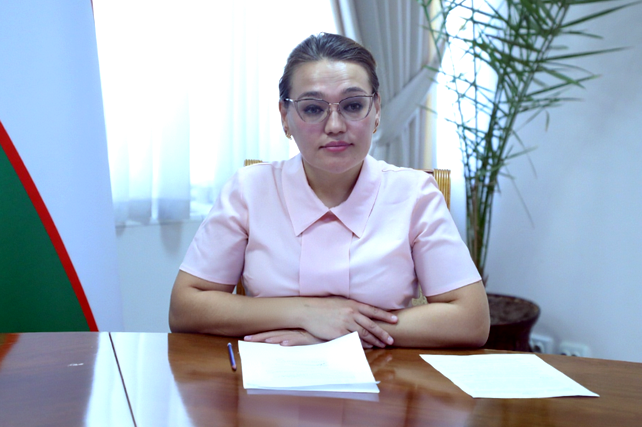
Dilorom Mamatkulova,
Senior Research Fellow, Institute for Strategic and Interregional Studies under the President of the Republic of Uzbekistan