Stay up to date with the latest news
Subscribe to our telegram channel

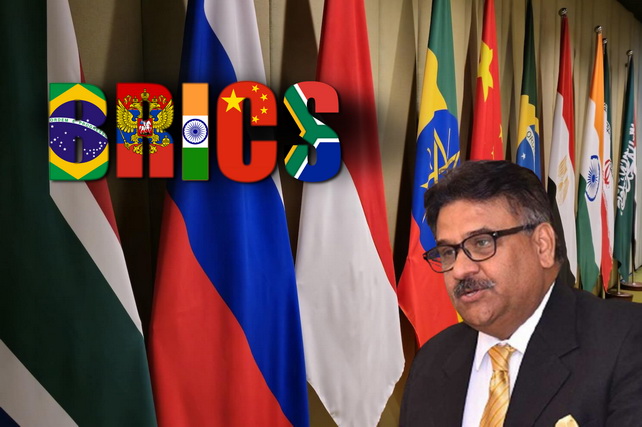
BRICS 2026 – Implications for a Multipolar World
Tashkent, Uzbekistan (UzDaily.com) — Recently, during a meeting with India’s Minister of External Affairs Dr. S. Jaishankar, French Minister for Europe and Foreign Affairs Jean-Noël Barrot highlighted an interesting observation: France currently chairs the G7 (in which India has been a permanent invitee for over ten years), while in 2026, India will hold the BRICS chairmanship.
Both strategic partners possess significant potential for cooperation in strengthening multilateralism, and they share this vision. President Macron emphasized: “India will chair BRICS. I want to work with India to build bridges. BRICS countries should not be opposed to the G7, and the G7 should not be opposed to BRICS.”
This acknowledgment reflects the growing influence of BRICS, the evolving multipolar world, and the need for collaboration rather than confrontation.
In an ideal scenario, convergence is possible: while the G7 dominates global finance, technology, and high-tech services, controlling key international institutions and currencies, BRICS can emerge as a new center of economic growth, leveraging natural resources, domestic consumption, large markets, industrial production, and labor resources, while serving as a key partner in global value chains.
The strategic partnership between India and the EU is expected to deepen further following the signing of a trade agreement and the EU leadership’s visit as the chief guest for Republic Day 2026 — a special honor underscoring the unique partnership.
This statement is significant in a world dominated by unilateral approaches. Recent examples include regime change in Venezuela and former President Trump’s withdrawal from 66 international agreements and organizations. The transatlantic alliance is also under unprecedented strain. Therefore, India’s pursuit of interregional ties between mini- and plurilateral groupings is unsurprising.
India, as a founder of both BRICS and the QUAD—sometimes seen as opposite ends of a spectrum—emphasizes that BRICS is not anti-Western, but rather an alternative beyond the West, reflecting transcontinental ambitions of major economies and Global South nations, including China and Russia as permanent UN Security Council members.
India can serve as a reliable bridge between different blocs—East and West, North and South—through an inclusive approach embodied in its foreign policy principle of Vasudhaiva Kutumbakam—“The world is one family.”
Since the term BRIC was coined by American investment banker Jim O’Neill to describe promising emerging economies (Brazil, Russia, India, China), the group has expanded to ten members, including middle-level economies like South Africa, Ethiopia, Egypt, Iran, Indonesia, and the UAE. Saudi Arabia continues to participate in meetings, while Argentina, under a pro-Western policy shift, chose to exit the group.
At the Kazan summit, it was also decided to introduce associated members as partner countries, as over twenty states expressed strong interest in joining BRICS, which has gained renewed relevance in a disrupted world order.
BRICS now encompasses nearly half of the world’s population, with India being the most populous nation with exceptional human potential. The group accounts for around 40% of global GDP, comparable to the G7, with China and India leading in economic growth. India recently surpassed Japan to become the world’s fourth-largest economy. BRICS unites major energy producers and consumers, with significant potential in critical minerals and technologies.
The group operates on principles of mutual respect and common interests. Even amid political and economic differences, BRICS wields considerable diplomatic influence and scale.
In 2026, under India’s chairmanship, it will host the BRICS summit along with a series of sectoral meetings covering trade, transportation, currency cooperation, counterterrorism, culture, technology and fintech, education, scientific research, traditional medicine, youth, and sports.
A key priority for BRICS and India is the pursuit of global institutional reforms, particularly of the UN and the Security Council, which risk becoming outdated if they continue reflecting the victors’ mindset of World War II.
Additionally, with former President Trump prioritizing unilateralism and MAGA voter concerns, financial instruments have been exploited one-sidedly, making de-dollarization a “red line.” The five original BRICS members—Russia, China, India, Brazil, and South Africa—have already faced risks from his high and unjustified tariffs.
BRICS seeks to offer a viable alternative without domination or coercion, particularly emphasizing Global South cooperation, despite the diversity of its members from the world’s largest democracy to authoritarian states.
Internal diversity enhances multipolarity and creates additional opportunities. The group challenges Western dominance, promoting a more cooperative, consensus-driven environment supported by institutions like the New Development Bank.
Work is ongoing on the creation of a new BRICS currency, although some countries, including India, remain cautious. This development emerges amid unilateral sanctions and the weaponization of financial mechanisms, prompting nations to transact in local currencies—potentially strengthening multipolarity in the future.
Rather than a single global security system, multipolarity encourages regionalized arrangements: Russia shapes Eurasian security, China dominates strategic calculations in East Asia, India influences the Indian Ocean, South Asia, and the Global South, while Brazil and South Africa act as regional stabilizers.
This decentralization reduces global uniformity but increases regional competition, sometimes heightening local instability. Within BRICS, competing forces can slow integration and block hegemonic projects.
Notably, India will also host the QUAD summit in 2026, with the US, Japan, and Australia participating, despite some uncertainties—offering a unique opportunity to resolve misunderstandings and strengthen collaboration between perceived rival groupings. Global challenges require global solidarity.
BRICS does not aim to replace the existing world order but hopes to reform the multipolar cooperative matrix. This process is ongoing, and the group’s influence will grow as powerful nations continue to act unilaterally and undermine institutions they created. India represents a voice of reason, advocating for dialogue, diplomacy, and institutional reform rather than replacement.
In 2026, under India’s BRICS chairmanship, the focus will remain on multipolarity and multilateralism, both under serious threat. Prime Minister Narendra Modi aptly redefined BRICS as Building Resilience and Innovation for Cooperation and Sustainability. He also added: “Condemnation of terrorism must be our principle, not just a convenience.”
Anil Trigunayat – former Indian Ambassador to Jordan, Libya, and Malta; currently Honorary Research Fellow at leading think tanks