Stay up to date with the latest news
Subscribe to our telegram channel

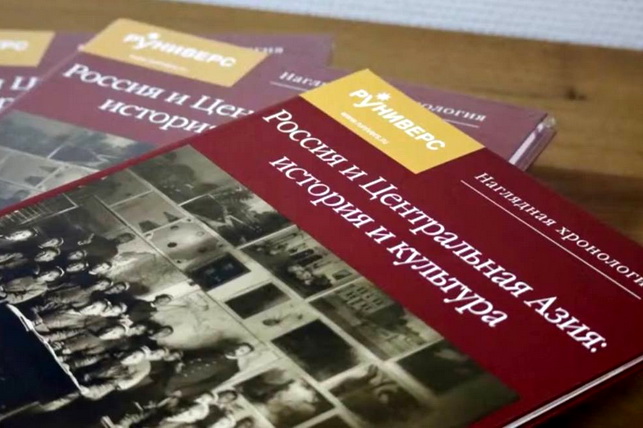
Book “Russia and Central Asia: History and Culture” Presented in Tashkent
Tashkent, Uzbekistan (UzDaily.com) — A book titled “Russia and Central Asia: History and Culture” was presented in Tashkent at an event organized by the Russian House. The edition, published by Rossotrudnichestvo in cooperation with the “Runivers” publishing house, marks the first project in a series dedicated to the centenary of people-to-people diplomacy.
The presentation was attended by Irina Staroselskaya, Head of the Rossotrudnichestvo Representative Office in Uzbekistan; Vasiliy Kostetsky, author of history textbooks on Uzbekistan and candidate of historical sciences; Shokhruh Choriyev, Senior Researcher at the National Center of Archaeology of the Academy of Sciences of Uzbekistan and participant in the “Guardians of Memory” project; Tatiana Katyukova, Leading Researcher at the Institute of World History of the Russian Academy of Sciences and candidate of historical sciences; and Darya Saprynskaya, Researcher at the Institute of Oriental Studies of the Russian Academy of Sciences and expert at the Valdai Club.
Opening the event, Irina Staroselskaya emphasized the importance of preserving historical memory and the significance of the book in fostering mutual understanding between peoples. She noted that the edition will be available at the Russian House, with its key historical timeline displayed on a 24-meter banner to provide visitors with an overview of its content.
Experts praised the book’s educational value and visual presentation. Vasiliy Kostetsky highlighted that the sequential “timeline” format makes the material accessible for schoolchildren and youth, promotes a holistic understanding of historical processes, and encourages further study.
Shokhruh Choriyev noted that the publication helps form an objective understanding of the region’s history and the mutual influence between Central Asia and Russia in fields ranging from science and culture to economics and administration. He stressed the importance of reliable sources, particularly amid information overload and the spread of distorted data.
Tatiana Katyukova said the book has significant potential as a teaching aid for high school and university students, expressing hope for the series’ further expansion and suggesting that future editions include detailed cartographic materials.
Darya Saprynskaya emphasized the demand for popular-science historical publications that clearly present positive examples of interaction between countries. She noted that the book helps address the current lack of Central Asian history materials in school curricula.
Concluding the presentation, Irina Staroselskaya highlighted the Russian House’s role as an open platform for educational initiatives aimed at strengthening neighborly relations, preserving historical truth, and developing humanitarian cooperation.
Participants also proposed expanding educational programs, supporting the dissemination of historical knowledge among youth, and strengthening mutual understanding between Russia and Uzbekistan.
Copies of “Russia and Central Asia: History and Culture” distributed to Russian Houses in Kazakhstan and other regional countries will become part of permanent exhibitions and be used in educational and cultural events.