Stay up to date with the latest news
Subscribe to our telegram channel

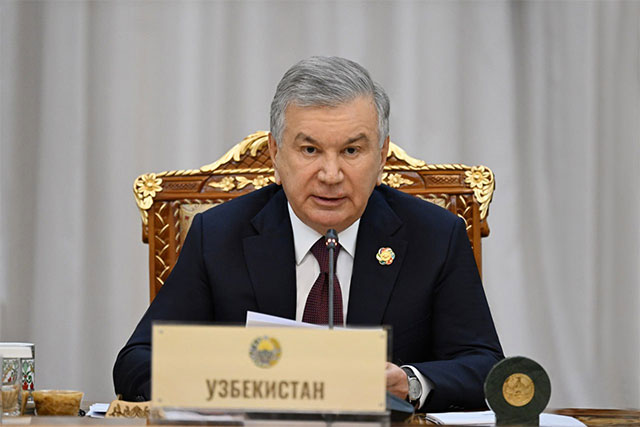
A Space of Opportunities: Ferghana Valley as a Growth Hub for the Entire Region
Tashkent, Uzbekistan (UzDaily.com) — At the 80th session of the United Nations General Assembly, the President of Uzbekistan emphasized the country’s commitment to further transforming Central Asia into a space of peace, neighborliness, and partnership.
This vision reflects real positive developments in the region, particularly evident in the Ferghana Valley — a key center of economic and social activity.
The region’s combined gross domestic product has doubled in recent years, reaching US$520 billion by the end of 2024.
On the Uzbek side of the Ferghana Valley, more than 13,000 industrial enterprises operate, including over 1,100 in the high-tech sector.
Cross-border trade and industrial zones are actively developing, contributing to a new architecture of regional cooperation. In a bilateral format, the Uzbek-Kyrgyz and Uzbek-Tajik Investment Funds support joint projects and stimulate industrial cooperation.
Transport infrastructure plays a significant role in strengthening economic ties. Regular road routes ensure stable connections between Uzbekistan, Tajikistan, and Kyrgyzstan. Since 2018, the Tashkent–Bishkek–Balykchy railway line has operated through the Ferghana Valley, and the restoration of the Bekabad–Kanibadam route in Tajikistan has become an important step in enhancing regional connectivity.
The summit of the leaders of Uzbekistan, Tajikistan, and Kyrgyzstan, held in March 2025 in Khujand, marked a new stage in regional relations. The meeting provided a strong impetus for economic cooperation, transport integration, and industrial collaboration, creating favorable conditions for stability and sustainable growth in the Ferghana Valley.
Given the region’s advantageous geographic position, priority is being given to the systematic implementation of joint measures aimed at developing a cooperative economy, cross-border trade, and transport communications.
Projects establishing international transport corridors are of particular importance — including the China–Kyrgyzstan–Uzbekistan railway and road routes, as well as the Tashkent–Andijan high-speed highway. These initiatives will create new overland economic corridors connecting China, Central Asia, and Western Asia, with access to the Caspian Sea, the Persian Gulf, and Pakistan. They offer broad opportunities for integrating the transport networks of Uzbekistan, Kyrgyzstan, and Tajikistan and strengthening their role in Eurasian logistics.
The implementation of such infrastructure projects has a pronounced multiplier effect: new jobs are created, including in remote areas, demand for related industries’ products rises, and the purchasing power of the Ferghana Valley population increases.
M. Turaev,
Senior Specialist, Institute of Macroeconomic and Regional Studies