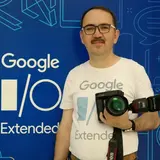
Tashkent, Uzbekistan (UzDaily.uz) — A representative of the a16z Speedrun venture program and founder of Headstarter, Yasin Ehsan, spoke at the Global Tech Weekend x TECH FEST international forum in Tashkent, urging Uzbek entrepreneurs to rethink how startups are built. His central message was deliberately provocative: success is determined not by the quality of technology, but by choosing the right market.
Ehsan illustrated his point with a natural metaphor linked to a historical event. He said the largest tsunami in United States history occurred in Alaska in 1954 and reached a height of 500 meters, higher than the Empire State Building in New York. According to him, a founder in the right market is like a rower in a small boat riding such a wave: even with minimal effort, they will move far ahead. By contrast, even the largest yacht will not move if placed in a still pond without current.
A central example in his speech was the story of Sardor, the first member of the Uzbek diaspora to gain entry into Y Combinator. About six months ago, Sardor contacted Ehsan with an idea for a startup but said he was not ready to quit his job immediately.
At the time, Sardor had graduated from Cornell University, an Ivy League institution, and was working on Meta’s superintelligence team, which competes with OpenAI and Anthropic. Ehsan advised him not to quit immediately but to relocate to Silicon Valley and immerse himself in the startup ecosystem.
Three months later, Sardor arrived in San Francisco and moved into Powell Street, a space where ten companies over the past year received funding from Y Combinator or joined the a16z Speedrun program. When Sardor brought a draft YC application, the team spent six hours fully reshaping his idea and redefining the target market. The application ultimately passed selection.
Speaking about global trends, Ehsan described a major shift in the industry: the traditional SaaS model, software as a service, is giving way to a new concept he called “service as software.”
He estimated that the agentification of workflows through artificial intelligence will create a market worth 1.5 trillion dollars, three times larger than the current cloud market valued at 500 billion dollars. Among the most promising sectors, he highlighted physical intelligence, computational biology, regulated industries, and the public sector.
He also addressed artificial general intelligence. Ehsan described a conversation with a researcher at Anthropic’s San Francisco office held just two to three days before the talk.
According to the researcher, the next generation of Anthropic models will be capable of independently training future generations of systems, a point at which, in his view, the era of AGI will begin. Ehsan urged founders to position themselves now either to anticipate this transition or to ride the wave of its widespread adoption.
He also outlined key criteria used by leading accelerators. Y Combinator selects 100 to 200 teams from 10,000 to 30,000 applications and offers 500,000 dollars for a 7% equity stake. a16z Speedrun follows a similar model, investing 1 million dollars for a 10% stake.
According to Ehsan, three factors matter most: an exceptional founder profile in a single domain, whether academic, athletic, or professional experience at top companies; early revenue, ideally 5,000 dollars in monthly recurring revenue within the first month; and finally, choosing the right market.
He said founders should speak less and let results speak for themselves.
Concluding his speech, Ehsan called for what he described as the “AI-ification of the nation,” emphasizing building infrastructure, expanding human potential, and turning ambitious ideas into reality.
He advised investors and ecosystem participants to study best practices of leading funds, help founders become strong storytellers, and support high-risk bets. The audience repeated his core message three times: technology does not determine the winner, the market does.