Stay up to date with the latest news
Subscribe to our telegram channel

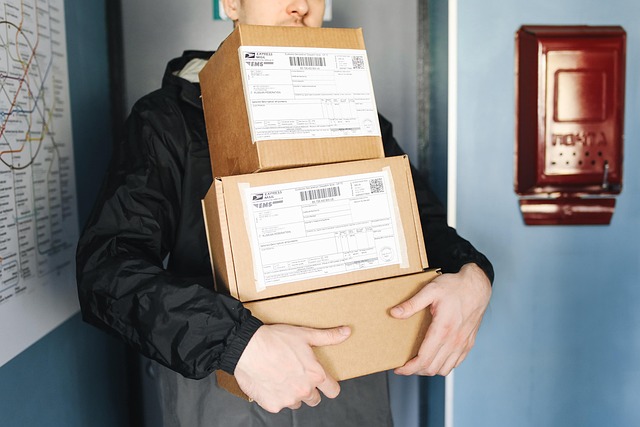
Why In-City Delivery Costs Are Rising — and What the FMCG Market Can Do / Photo: Pixabay/romeosessions
Tashkent, Uzbekistan (UzDaily.com) — According to a study by Relog, Uzbekistan’s B2B FMCG delivery market has entered a phase where logistics is no longer just an invisible backdrop to trade. The “last mile,” previously perceived as a purely operational task, has become a point of competition and simultaneously the area of highest costs.
Missed deadlines, complex urban infrastructure, a shortage of trained personnel, and the transition to electronic documentation are all shaping a new operational reality. The faster participants in the supply chain recognize the scale of these changes, the greater their chance to survive and secure leading positions in the next two to three years.
Perhaps the most painful factor remains late deliveries. According to the study, up to 67% of online retailers have experienced last-mile problems. While such issues in the B2B segment are less often publicized, their effect is often stronger.
A few consecutive delays can make a distributor lose a client—not through a loud conflict or scandal, but quietly: the store simply purchases from another supplier. In an environment of growing competition and similar product assortments, the main competitive advantage becomes not price or speed, but predictability. A supplier who delivers on time is more valuable than one who is cheaper but cannot guarantee punctuality.
The causes of delays are diverse but can be summarized simply: traditional logistics can no longer cope with current market volumes and pace. Packing errors, underloads, human mistakes, incorrect addresses, stores closing before delivery, vehicle breakdowns, traffic jams in the city center—all are individual cases that collectively create a systemic problem. “In 2025, the primary pain point remains untimely delivery. Major players are already revising contracts to tighten requirements for timing and service,” notes Ayrat Samerkhanov, Development Director at Orient Logistics. His observation confirms that the market is maturing, and issues once considered minor operational errors are now a criterion for client access.
Urban restrictions are accelerating this transformation. Tashkent already restricts trucks over 10 tons during peak hours, forcing the market to shift to smaller vehicles, split shipments into two or three trips, or move deliveries to nighttime windows. In historic districts, the problem is compounded by the lack of unloading zones, narrow streets, and chaotic parking. Sometimes servicing a single point can take up to two hours—half a vehicle’s working day.
Where one truck could previously serve three addresses, now three smaller trips are needed. Costs rise geometrically, and distribution margins shrink. “Restrictions, lack of parking, and complex urban topology make deliveries more expensive—this trend is irreversible,” emphasizes Toghrul Khalafov, Chief Operational Support Officer at Asvad Logistic. The key takeaway: rising costs are not a temporary system error, but a new market baseline.
Digitalization has become the second catalyst for change. Since July 1, 2024, all deliveries have been documented through electronic consignment notes. For large retail chains, the transition was relatively smooth, as document processing infrastructure was prepared in advance. Small companies, however, needed training, digital signatures, equipment for point-of-delivery document signing, and skills to work with EDI platforms. Formally, the transition is complete, but adaptation is ongoing. Electronic documentation is not bureaucracy—it is the foundation for a transparent market, where every delivery, entry time, and delay is visible. This is the level of transparency retailers have long awaited.
Against this backdrop, another weakness is especially apparent: a lack of real-time last-mile control. According to Relog, only 27% of companies use GPS monitoring, and just 23% collect feedback upon delivery. This means most market participants cannot see the current location of vehicles, predict ETAs, or record downtime points. The market is still managed retrospectively: first a delay occurs, then it is explained. But as SLA requirements evolve, such an approach becomes unacceptable. Once networks begin tying penalties to minutes of delay, manual logistics will cease to exist.
One more often underestimated factor is human resources. Infrastructure can be rebuilt, rules enforced, and systems purchased—but people cannot be replaced. The average age of drivers is rising, young workers move to taxi services, and experienced personnel leave for other countries. Seventy-three percent of companies complain about warehouse staff quality. Delays often start not on the road but in the warehouse: late packing, mis-sorting, or a lack of loaders. “There are many young people, but few qualified ones. Companies must invest in mentorship and staff training,” Samerkhanov notes. This means companies that begin training personnel today will be in a stronger position in two years than those still seeking drivers through classified ads.
When combining all elements—urban environment, deadlines, documentation, service, and personnel—a complete picture emerges. Uzbekistan is at a point where logistics is no longer a “black box” of trade. The last mile has become a strategic resource that must be planned, monitored, measured, and optimized. Those who succeed will provide not just speed, but reliability—a delivery service people can trust.
In-city delivery costs are indeed rising—and will continue to rise. But winners will be those who learn to earn faster than costs increase. This is not a forecast or a threat—it is the new reality. The market has become more complex, but it has also matured, opening opportunities for those ready to play the long game.