Uzbekistan's Mirziyoyev Unveils Bold Economic Agenda at ADB Forum

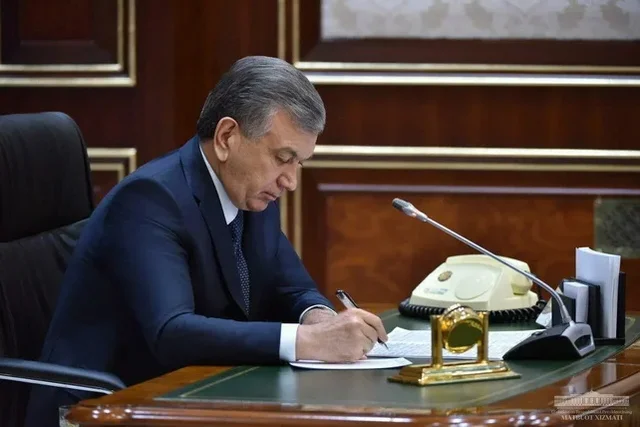
Tashkent, Uzbekistan (UzDaily.uz) — President Shavkat Mirziyoyev addressed the 59th Annual Meeting of the Board of Governors of the Asian Development Bank, held in the city of Samarkand.
The head of state warmly welcomed participants to the event: "Hosting such an authoritative forum in our country fills us with a deep sense of pride and gratitude. Our land, with its millennia-long history and location at the crossroads of the Great Silk Road, has since ancient times served as a hub connecting East and West, North and South. The pathways of world civilization, science, and trade have long converged here. The New Uzbekistan, uniting a great past with a bright future, is gradually becoming a major platform for discussing pressing issues of international significance. I am confident that the Samarkand forum will serve to advance forward-looking ideas, new initiatives, and important decisions. Welcome to the New Uzbekistan!"
The president noted that the country's economy is today entering a fundamentally new stage of development.
"Since 2016, we have been implementing sweeping reforms to liberalize the economy, create an attractive environment for investors, actively integrate into global value chains, comprehensively upgrade social and industrial infrastructure across the regions, and improve living standards for our people. In a historically short period of time, our hardworking and creative people have traveled a challenging path of development. In recent years, $150 billion in foreign investment has been attracted into the economy, and thousands of modern enterprises have been brought online. In the energy sector alone, investment projects totaling $35 billion have increased electricity generation by one and a half times, reaching 87 billion kilowatt-hours. Over this same period, exports of goods and services have tripled, and the size of the economy has grown from $50 billion to $147 billion. These positive results are recognized by the international community as well. Since 2020, Uzbekistan has consistently improved its position in sovereign credit ratings. In this year's Index of Economic Freedom, our country climbed 14 places and for the first time entered the category of 'moderately free economies,'" the president stated.
Despite global instability, Uzbekistan's economy achieved growth of 8.7 percent in the first quarter.
"Most importantly, our reforms have been centered on improving the everyday lives of each family and each individual. Over this period, we have succeeded in raising the incomes of 8.5 million citizens in need and reducing the poverty rate from nearly 35 percent to 5.8 percent today. Uzbekistan has joined the ranks of the five countries that have made the greatest progress toward achieving the Sustainable Development Goals over the past decade. We intend by 2030 to transition all sectors in Uzbekistan to a model of technological and innovative growth and to increase the size of the economy to more than $240 billion. As a result, we are setting the goal of entering the upper-middle-income country category and fully eradicating poverty. In the coming days, we will list a 30 percent stake in the National Investment Fund — which encompasses the assets of 13 strategically significant enterprises — on the international stock market. I am convinced that this important step will further strengthen our partners' confidence in the country's investment climate," the head of state declared.
The president paid particular tribute to the role of the Asian Development Bank and other international financial institutions in the large-scale reforms being carried out in Uzbekistan.
With the ADB, which has become a trusted strategic partner, projects totaling approximately $16 billion are currently under implementation. In particular, the Asian Development Bank has from the outset actively supported Uzbekistan in areas including renewable energy, rural housing construction, and the development of economic cooperation in Central Asia.
The head of state took the opportunity to express sincere gratitude to ADB President Masato Kanda and the bank's governors for their continued support of Uzbekistan. Separate appreciation was also conveyed to the leadership of the World Bank, the International Monetary Fund, the Islamic Development Bank, the Asian Infrastructure Investment Bank, the European Bank for Reconstruction and Development, and other international financial institutions and foreign partners for their close cooperation.
On the eve of the forum, a new cooperation program with the ADB valued at $12 billion was signed.
"To ensure sustainable development, the times themselves demand that we introduce new mechanisms and more effective approaches in our cooperation with the Bank," the president stated.
Digital technologies and artificial intelligence are today elevating virtually every sector to an entirely new level. According to World Trade Organization forecasts, by 2040 artificial intelligence could generate an additional 40 percent increase in the volume of international trade.
Uzbekistan has also moved actively to develop information technologies. An innovation hub grounded in knowledge and artificial intelligence is being established. More than 200 artificial intelligence projects are under way across economic sectors. Programs to expand data centers, supercomputers, and AI laboratories are being implemented across the regions, alongside a program to train "5 Million AI Leaders."
"I would particularly like to note that in these areas we are being actively assisted by the Asian Development Bank, as well as our partners from the United States, Saudi Arabia, the United Arab Emirates, Japan, Korea, and China," the president stated.
Sectors such as education, healthcare, water management, ecology, and food security — areas of primary importance to the population — equally require the deployment of open artificial intelligence models.
In this regard, the president proposed the development, under the auspices of the Asian Development Bank, of a dedicated program to expand the application of artificial intelligence in developing countries. Uzbekistan also announced its accession to the bank's Digital Highway for Asia initiative and put forward a proposal to open its regional coordination center in Tashkent.
The expansion of digital technologies and artificial intelligence, in turn, is sharply increasing demand for energy resources. According to the International Energy Agency, by 2030 electricity demand from data centers could rise by two to three times compared with current levels. Under these conditions, only those countries that offer investors cheap, reliable, and clean energy will be competitive in the global market.
In this area, Uzbekistan, in partnership with leading global companies, has commissioned large wind and solar power plants with a combined capacity of 5,600 megawatts and has raised the share of green energy in its generation mix to 30 percent. By 2030, that figure is planned to reach 54 percent.
"On the whole, our region possesses enormous potential in the field of renewable energy. We gratefully acknowledge the support of the Asian Development Bank in establishing a Central Asia–Europe green energy corridor to expand the export of clean energy. We are confident that the countries of the region, working together with the Bank, will move swiftly to begin implementing this 'energy artery' project," the president stated.
The president noted that ensuring the resilience of the interconnected transport system and logistics corridors has become one of the most pressing issues. As a result of global tensions, the rerouting of logistics is already driving up freight costs for Central Asian countries by as much as 30 percent, while delivery times are extending by several weeks.
Implementation of the China–Kyrgyzstan–Uzbekistan railway project, connecting East and West, has already begun. This new transport corridor will significantly expand the transit potential of the entire region. Delivery times will be reduced to 10 days, and freight volumes will reach up to 15 million tons per year.
The head of state proposed the creation, within the framework of the Central Asia Regional Economic Cooperation (CAREC) program and with bank support, of a Digital Customs and Logistics Alliance. This would harmonize customs procedures, digitize documentation workflows, and simplify cross-border freight transport.
Uzbekistan expressed its interest in further deepening cooperation with the private sector through the involvement of the Asian Development Bank.
"Especially in this era of technology, we are all witnessing how rapidly competition for critical minerals is intensifying. According to international expert assessments, by 2040 demand for minerals vital to industry will increase sixfold. These represent new opportunities," the president stated.
Uzbekistan holds significant reserves of copper, tungsten, molybdenum, magnesium, graphite, vanadium, titanium, and other minerals. To realize this potential, an R&D center has already been launched in partnership with Korean partners. A "Metals of the Future" technology park is under construction in the Tashkent and Samarkand regions. More than 70 projects with a combined value of $1.6 billion have already been launched with major companies from the United States, China, and Turkey.
"We are setting the goal not merely of extracting natural resources, but of giving new impetus to economic development through their deep-level processing. We propose joining the Asian Development Bank's 'From Critical Minerals to Manufacturing' program and implementing high-value-added projects within its framework," the president stated.
Climate change and desertification are exerting a serious impact on the development of Central Asian countries. To mitigate the consequences of environmental challenges, Uzbekistan's nationwide Green Space project has involved the planting of 200 million seedlings annually for the past five years. Two million hectares of protective green forest cover have been established on the dried bed of the Aral Sea.
Uzbekistan has set an ambitious national target of raising its level of green cover to 30 percent by 2030.
It was also noted that the Asian Development Bank is effectively implementing its Climate Action Plan through 2030, with no less than 50 percent of the bank's annual allocations directed toward financing climate-related projects.
"I believe that if we carry out these worthwhile initiatives together with the Bank and the countries of the region, the results will be considerably greater. We therefore propose implementing a regional 'Green Belt of Central Asia' project," the president stated.
With instability spreading across the world, millions of tourists today are seeking safe destinations. Central Asia holds significant potential across such tourism segments as religious pilgrimage, cultural, culinary, ethnographic, adventure, and medical tourism.
Uzbekistan has devoted particular attention to this sector and has implemented reforms targeting the development of necessary infrastructure, services, visa and transport conditions, and above all, tourist safety. As a result, the flow of foreign visitors to Uzbekistan has increased sixfold over the past decade, reaching 12 million people.
The recently opened Center of Islamic Civilization in Tashkent — recognized as a treasury of science and the spiritual heritage of Central Asia — along with the Imam Bukhari memorial complex in Samarkand, have become new landmarks of the country.
Similar complexes are being built in neighboring countries. In this regard, the president put forward an initiative to create a region-wide tourism space — the "Central Asia Tourism Ring" — and called on neighboring countries, the Asian Development Bank, and other partners to form a portfolio of tourism development projects and pursue their joint financing.
"We are prepared to implement all of the proposals and initiatives mentioned above with the Asian Development Bank not only through sovereign lending, but also actively through public-private partnerships, guarantee instruments, blended finance, and the attraction of private capital. In this regard, we propose the establishment of an Innovative Financing Platform for regional projects," the president stated.
It was noted that amid the rapid changes taking place in the global economy, the role of the Asian Development Bank in ensuring the socioeconomic stability of this vast region is becoming ever more significant.
Uzbekistan expressed full support for the effective reforms of Bank President Masato Kanda, who brings extensive experience and knowledge in the fields of international finance and economic relations.
More than 4,000 representatives from over 100 countries are participating in the current forum, alongside experts from leading international financial institutions, banks, and companies.
"I am confident that the important proposals and initiatives put forward at the Samarkand platform will in time translate into concrete practical results, and that each agreement will become a real and effective project," the president stated, wishing participants every success.