Stay up to date with the latest news
Subscribe to our telegram channel

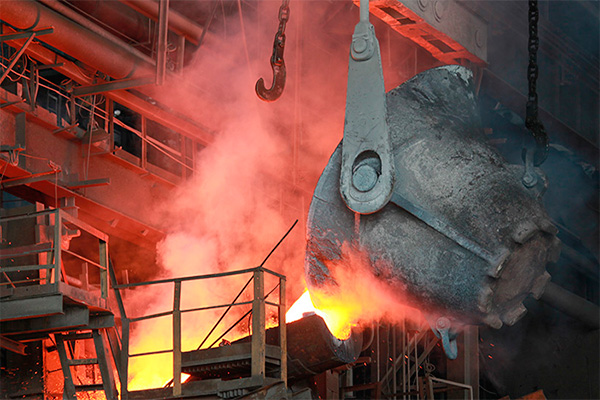
Uzbekistan’s industrial output grows 7.7% in early 2026
Tashkent, Uzbekistan (UzDaily.com) — Uzbekistan’s industrial production totaled 175.0 trillion soums in January–February 2026, marking a 7.7% increase compared with the same period in 2025, according to the National Statistics Committee of Uzbekistan.
As of March 1, the country had 61,800 industrial enterprises in operation. The largest sectors by number of enterprises were food production (12,400, 20%), other non-metallic mineral products (8,600, 13.9%), and clothing production (6,200, 10.1%). Other notable sectors included fabricated metal products (5,000, 8.1%), furniture (4,200, 6.8%), textiles (3,900, 6.3%), and rubber and plastic products (2,900, 4.7%).
Manufacturing accounted for the bulk of industrial output, contributing 146.8 trillion soums (83.8% of total). Electricity and gas supply, steam and air conditioning provided 14.1 trillion soums (8.1%), mining produced 13.1 trillion soums (7.5%), and water supply and waste management accounted for 1.0 trillion soums (0.6%).
Within manufacturing, the largest shares were in fabricated metal products, machinery, and equipment (16.5%), food, beverages, and tobacco (17.4%), and textiles, clothing, and leather goods (13.0%). Chemicals, rubber, and plastics contributed 6.3%.
During the reporting period, Uzbekistan produced 6.9 billion cubic meters of natural gas, 103.1 thousand tons of oil, 0.7 million tons of coal, 204.4 thousand tons of gasoline, 2.7 million tons of Portland cement, 103.5 thousand tons of yarn, and 210.7 thousand tons of wheat flour. Electricity output rose to 106.0% of the level in the same period of 2025, while heat production by large enterprises declined to 86.9%.
Regional per capita industrial output exceeded the national average of 4.6 million soums in Navoiy Region (43.2 million), Tashkent city (8.9 million), Tashkent Region (8.1 million), and Sirdaryo Region (4.8 million). Growth rates above the national average were recorded in Sirdaryo and Namangan regions (106.6%), Samarkand (106.5%), Bukhara (106.4%), Surkhandarya and Andijan (106.2%).
Compared with January–February 2025, textile waste production decreased by 0.4%, while wastewater treatment and disposal services grew by 28.8%.